The Best Time to Photograph Hoi An: The Old Town, Fishing Villages & Rice Fields
Most people plan their trip to Hoi An around the evening lanterns in the Old Town. It's a beautiful sight, but the light and life that make for genuinely interesting photographs are spread across the wider region, the fishing villages before dawn, the rice fields in late afternoon, and the Old Town itself in the quieter hours either side of the crowds.
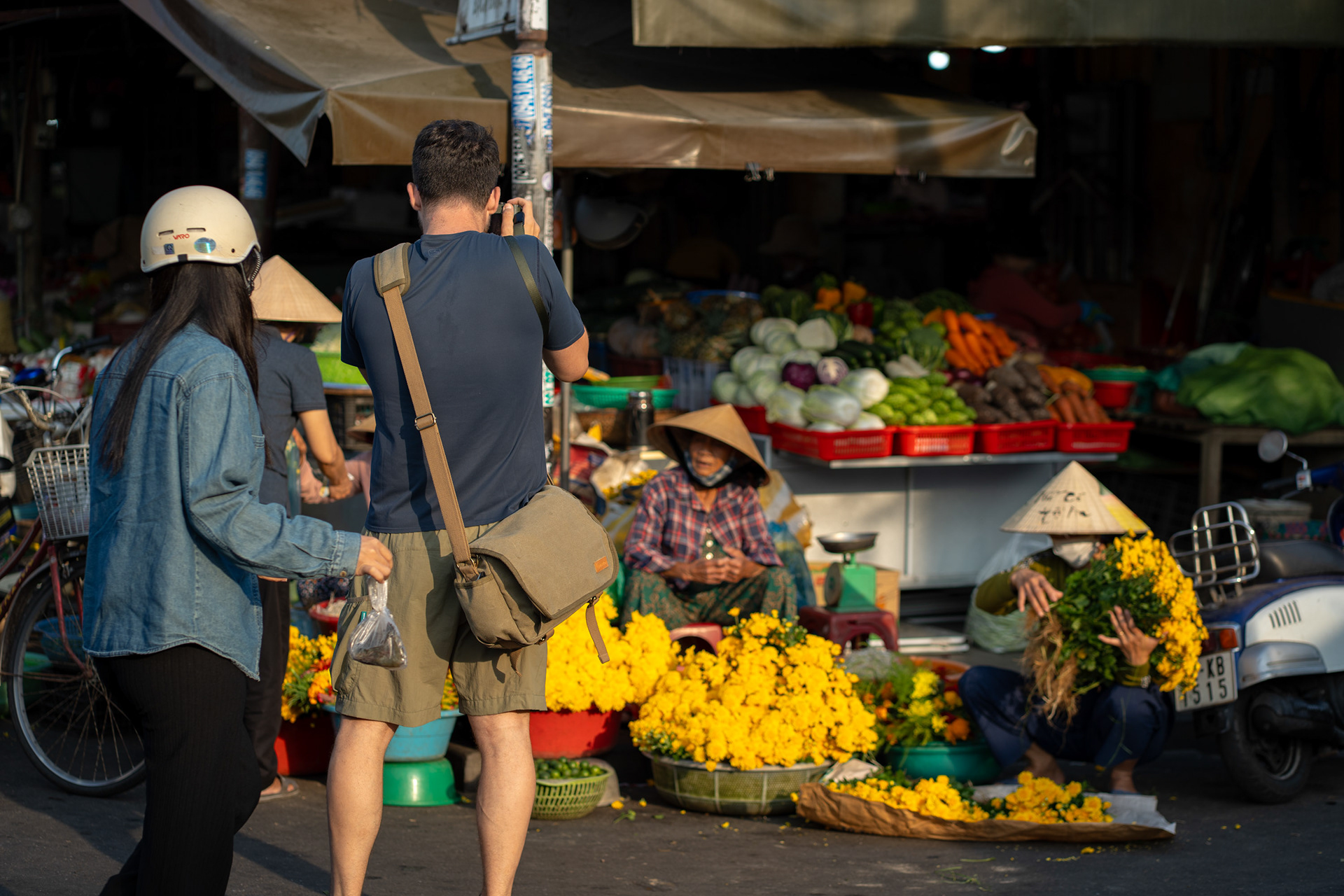
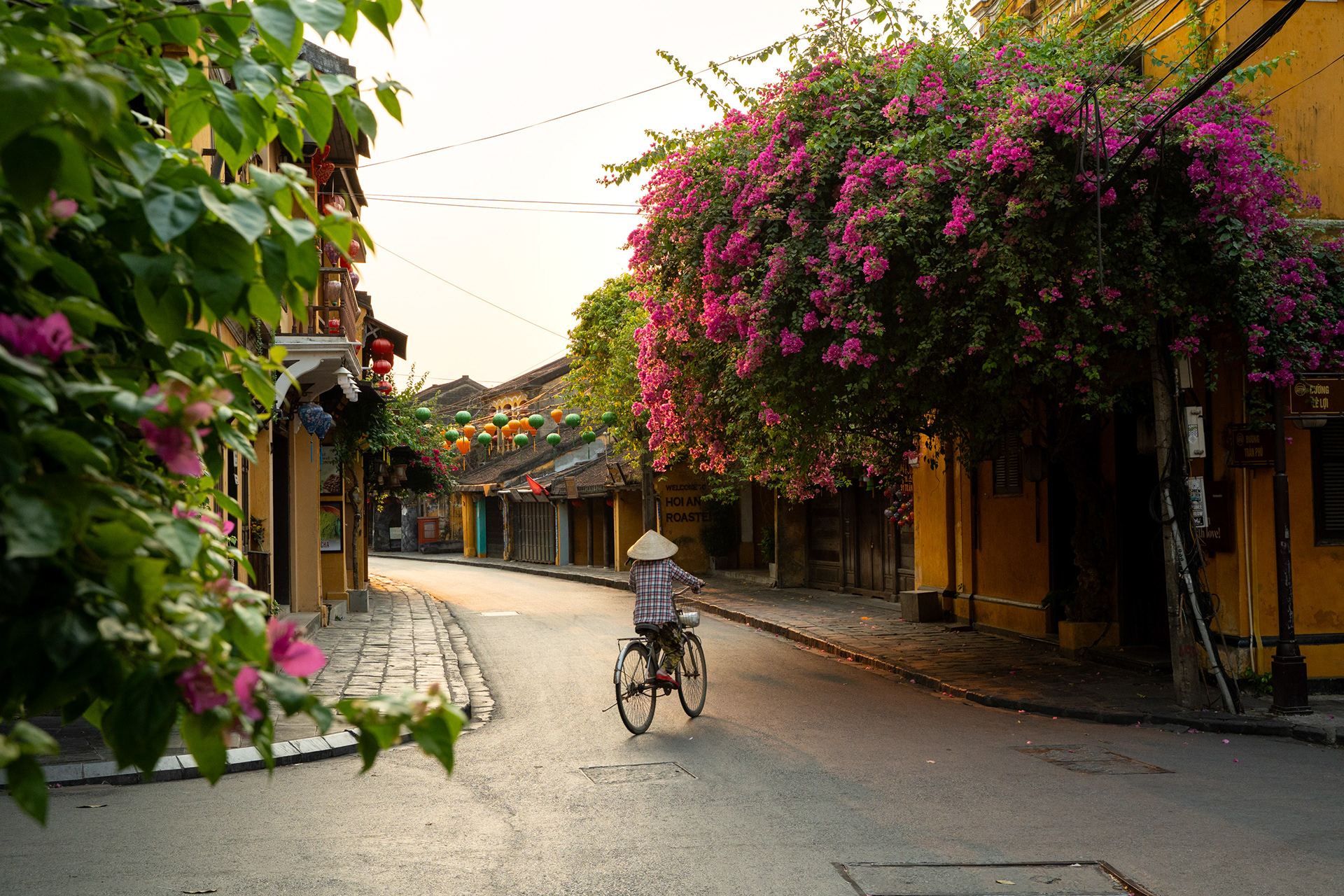
The Old Town: 5.30am to 7.30am
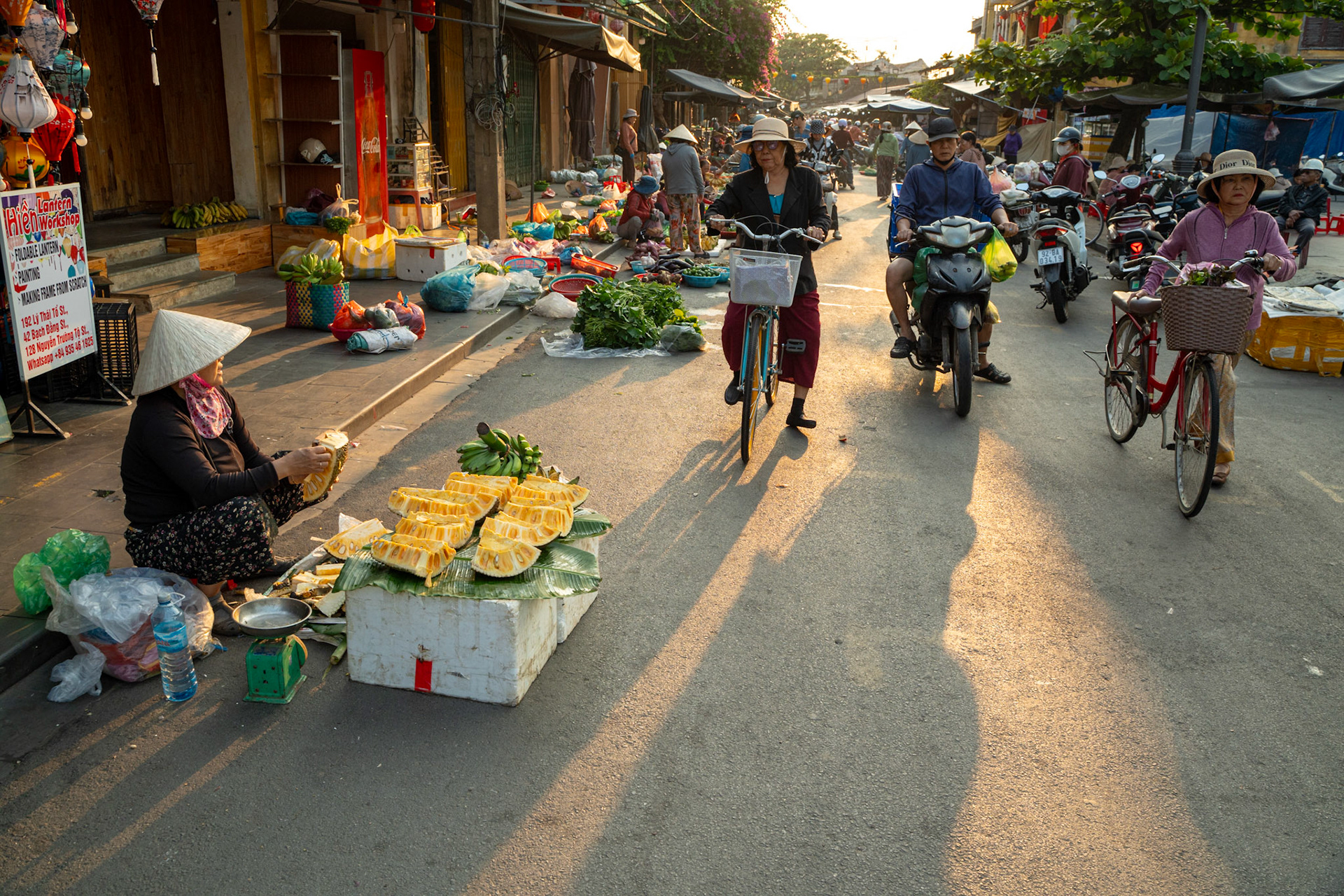
This is the best window for photography in the Old Town, and the least crowded. The streets are still being swept, market stalls are setting up, and the light along the river is soft and low. Boats are already moving on the water, fishermen are working the nets close to the bridges, and the town has a completely different atmosphere to how it feels later in the day. If you only have one morning here for photography, this is it.
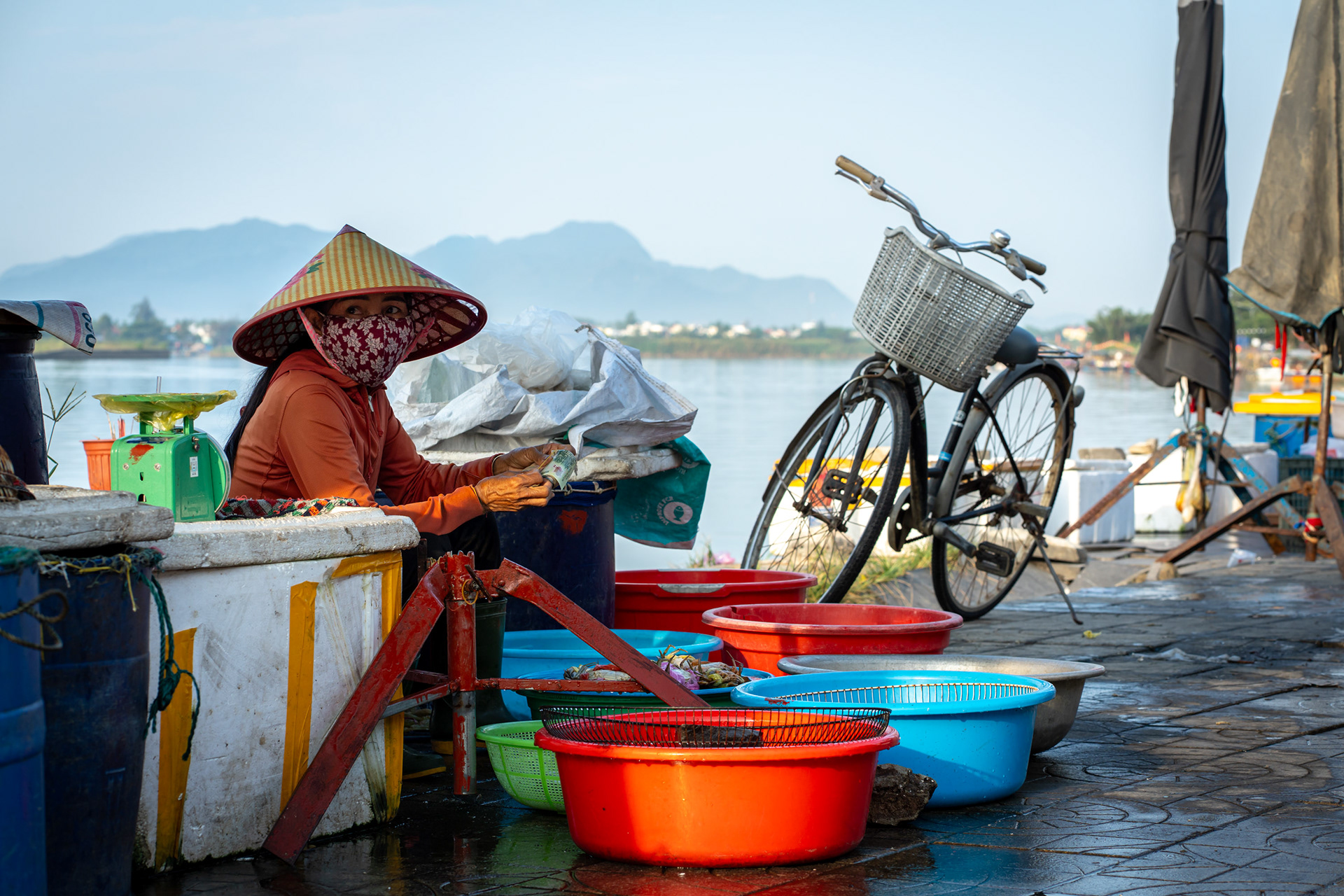
Fishing villages and beaches: from 4.30am
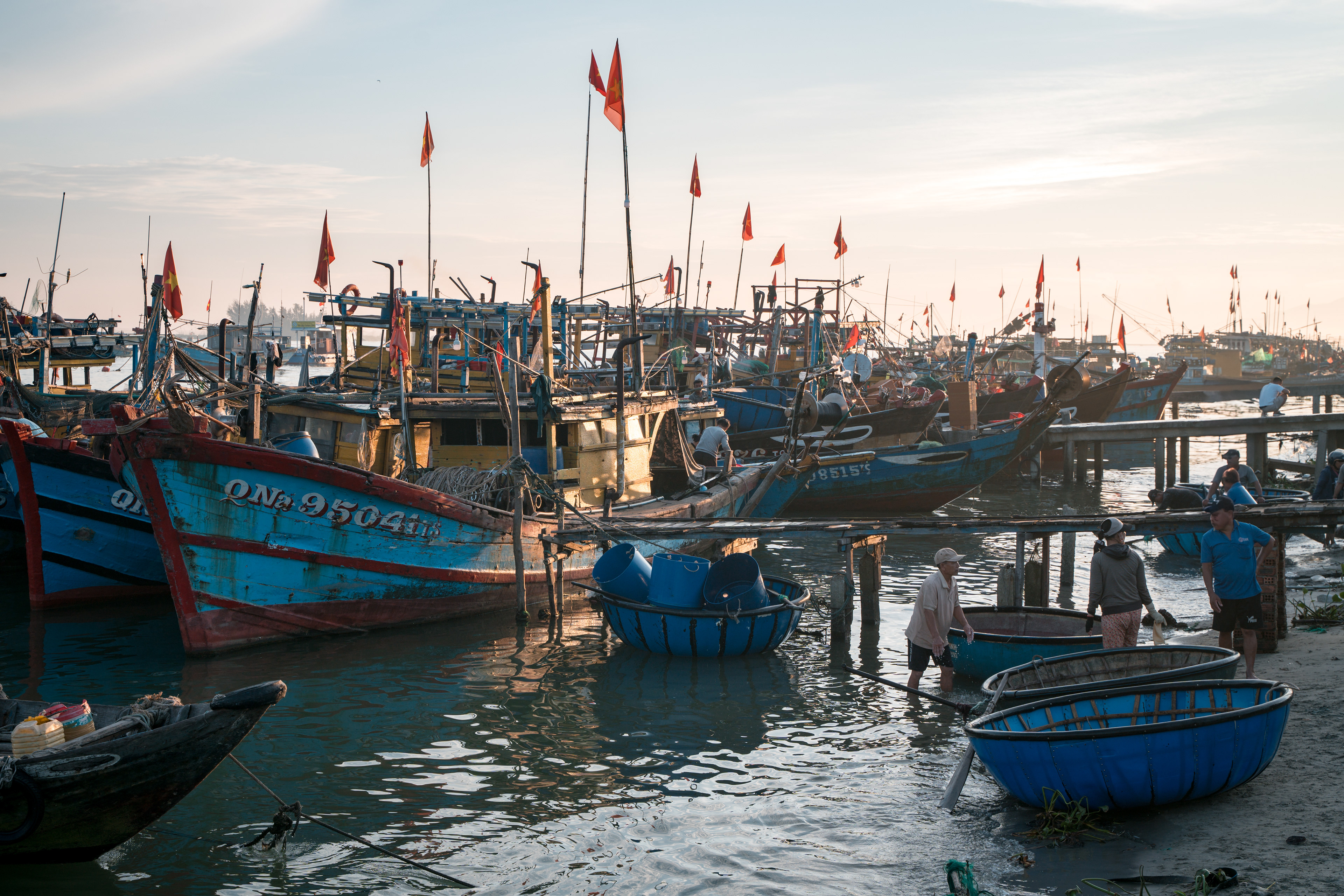
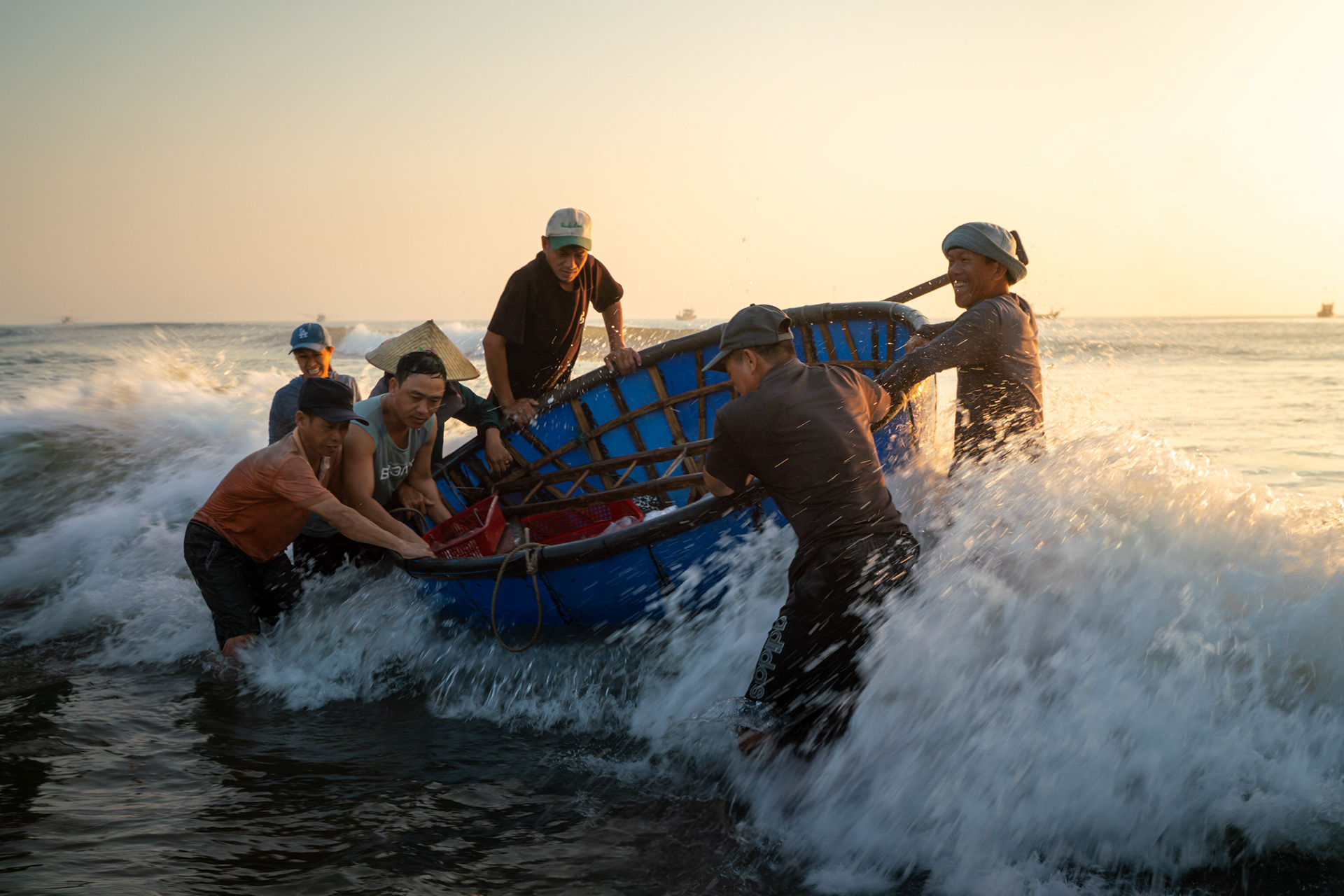
If you're heading out to the fishing villages or coastal areas rather than staying in the Old Town, the timing shifts earlier again. Boats start coming ashore from around 4.30am, and this is when the real activity happens — nets being unloaded, the morning catch being sorted and sold, and a rhythm of work that's over well before most visitors are awake. It's an earlier start than the Old Town requires, but it's a different, more working side of the area and worth it if you want images that feel further from the tourist trail.
Through the middle of the day
Once the morning light window closes, the Old Town fills up quickly with day-trippers, and the light overhead turns flat and harsh. It's not a window I'd point anyone toward for photography — better to use those hours for food, rest, or exploring somewhere shaded, and save your energy for when the light comes back.
Late afternoon: 3pm onward
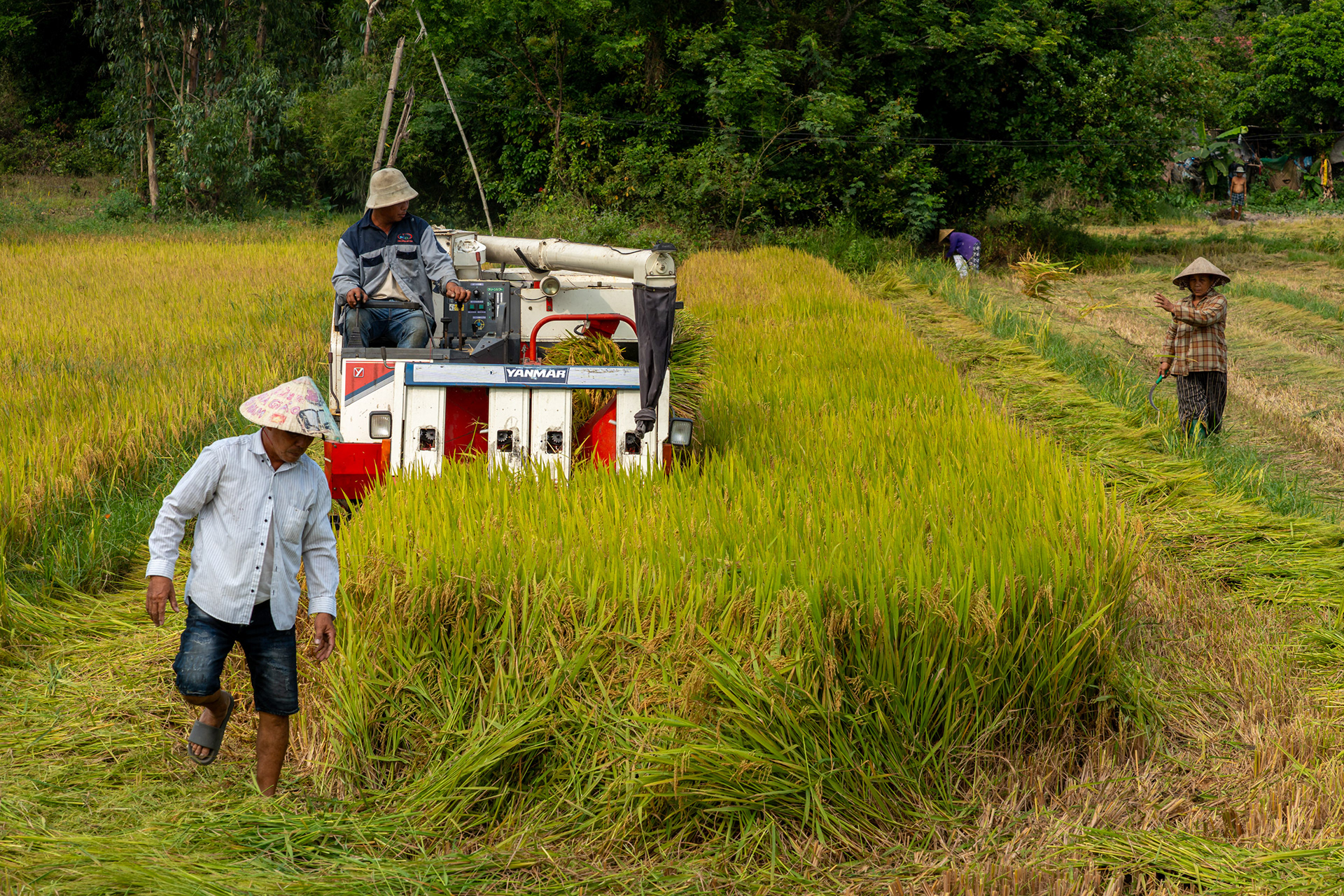
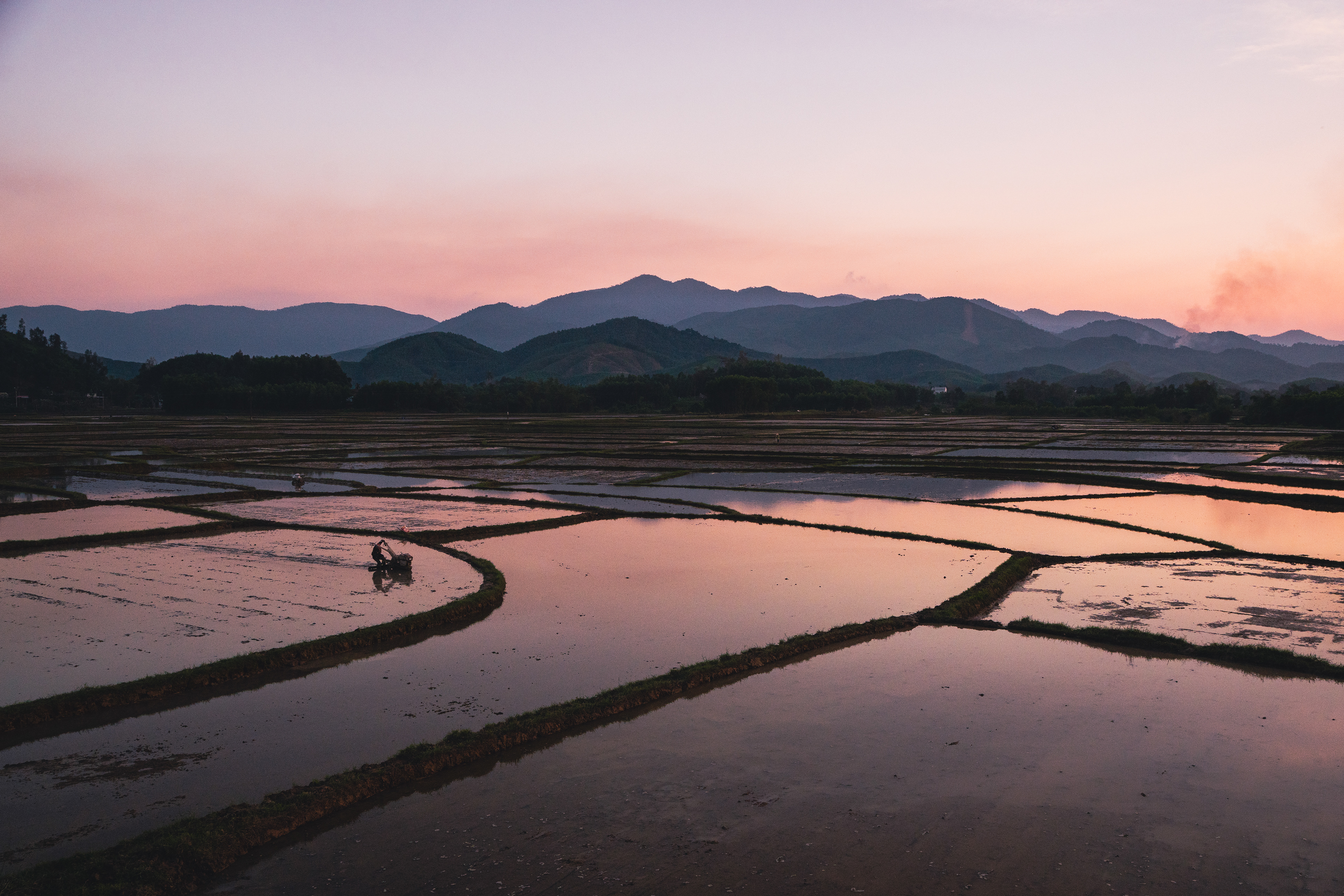
The light starts to turn good again from around 3pm, earlier than most people expect. Out at the rice fields, this is a strong window for photographing workers still out in the paddies, with the low, warm light picking out the greens and the movement of the work itself. Back in the Old Town, the backstreets come into their own once the light drops low enough to bounce off walls and water, filling in shadows and giving even narrow, unglamorous lanes a warmth they don't have at midday. It's also a good window for people rather than places: locals are winding down for the day just as the Old Town starts filling with the afternoon wave of tourists, so there's a brief overlap where you can catch that quieter, end-of-day rhythm before the streets properly fill in.
Evening: after 7pm
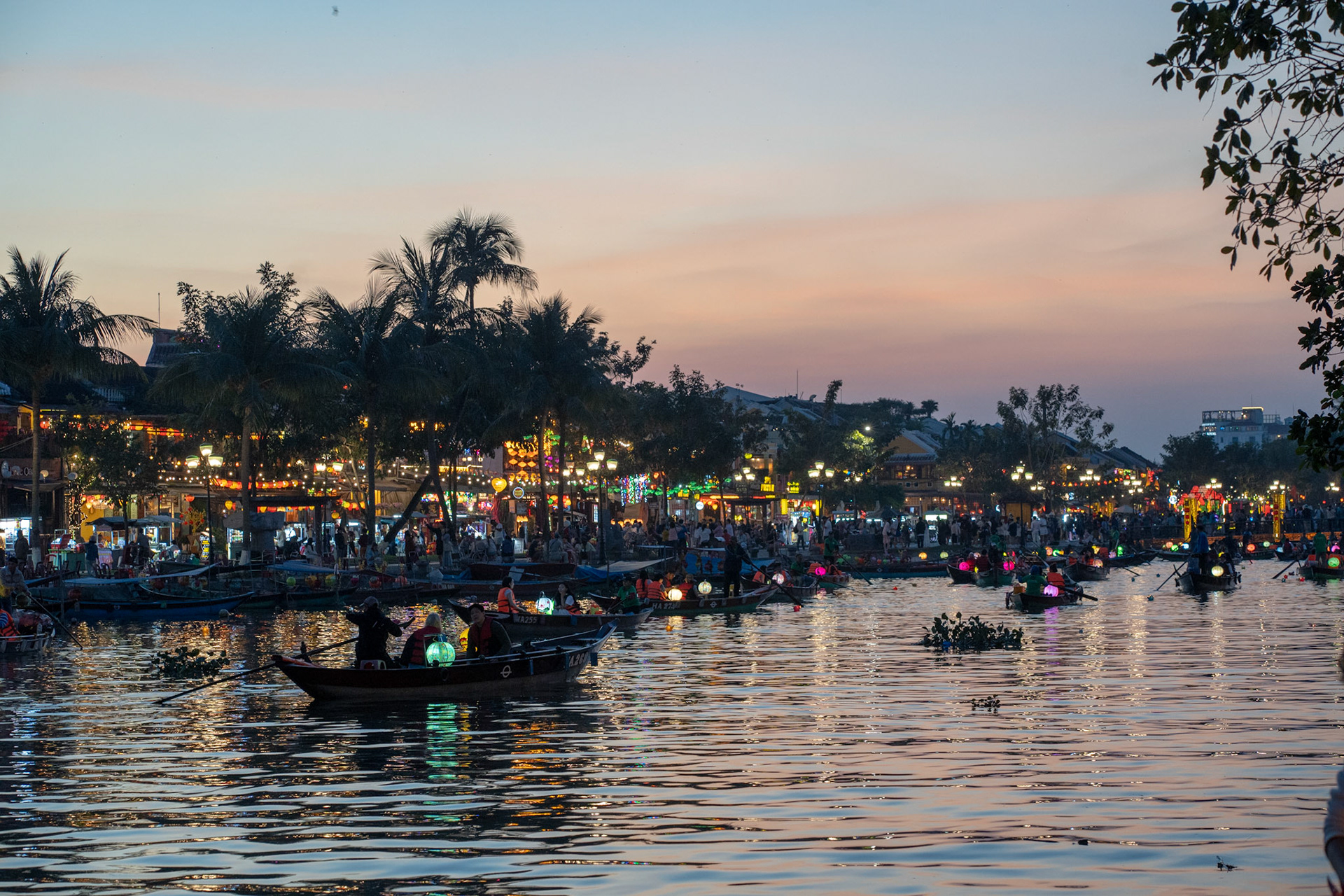
The lanterns are genuinely worth seeing, and the atmosphere is part of what makes Hoi An special. For photography though, expect crowds, and expect to be shooting a scene many other people are also photographing at the same time. It's a different kind of shot to the ones above, more about atmosphere and colour than the quieter, observational images this site is about.
It changes with the seasons
None of this is fixed to one time of year. Hoi An shifts through the seasons, from the wetter months with their own light and atmosphere, to the drier stretches with clearer skies and different daily rhythms. There's always something worth photographing here, whatever time of year you visit, it's just a matter of knowing what to look for and when.
Follow the light, not a checklist
The best approach in Hoi An isn't a fixed list of spots at fixed times, it's staying loose enough to follow whatever's happening. A shaft of light hitting a doorway, a vendor setting up, a group of kids on their way to school, none of which shows up on a schedule, and it's usually gone by the time you'd plan to be there. Walking without a rigid route, letting the light and the moment decide where you go next, is what actually produces the images worth keeping. It's a harder habit to build on your own, especially if you don't know the streets or don't yet trust your eye to spot it in time.
The real images are usually outside the Old Town's borders
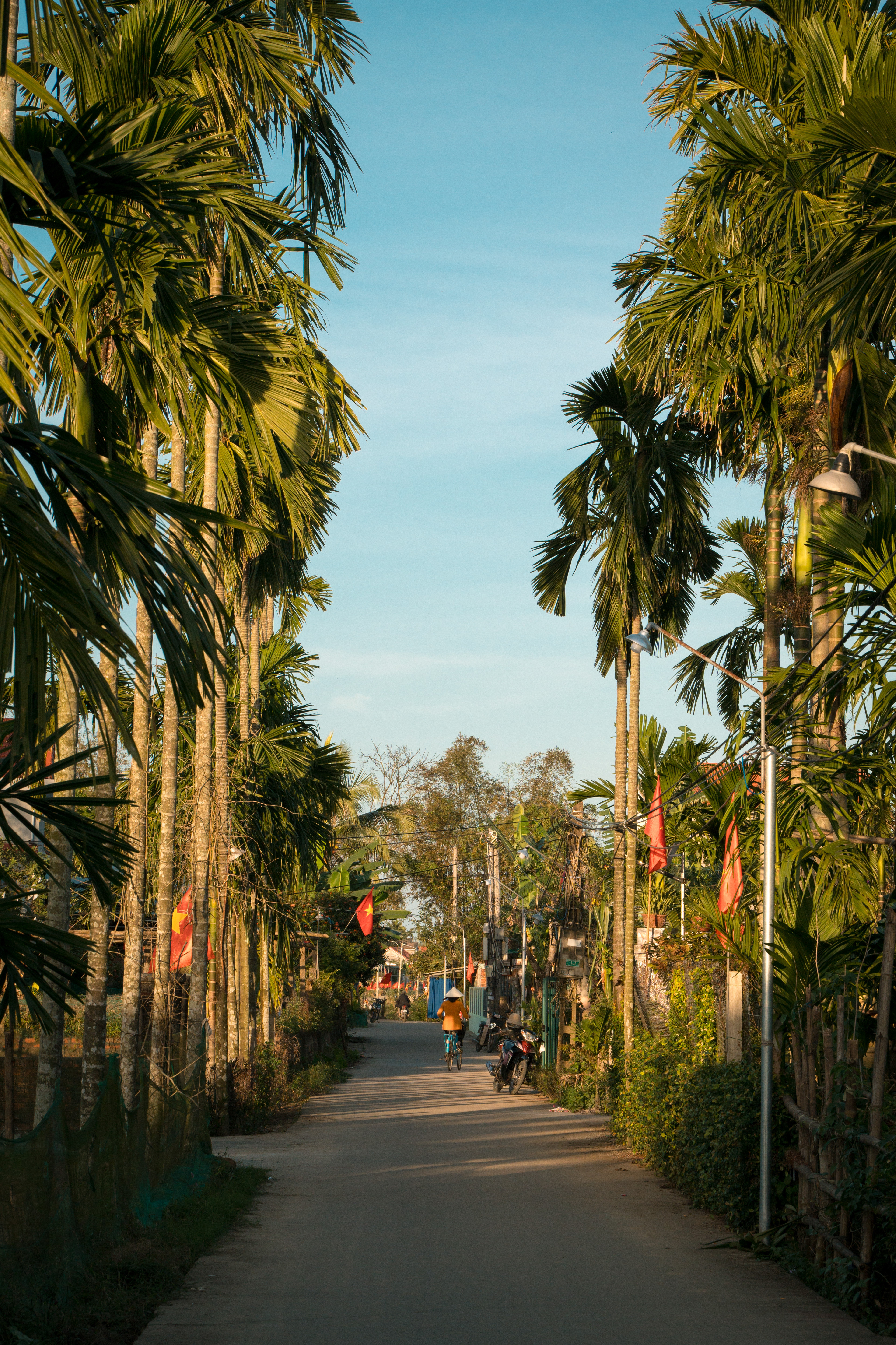
The Old Town is the obvious draw, and it's worth photographing well, but some of the strongest images come from stepping outside it entirely, the rice fields, the fishing villages, the backroads and communities that most visitors never see. That's the difference between a photograph of Hoi An and a photograph that actually shows you something about how people here live.
That's exactly what my Hoi An photo tours and workshops are built around, walking without a fixed itinerary, following the light and whatever's genuinely happening, in and beyond the Old Town. It's a route into that real side of the region, timed and guided so you're in the right place when the light and the life of the place actually line up, and free enough to follow it when something better appears.
Before Sunrise on the Fishing Beaches of Hoi An
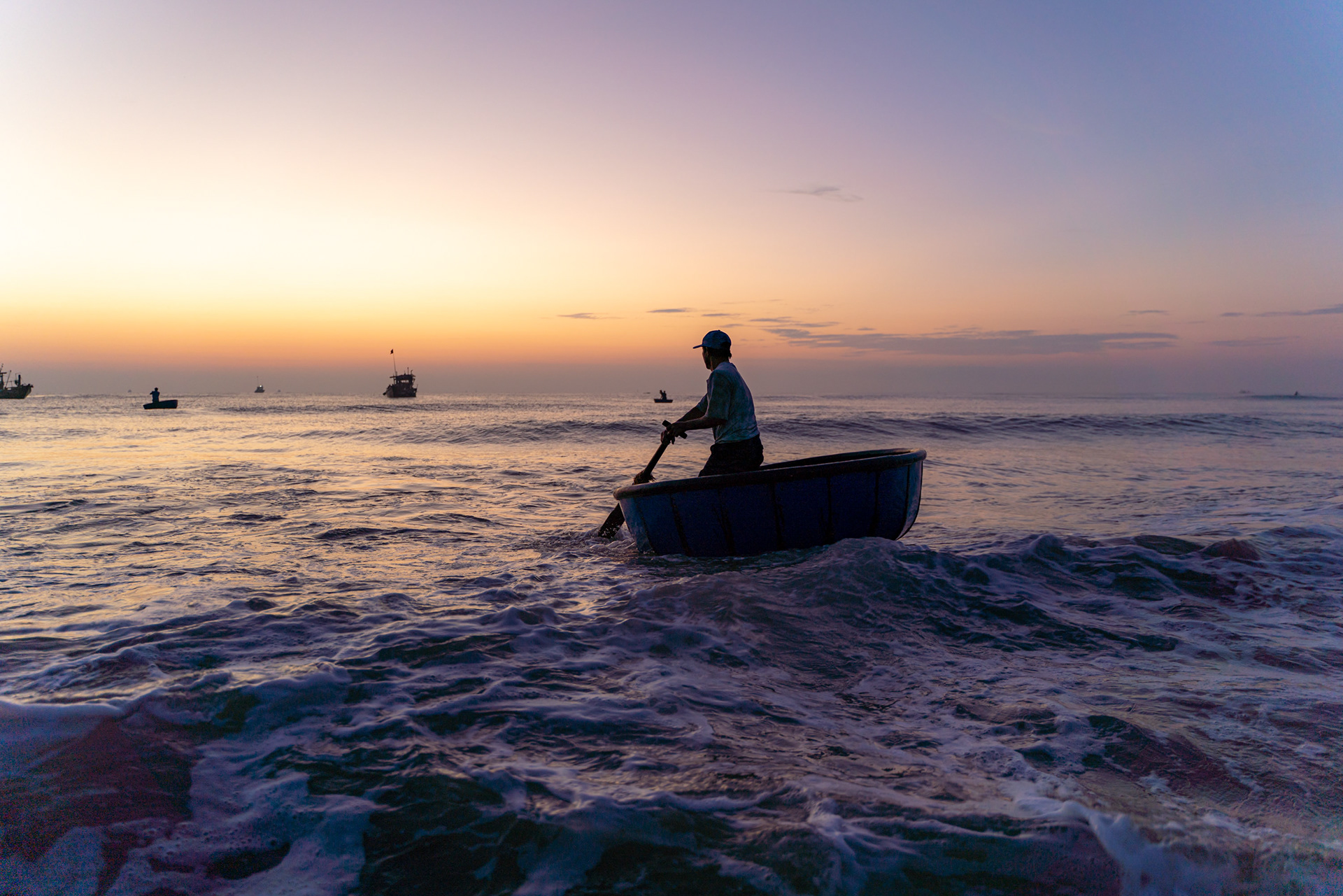
Vietnamese fishermen pushing a blue coracle boat through crashing waves at sunrise near Hoi An.

Fishermen haul a coracle through heavy surf at sunrise on the coast near Hoi An.
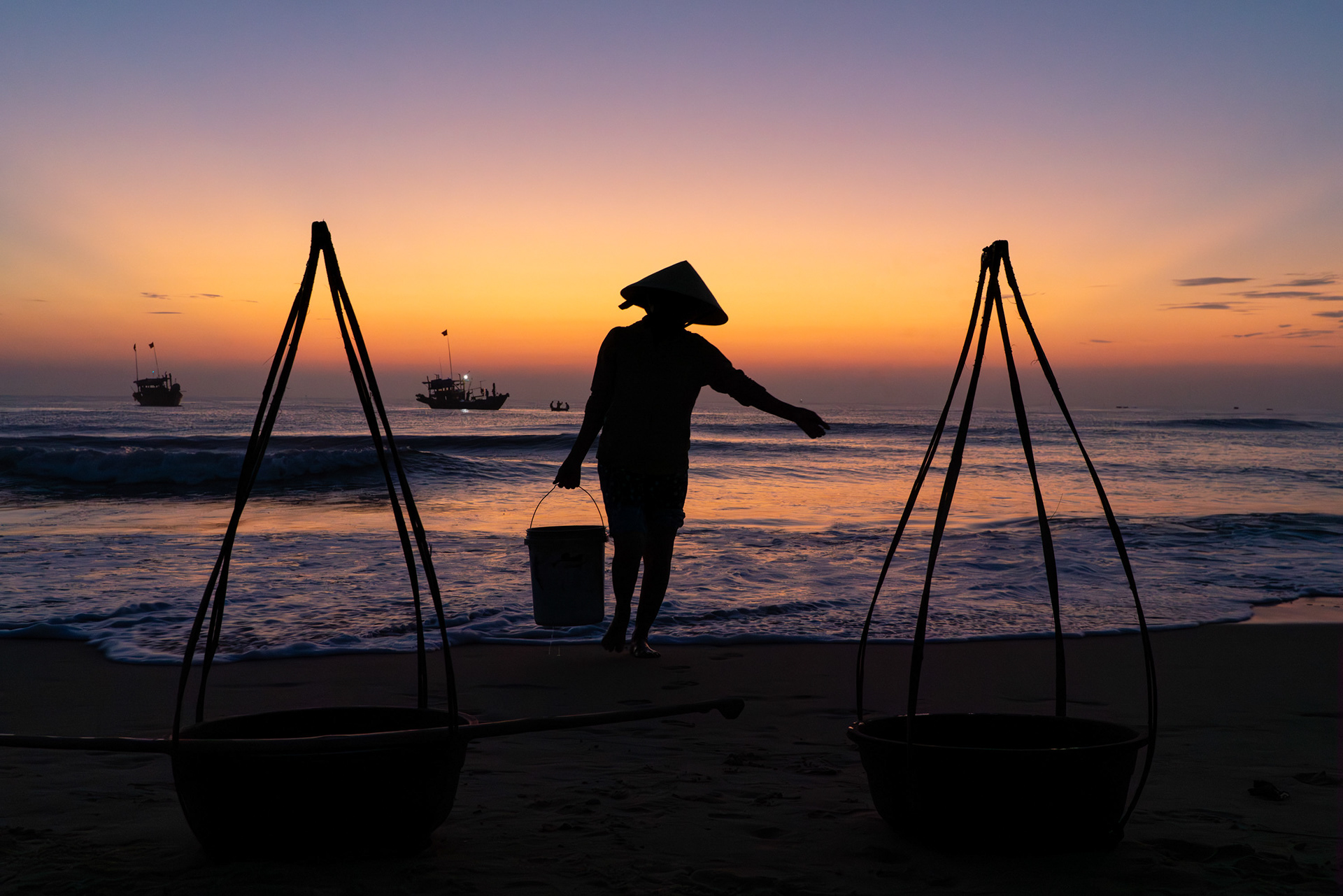
The alarm goes off at 0300. By 0330, scooters laden with empty crates and baskets are already moving through the dark lanes and sandy passages towards Hoi An's coast. Long before the old town wakes, the beaches along the shore are coming alive with engines, headtorches, waves, and fishermen preparing to return to land. Thankfully, coffee is readily available almost anywhere.
This is a different side of Hoi An and its surrounding region. This is away from the lanterns and Instagram cafés. Away from the topless tourists and coconut boat rides. Here, the coastline wakes early. Boats return through rough surf while buyers wait eagerly in the water, ready to pull the morning catch onto the sand.
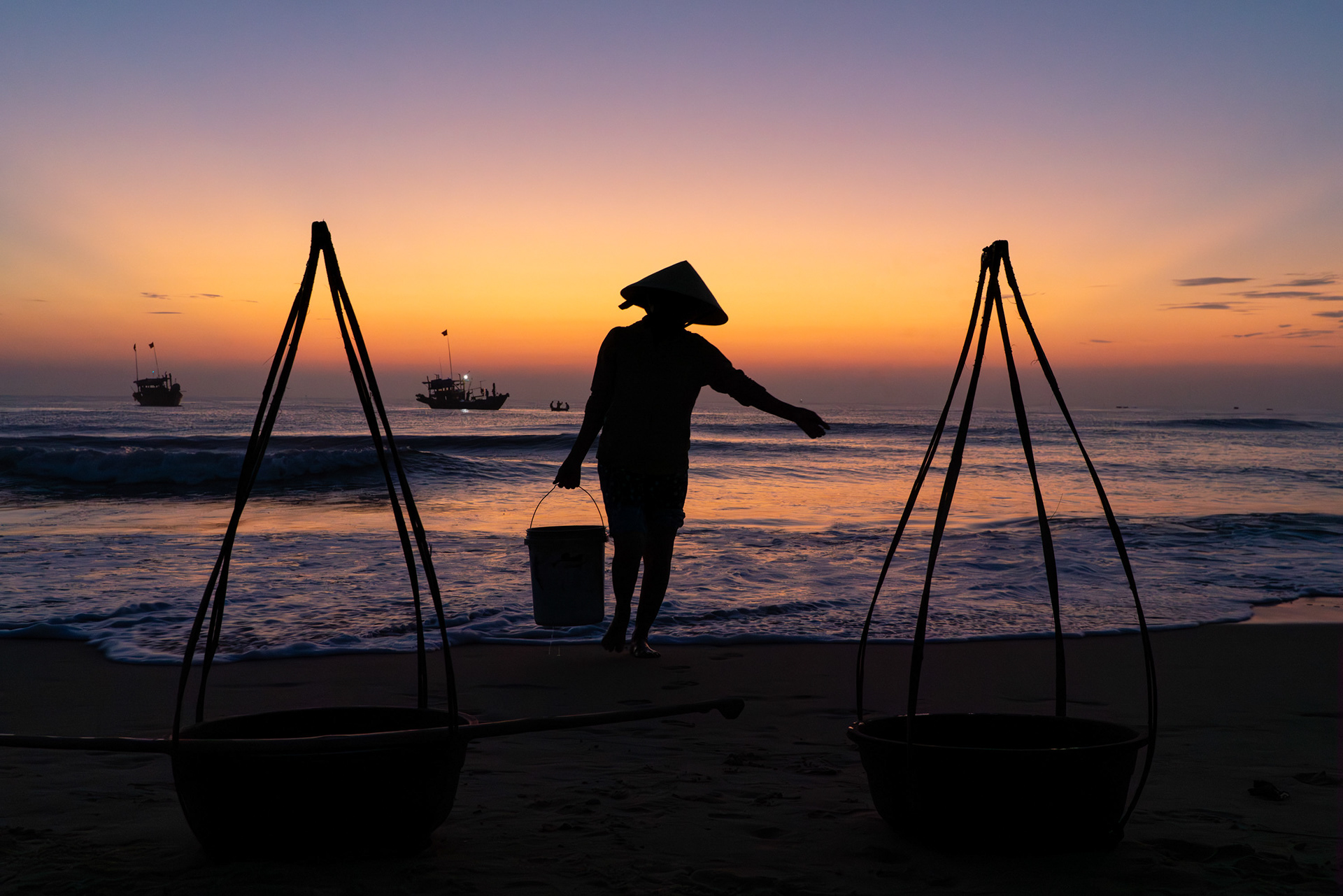
Silhouetted woman carrying buckets on a beach at sunrise with fishing boats offshore near Hoi An, Vietnam.

A woman walks the shoreline before sunrise as fishing boats wait offshore near Hoi An.

The sea controls everything here. Timing is everything. Boats wait beyond the breakwaters before committing smaller coracles to the shore. Crews and buyers alike jump into the surf to steady them, rushing the catch in baskets and sacks to the shoreline.
For photographers, that unpredictability and almost constant action is what makes mornings like these so rewarding. No two mornings are the same, and the conditions change minute by minute as the light slowly illuminates the sky before it reaches the shoreline.
People wading through waves to collect fish from returning boats near Hoi An.

Buyers rush into the water as boats arrive with the morning catch.
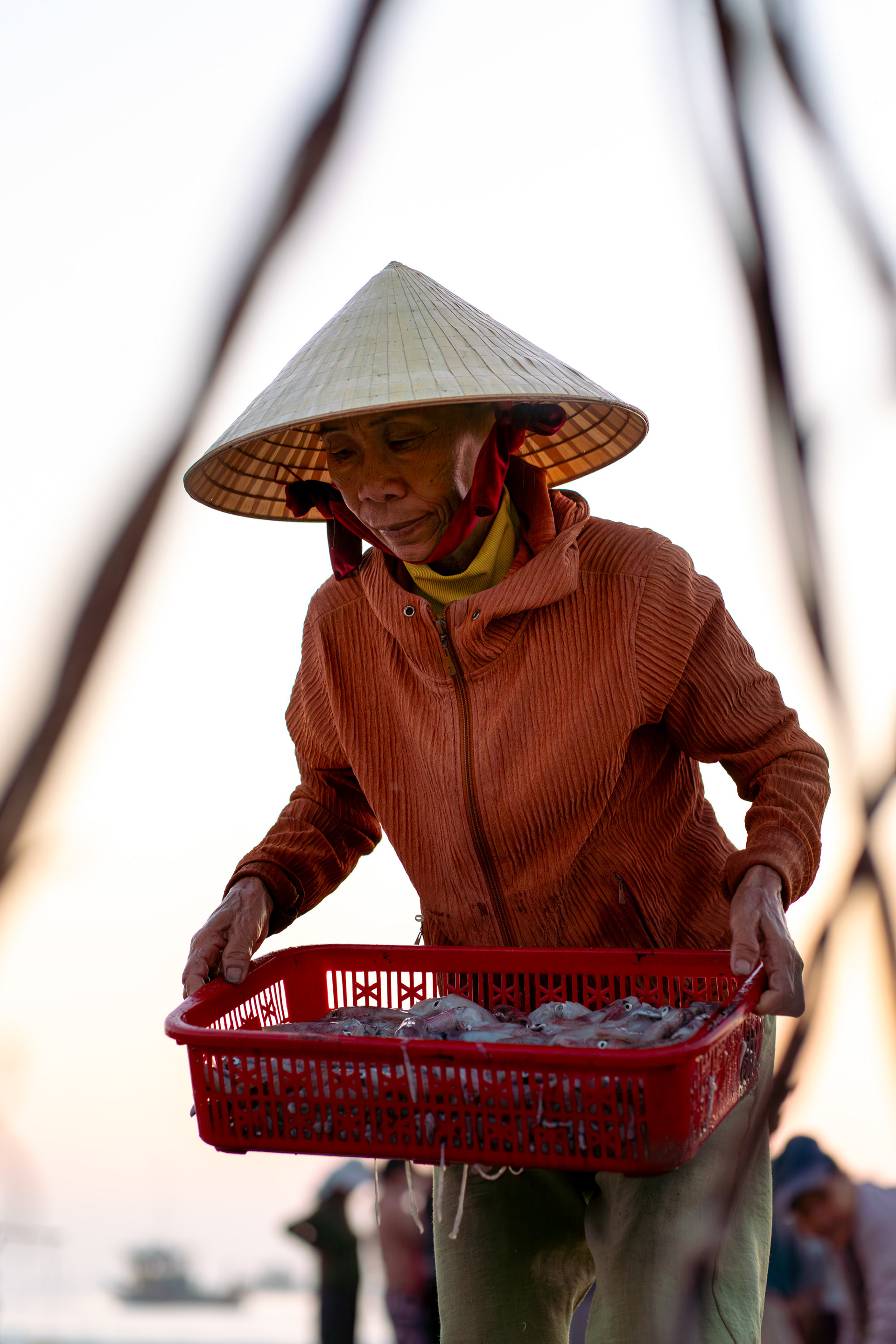
Vietnamese woman carrying baskets on a beach near Hoi An at sunrise.

A woman carries the squid she has purchased to sell at market.

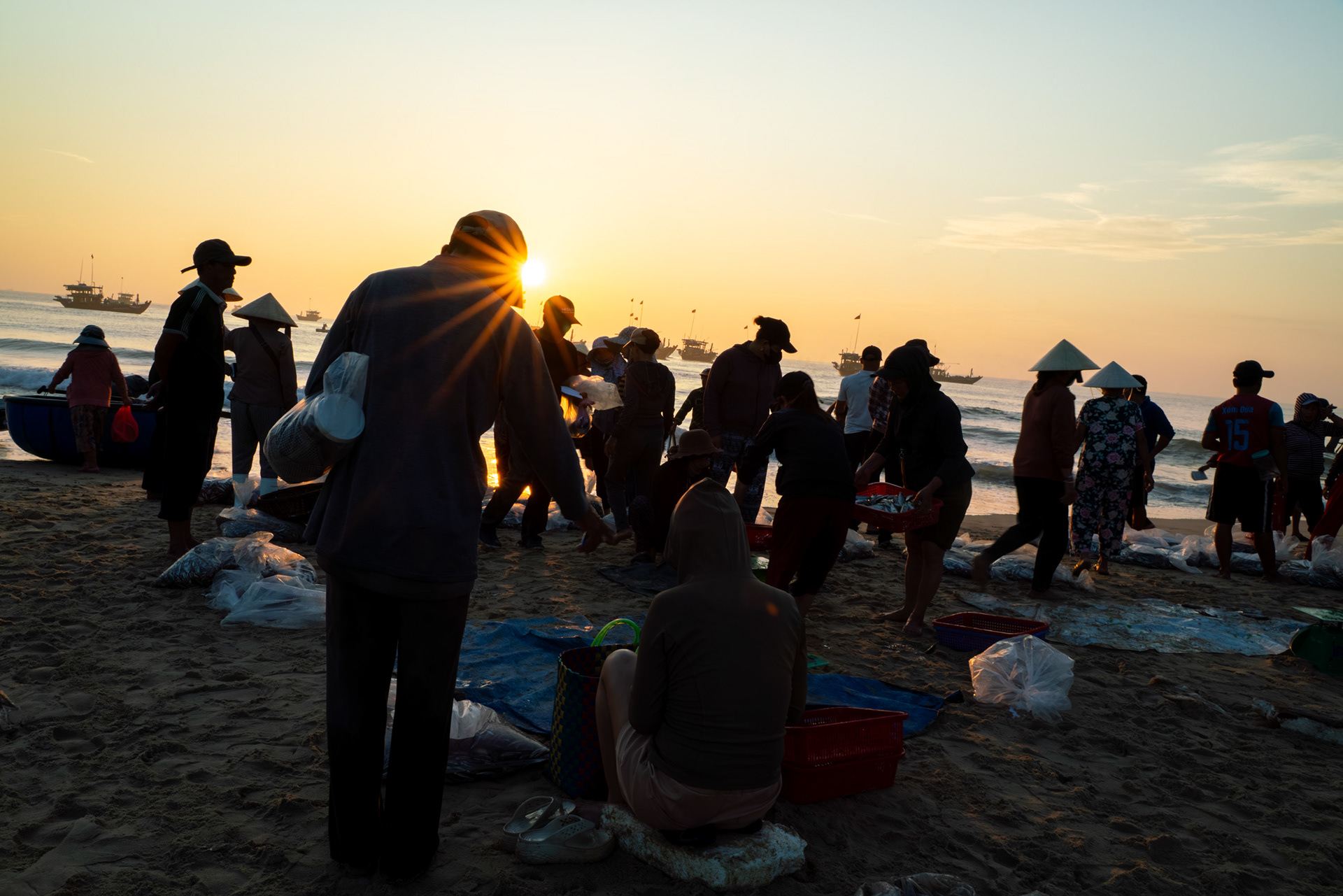
As daylight reaches the beach, the shoreline becomes a temporary seafood market. People crowd round and jostle for position as impromptu auctions take place. Fish are sorted directly beside the water while traders move quickly between boats, baskets, and waiting scooters.

There is no performance to it. People are working against time, tide, and heat before the sun fully rises.
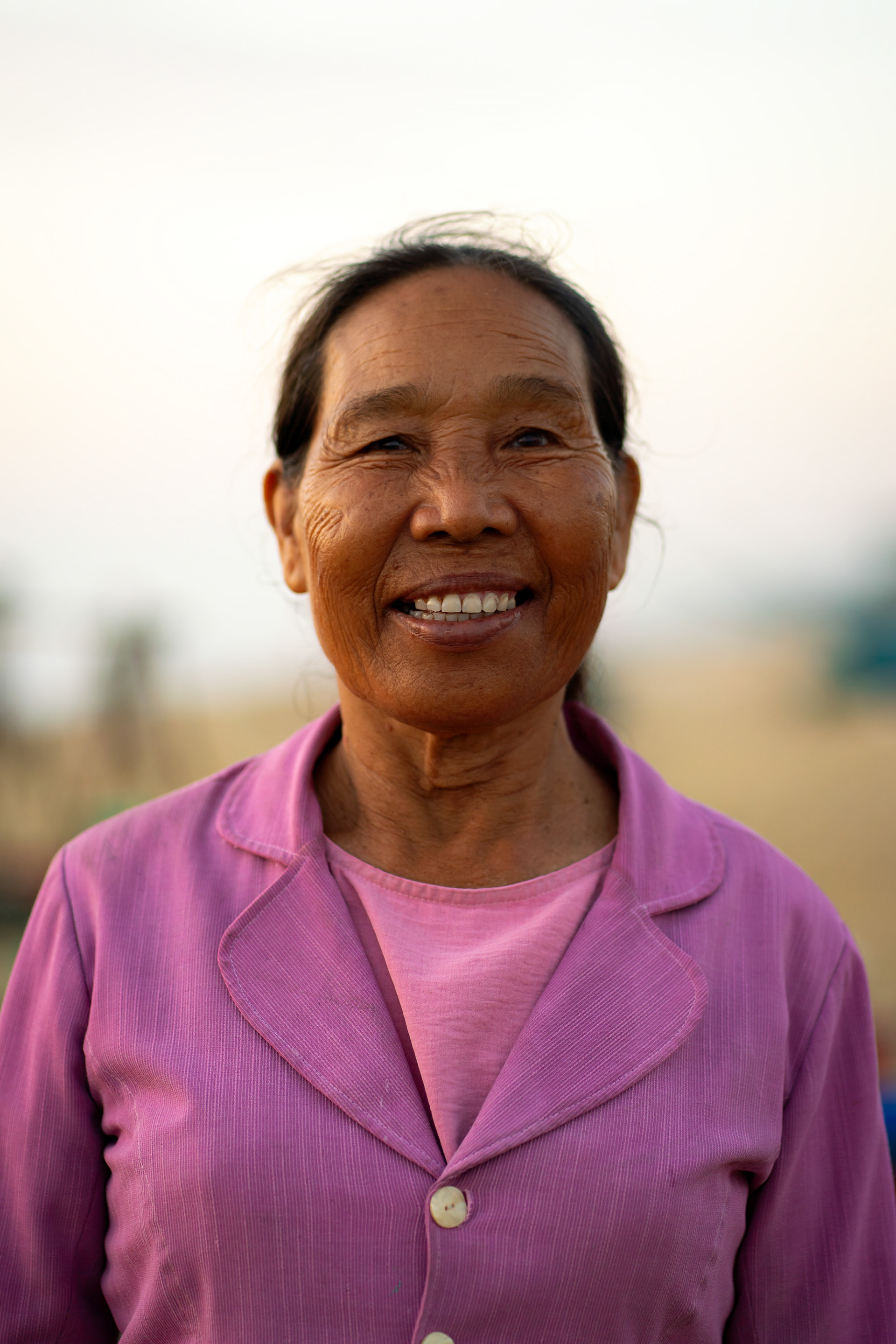
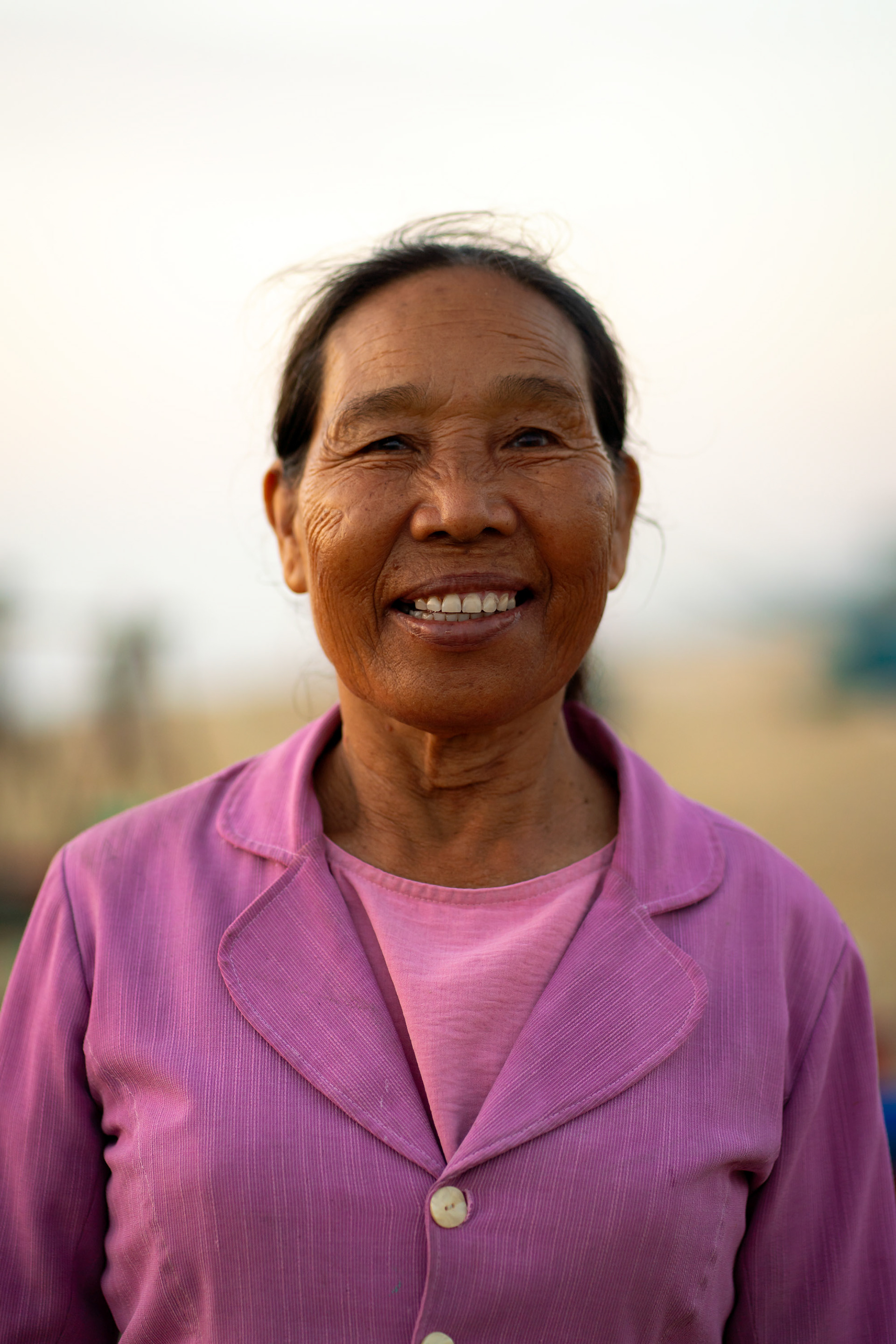
Portrait of a Vietnamese woman during the morning fish market near Hoi An.

A lady pauses briefly for a portrait in the morning glow.

A woman awaiting the fresh catch or for her family members to return from their night at sea.
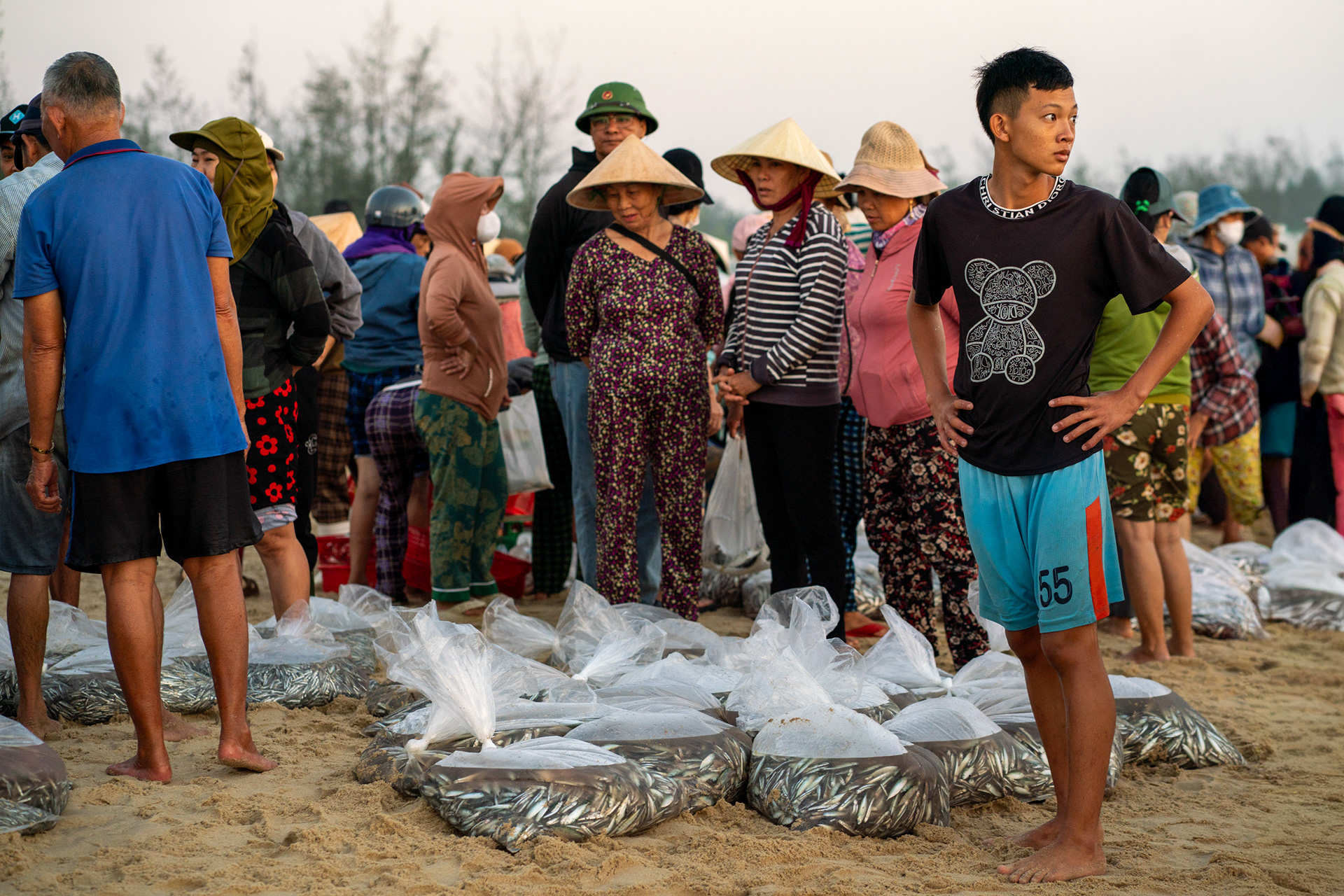
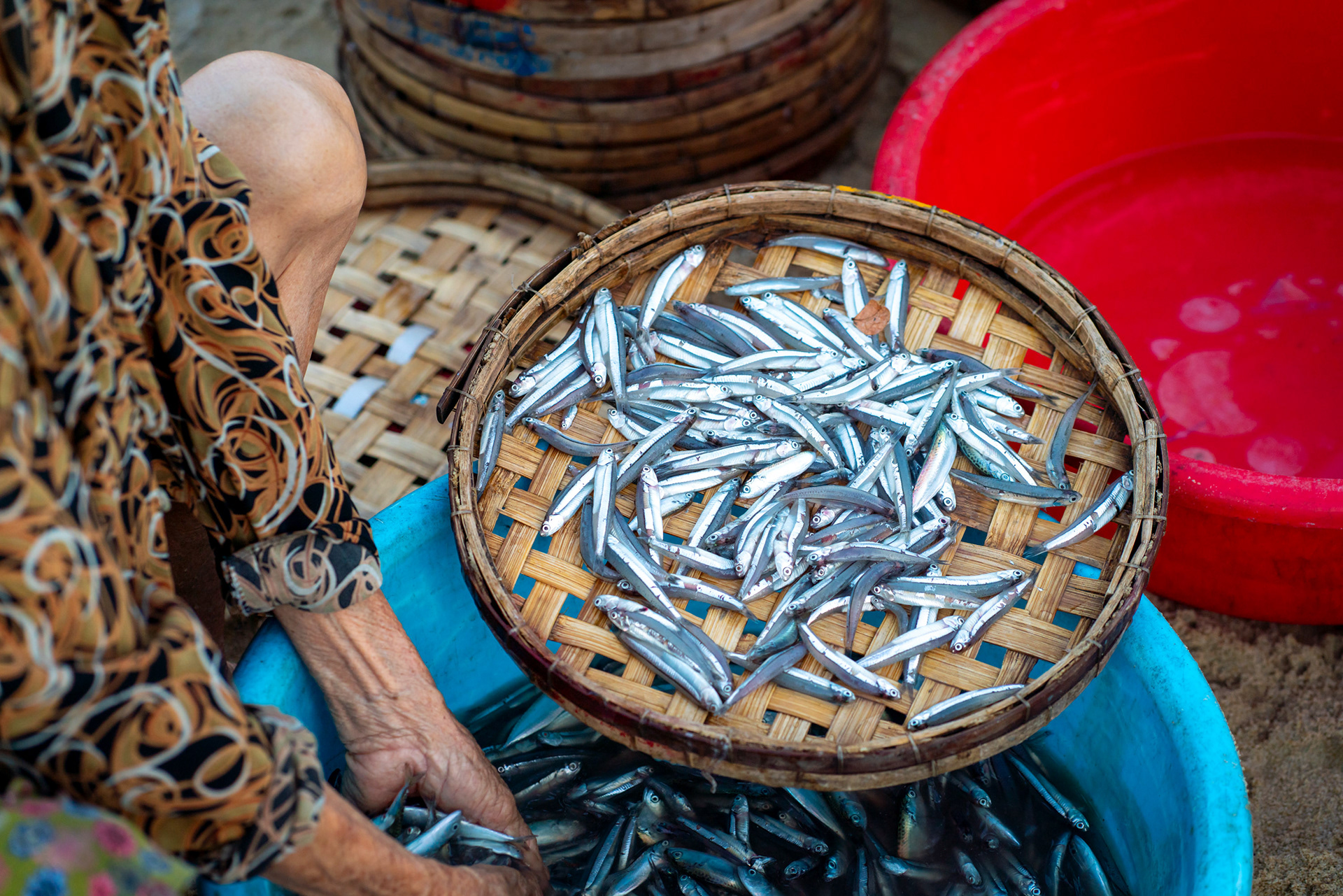
Sardines brought ashore

Heavy bags of sardines are dragged to auction

Wholesale sardines being prepared for transport on wooden baskets to market

One of the things I enjoy most about photographing these mornings is how connected everything feels to the people around you and the sea itself. The surf shapes the pace of the market, the movement of the boats, and the rhythm of everyone working along the shoreline. Just be ready to get into the waves. It helps. I promise.
Further along the coast and river mouths, the morning continues as catches are unloaded and sorted before heading inland towards local markets and restaurants across the region.
Workers unloading fresh fish beside the river near Hoi An, Vietnam.

Fresh fish unloaded beside the water after sunrise in Quang Nam Province.

Vietnamese fisherman carrying fish crates on a dock in coastal Quang Nam.

A fisherman carries the morning catch across the dock after returning from sea.
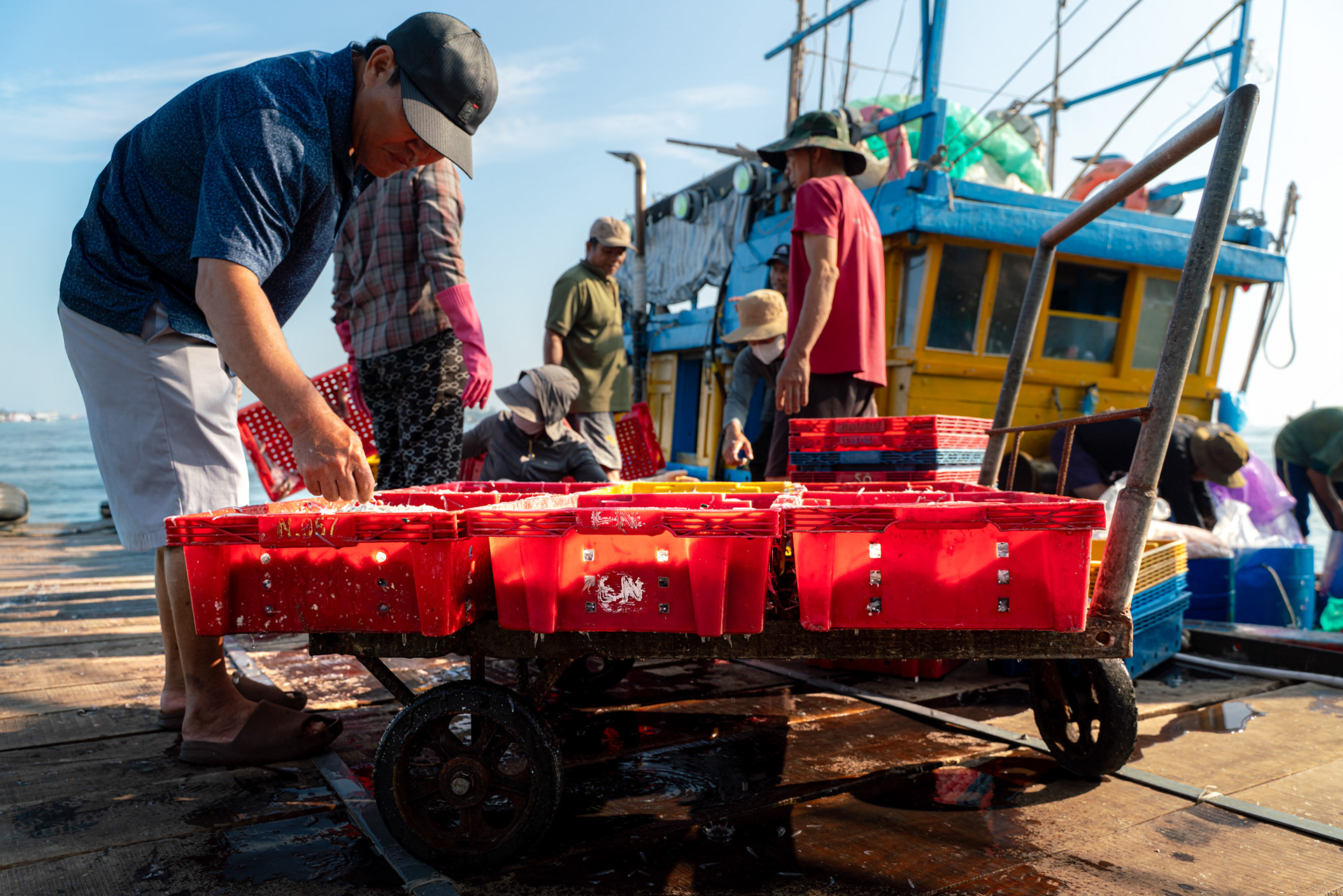
Workers sorting fresh fish in red crates near Hoi An harbour.

Sorting the catch along the harbour after the boats return.
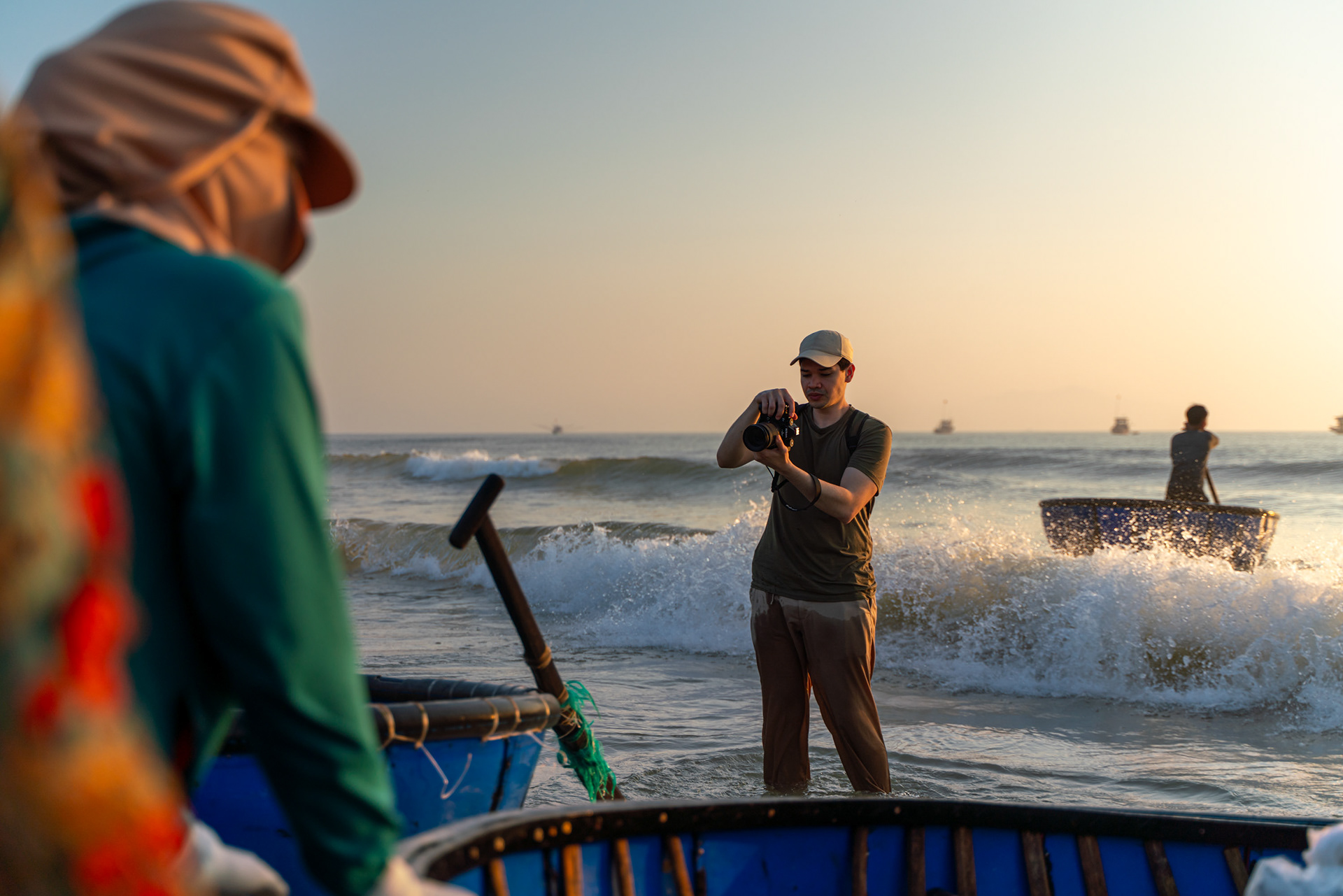
For visitors wanting to experience a more local side of Hoi An, these fishing beaches offer something entirely different from the old town. The mornings are raw, fast-moving, and shaped entirely by offshore conditions.
My photography tours focus on documenting these scenes naturally. Working with individuals or small groups allows us to move quietly through the beach scenes, integrating with the locals, and adapting to whatever conditions the sea brings that morning.
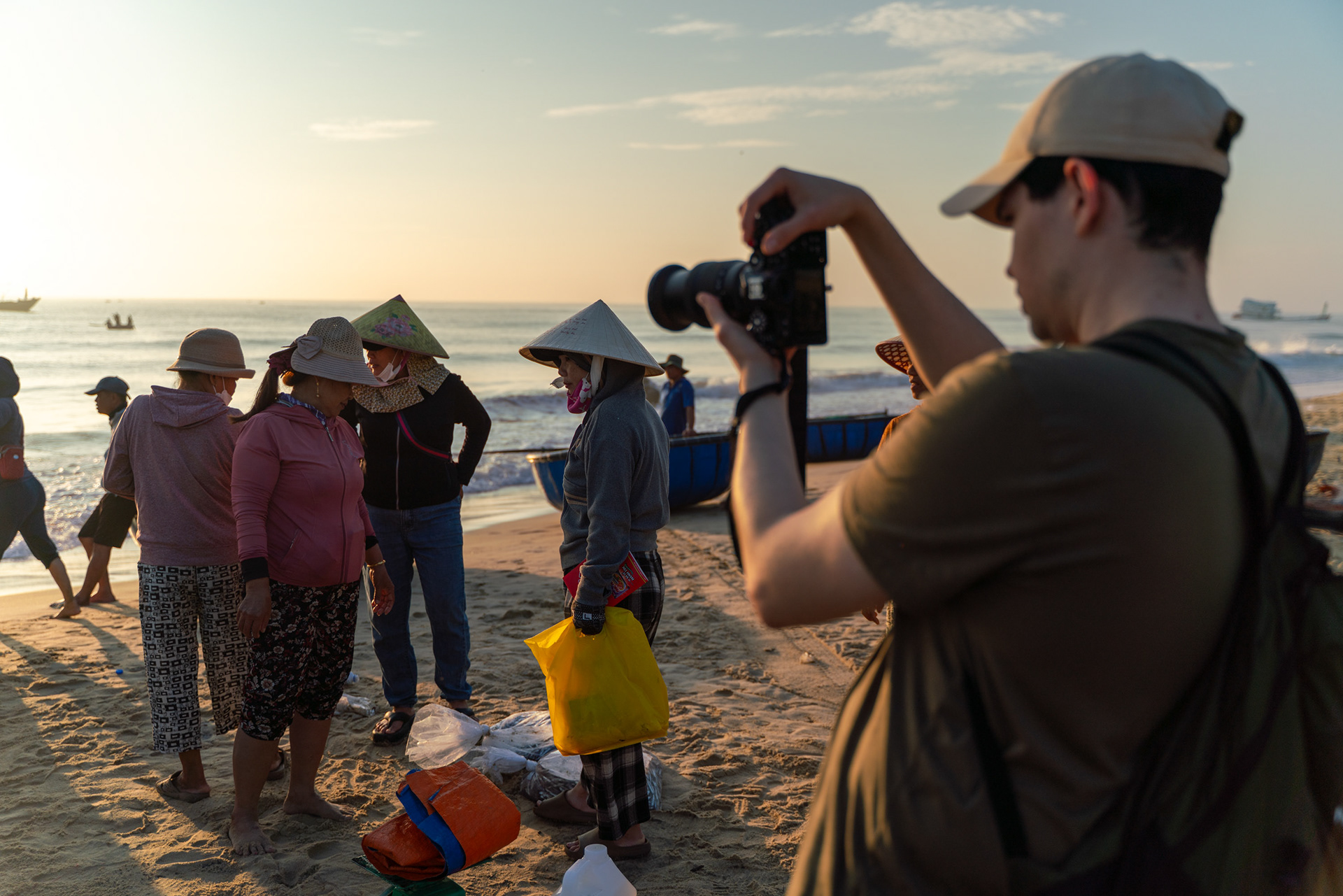
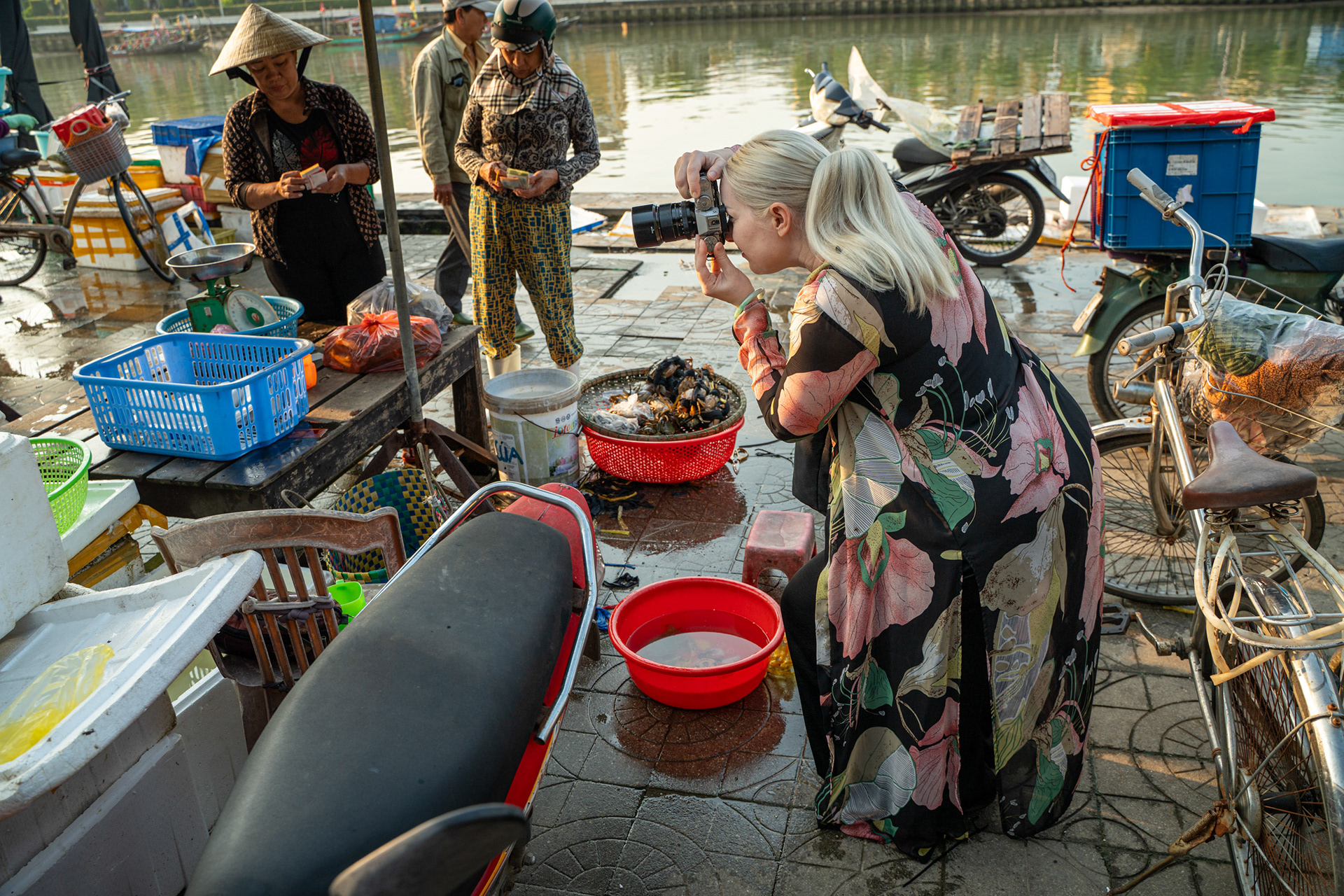
Photographer documenting fishermen and fish markets near Hoi An, Vietnam.

Photographing the morning fishing market on the coast outside Hoi An.
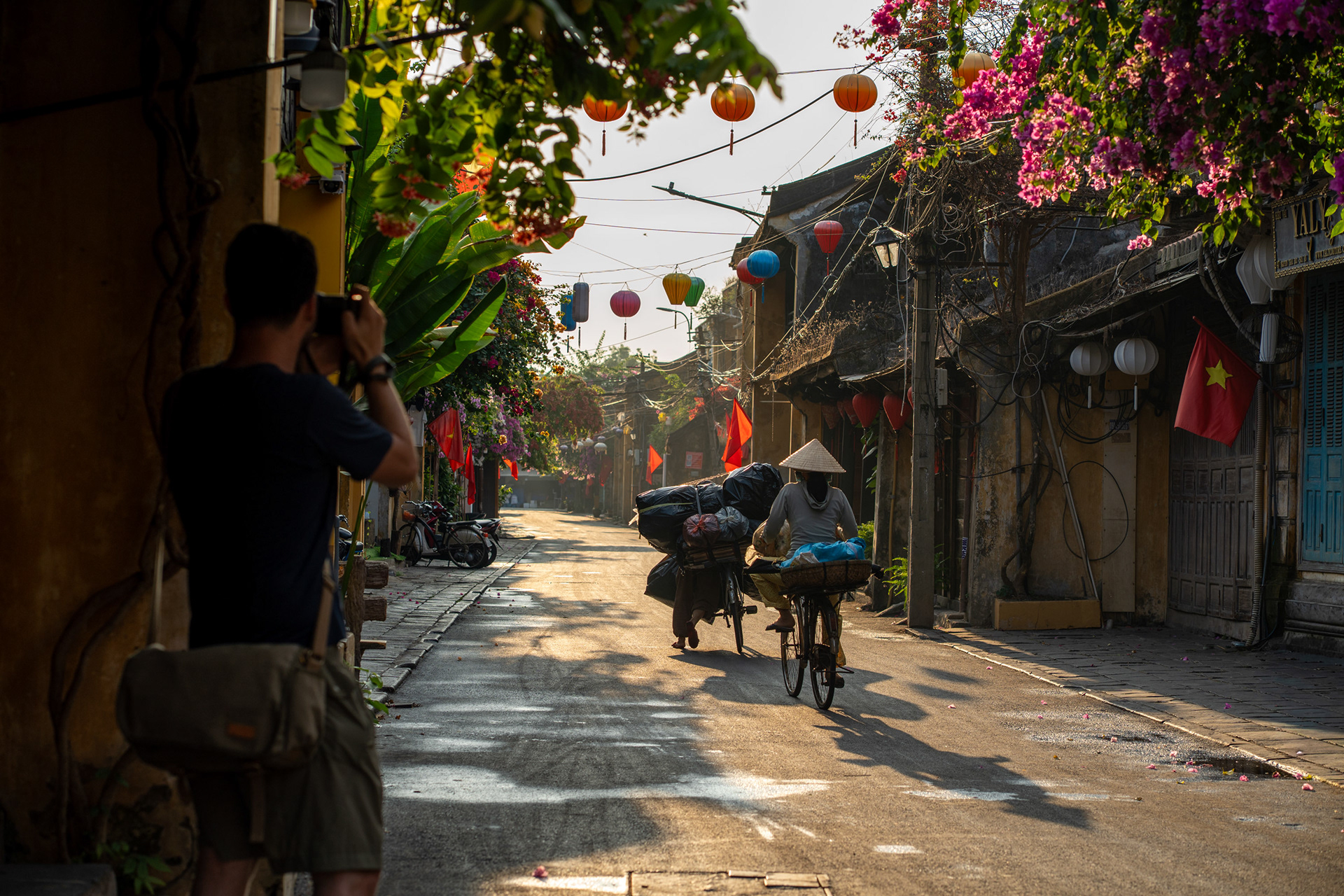
By 0700, most of it is already fading away. The crowds thin out, scooters leave carrying the morning catch inland, and the beaches slowly return to quiet. Out beyond the surf, the remaining boats continue working to the sound of opening beer cans and the end of a long and unpredictable night on the sea.
“This was easily one of the highlights of our whole Vietnam trip. I wanted an experience to take photos that did not feel touristy and more authentic, and this was exactly that.
Pete is extremely welcoming and talented. He took me to all the best photo spots and helped me navigate the busy markets and streets to get incredible shots.
Along the way, we had several lovely organic interactions with local vendors and patrons that made me feel truly integrated with the environment and created great memories that I’ll take home.
He balanced guidance with autonomy to help me get excellent photos that I loved. Would recommend to anyone hoping for an authentic and safe experience to get great photos.”
— Oscar, US
A Two-Day Tour in and Around Hoi An - Diving Deeper
Hoi An before the heat and the crowds is a different place. The streets are still, lanterns hanging, and the odd motorbike passing through the frame.
We started early. No plan beyond walking and seeing what was there.
Running it over two days changed things from the start. There’s no pressure to squeeze it all in. You can let it breathe a bit.

Early light in the Old Town

Light doing most of the work
In between customers
Taking a moment before stepping in
After a while, it slows down. Not the market, just how you see it.
You stop chasing everything and start noticing what matters. Where the light falls, how people move through it, when to step forward and when to leave it alone.
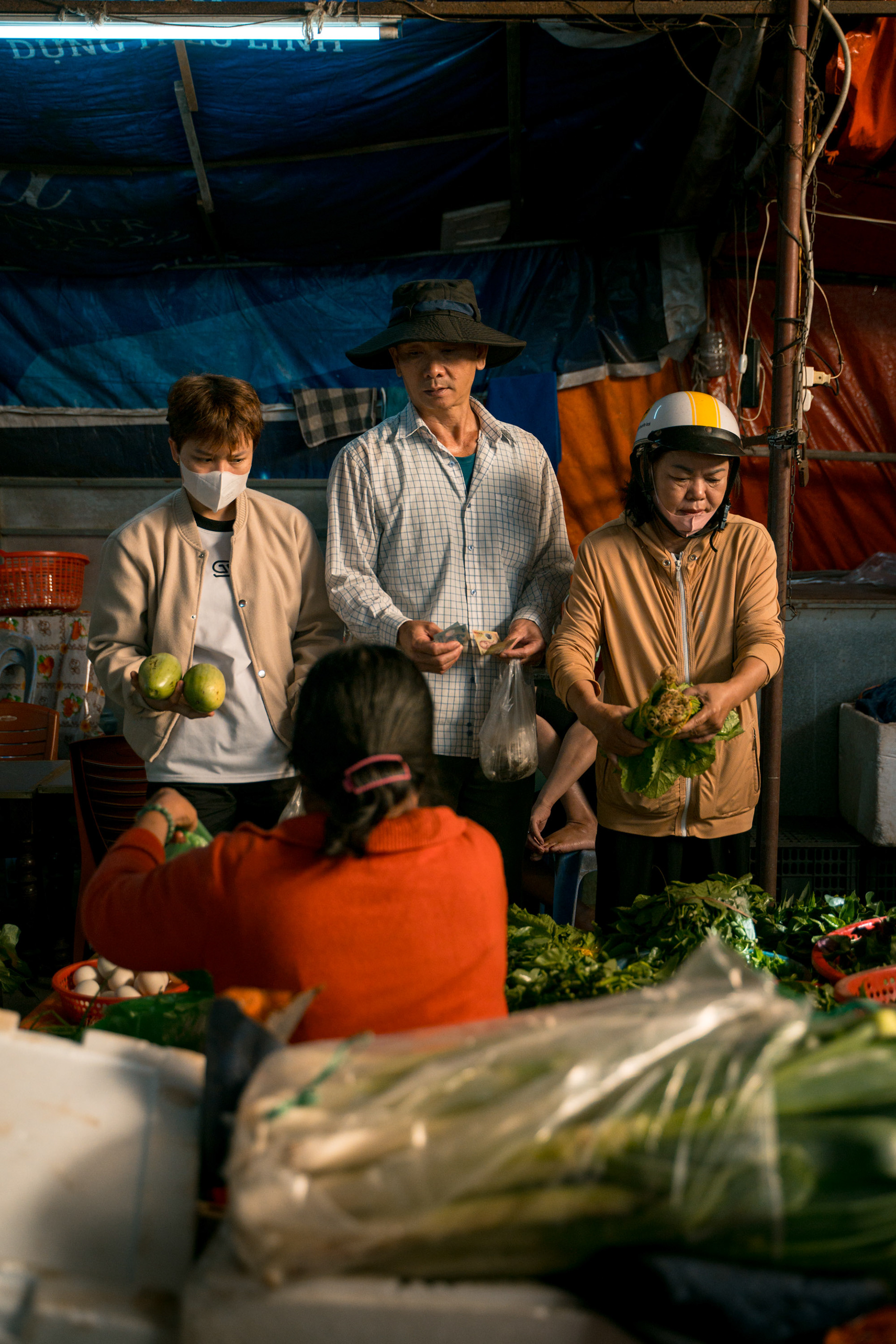
The market comes at you quickly. Noise, colour, movement in every direction. Easy to get lost in it, or stuck and unsure where to start.
So we didn’t rush it. Stayed in one place, watched what repeated, waited for things to settle into something you could actually work with.
Details you’d normally walk past
Faces that stay with you
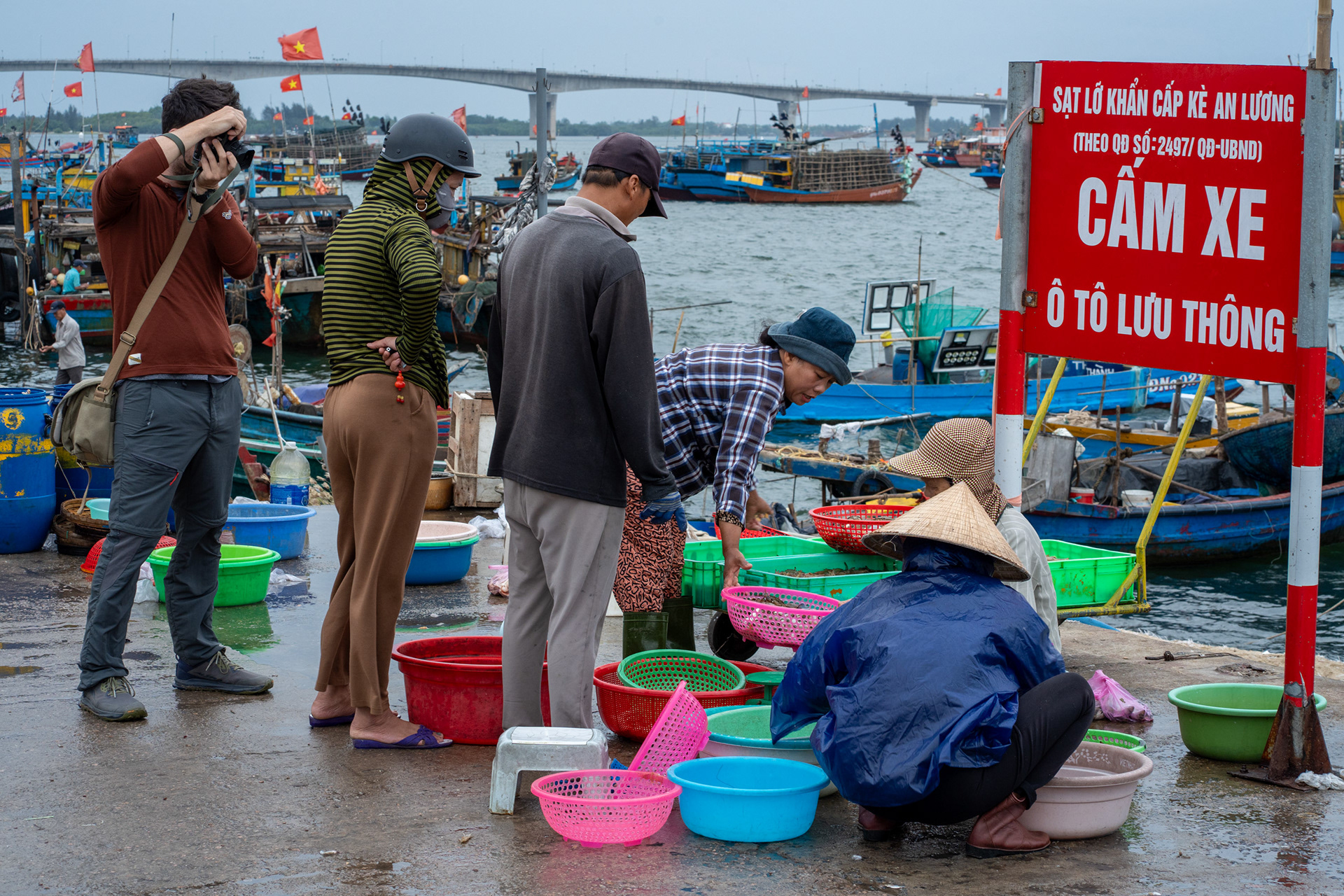
“I could not have been luckier than meeting Pete and doing the tour with him. He took me to places I would never have found alone and helped me understand how to use the light, improve my compositions, and interact more naturally with local people.”
Once you leave the Old Town, it opens up quickly. Fewer people, more space, less distraction.
Down by the river, everything runs on repetition. Wash, sort, carry, repeat. You don’t need to move much. Just stay put and watch it happen.

Morning along the river

A successful morning in the market

You get more from staying longer. People get used to you being there. Things feel less staged, more natural.
That’s where most of the better frames come from.

Same motion, over and over

Hands, texture, small movements
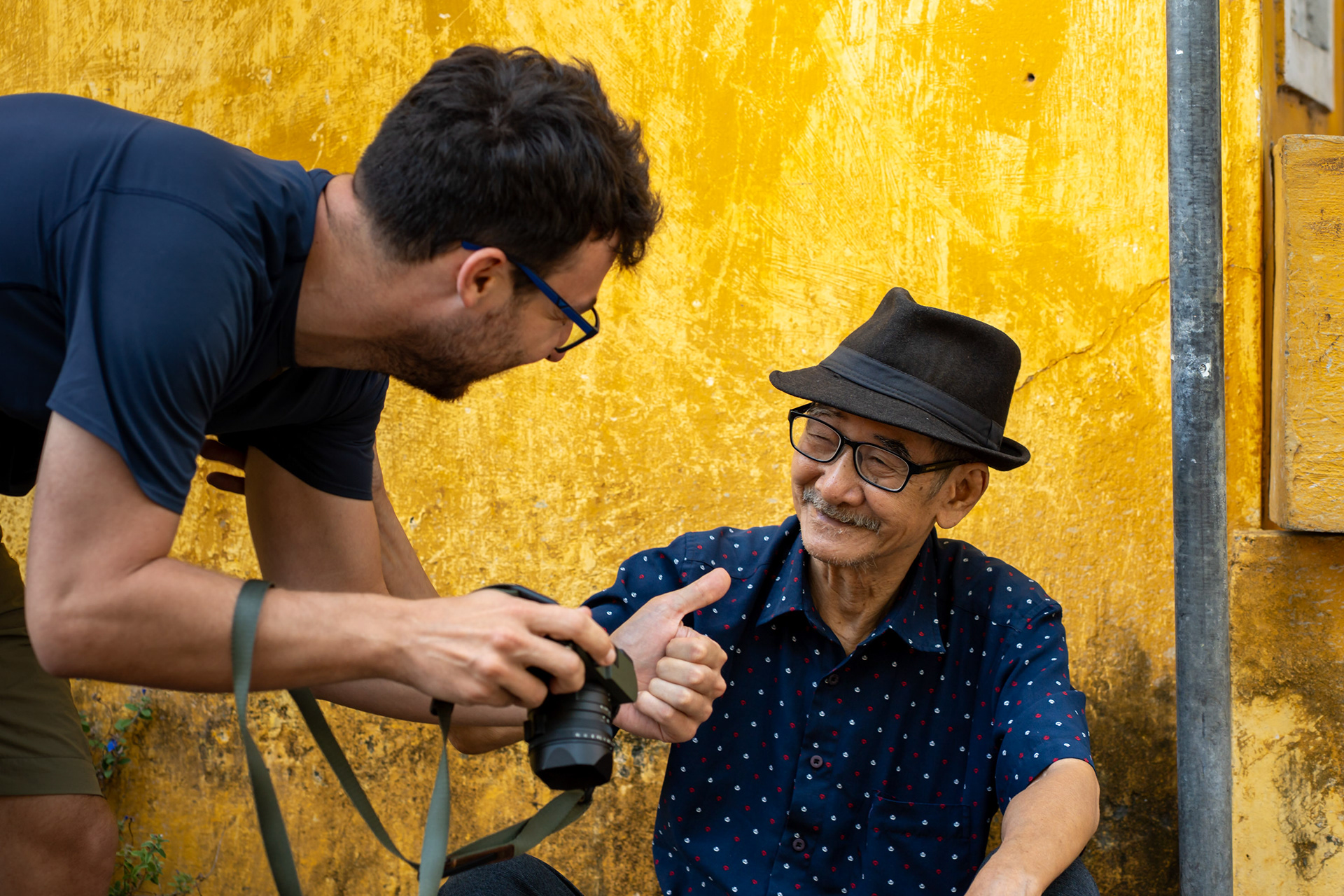
Give it time and the distance drops. A look, a gesture, a bit of conversation.
Nothing forced. Just a moment that wouldn’t happen if you were in and out in twenty minutes.

Showing the happy customer his portrait

Friendly welcomes along the shorline

Moving between places, there’s always something. A crossing, a wall catching the light, someone passing through at the right time.
You don’t really plan for those. You just stay present and aware.

Let the light and action direct you

We finished the second day over seafood, going through the photos properly for the first time.
Two days makes a difference. You’re not just collecting images. You start to understand the place a bit, and your way of working in it.
“I couldn’t have been luckier than meeting Pete and doing the tour with him. He was a great photography guide, helping me understand light, improve my compositions, and interact more naturally with local people.
Beyond the Old Town, we visited farmers and fishermen while they were working - experiences that would have been difficult to discover independently.
The two-day structure made a real difference, and I’d highly recommend the tour. I’m already looking forward to the next time I’m back.”
If you’re heading to Hoi An and want to spend a bit more time with it, I run small, one-to-one photography tours in and around the town.
No fixed route — just good light, interesting places, and time to work properly.
Harvest Season in Thăng An and Duy Nghĩa, Quảng Nam
These images were taken across Thăng An and Duy Nghĩa, rural areas just outside Hoi An in Quảng Nam Province, Vietnam, during the rice harvest season.
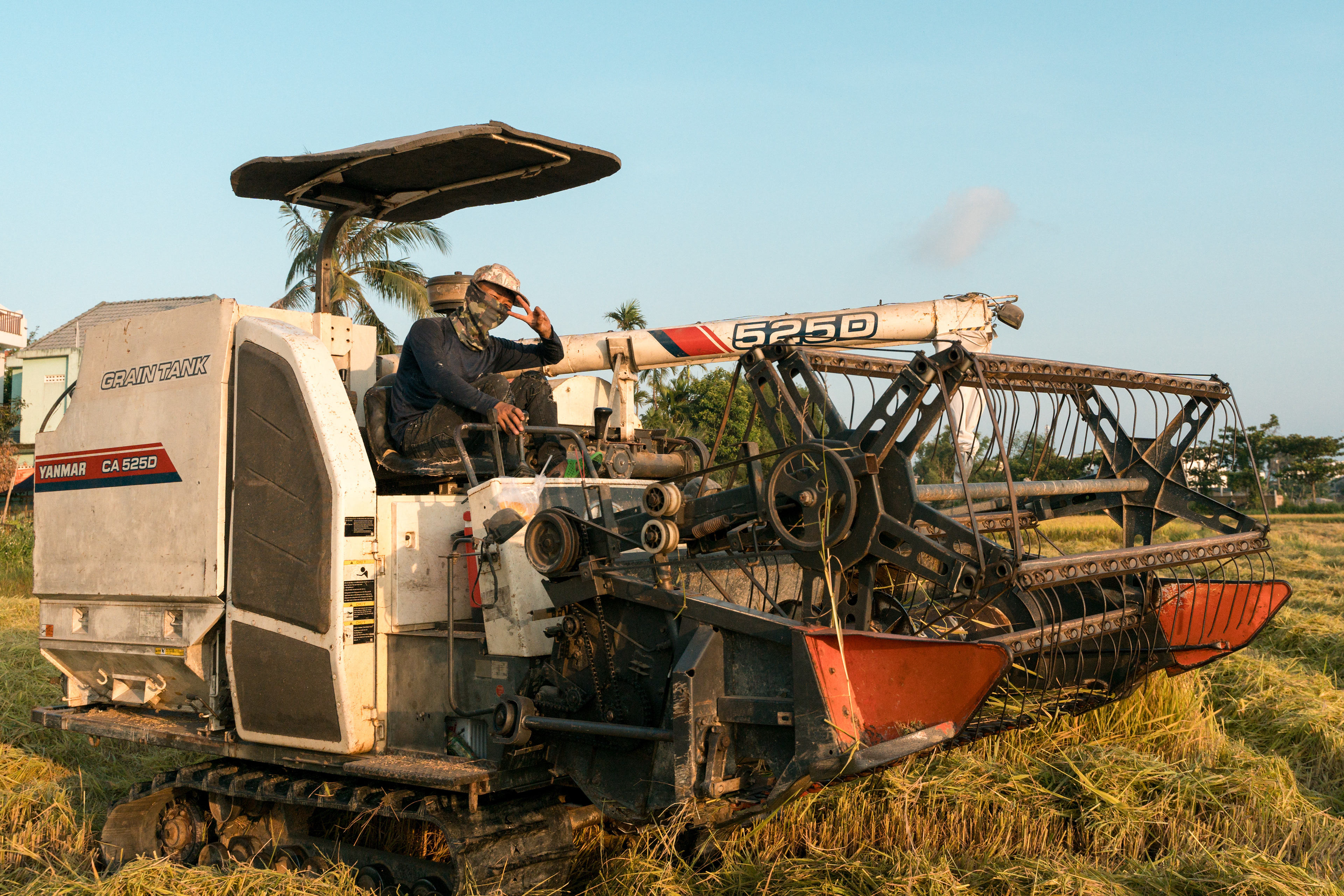
Combine harvester cutting rice in a field in Thăng An near Hoi An, Vietnam

Thăng An, Quảng Nam — rice harvest

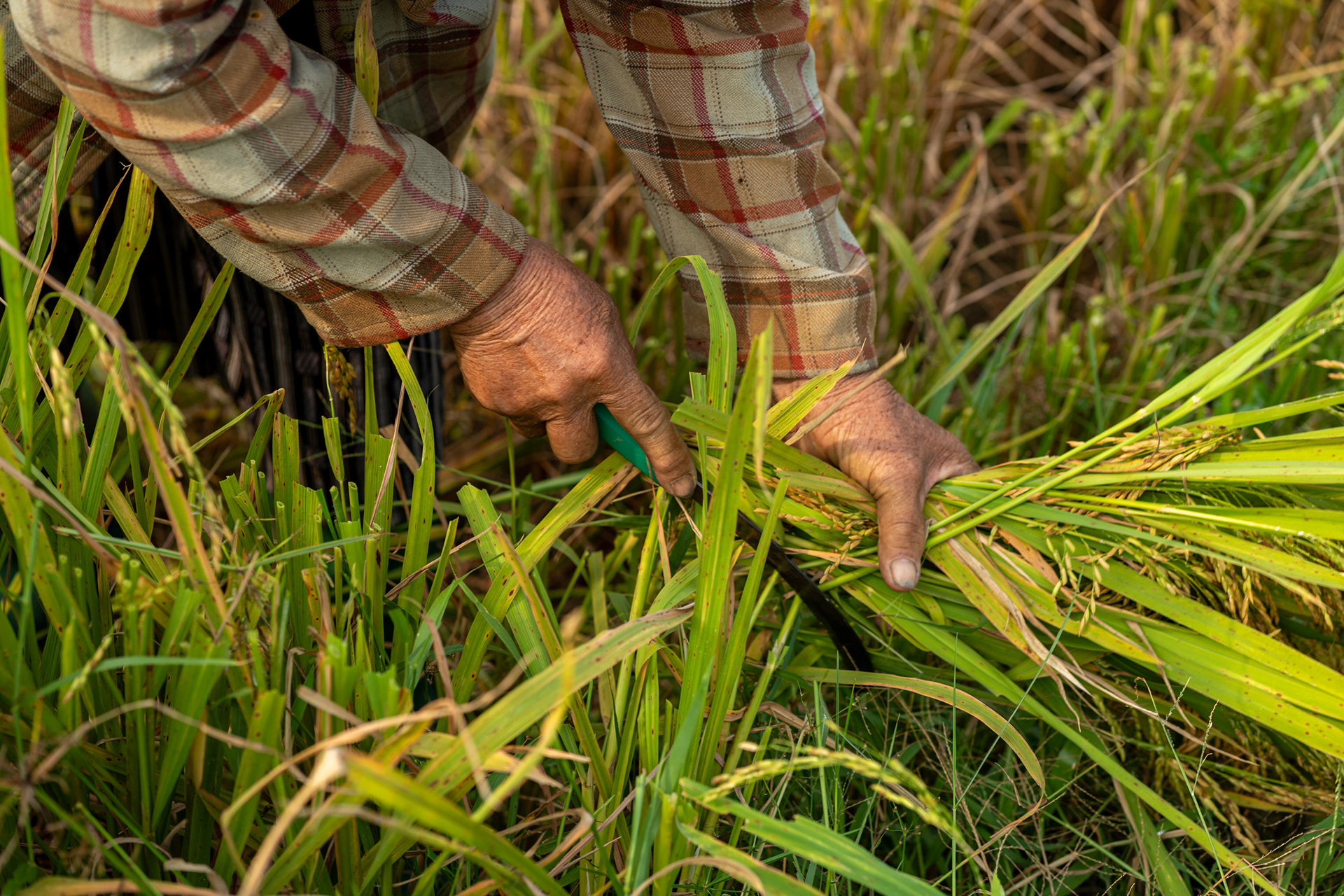
Rice is still cut both by hand and with small machines depending on the field. Once cut, it’s gathered into bundles and stacked before being moved off the land.
Thăng An — hand cutting rice
Thăng An — field work
Duy Nghĩa — rice farmer
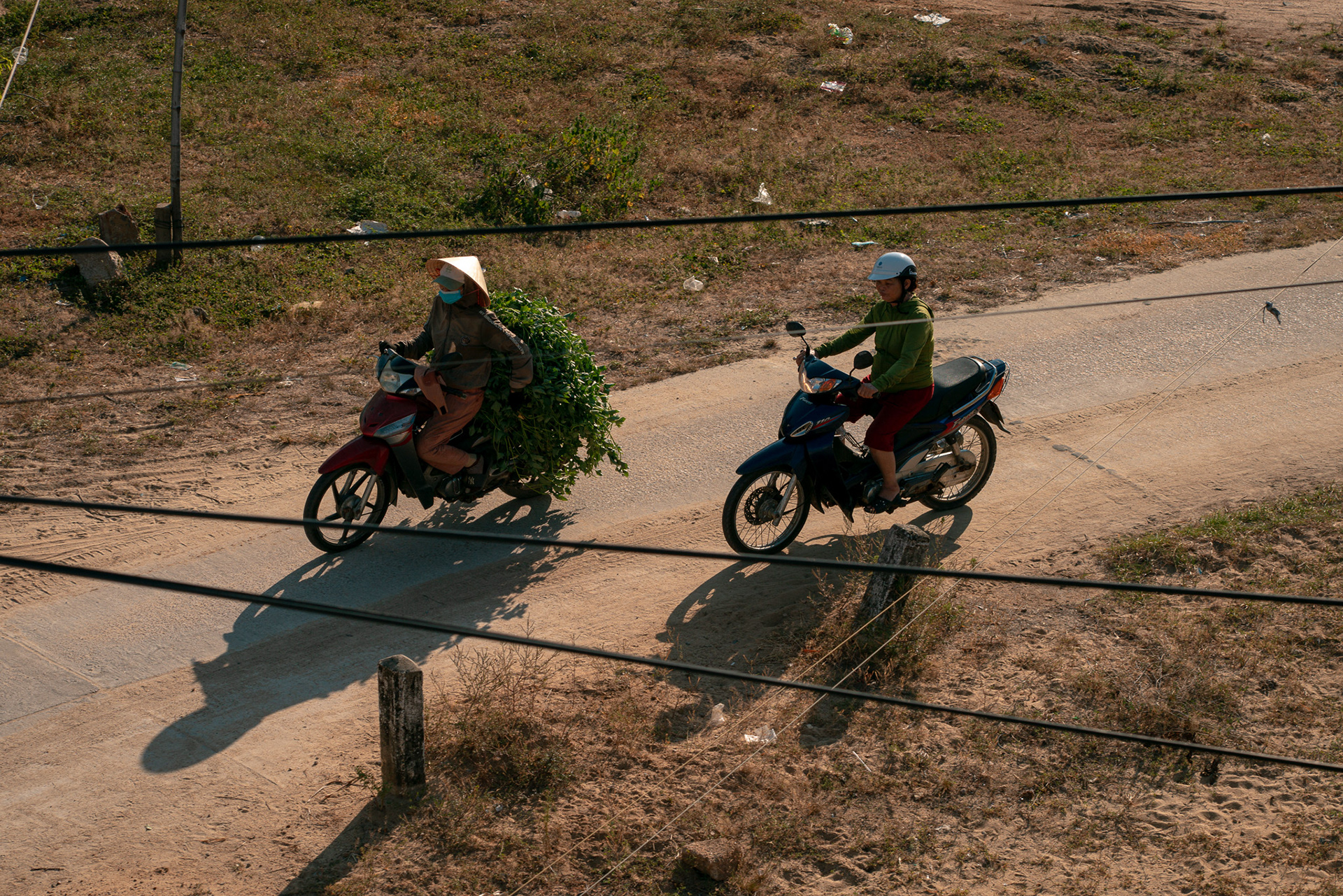
 Motorbike carrying large bundle of harvested hay along rural road in Duy Nghĩa near Hoi An

Duy Nghĩa, Quảng Nam — transporting hay by motorbike
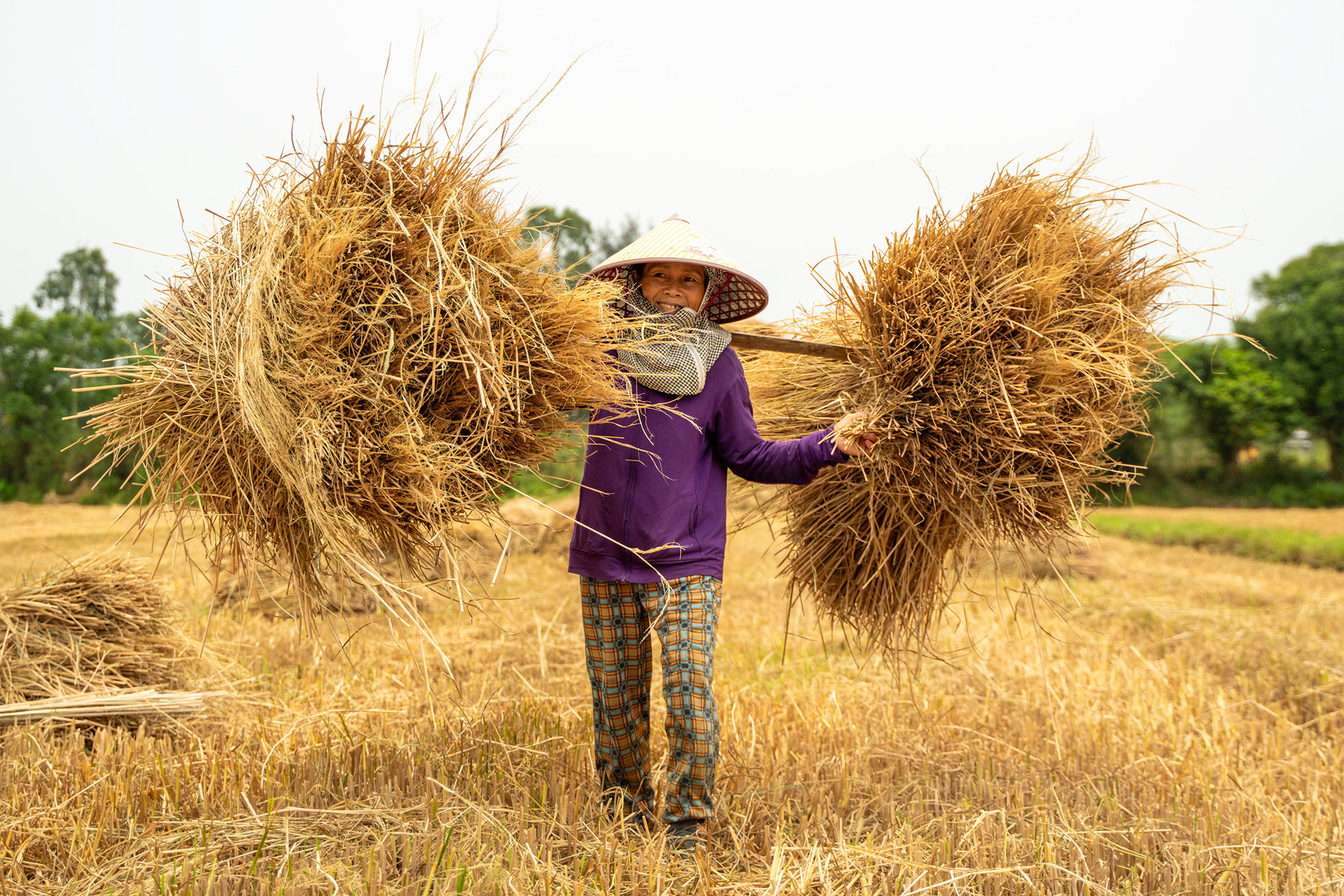
Work is spread out. People move between sections throughout the day, often working alone or in small groups. The pace stays steady, repeating the same movements across different plots.
Farmer carrying bundle of harvested hay over shoulder in Duy Nghĩa near Hoi An, Vietnam

Duy Nghĩa — transporting freshly cut hay

Farmer transporting cut hay along rural road in Duy Nghĩa, Quảng Nam near Hoi An

Duy Nghĩa - preparing to move the cut hay
Most of the work happens through the afternoon. As the light drops, more of the cut rice is cleared, and fewer people remain in the fields.
The harvest sits alongside everything else. Boats move along the river with tools and materials, while homes and small shops continue as normal nearby.
Quảng Nam — river transport
South of Hoi An — working boat
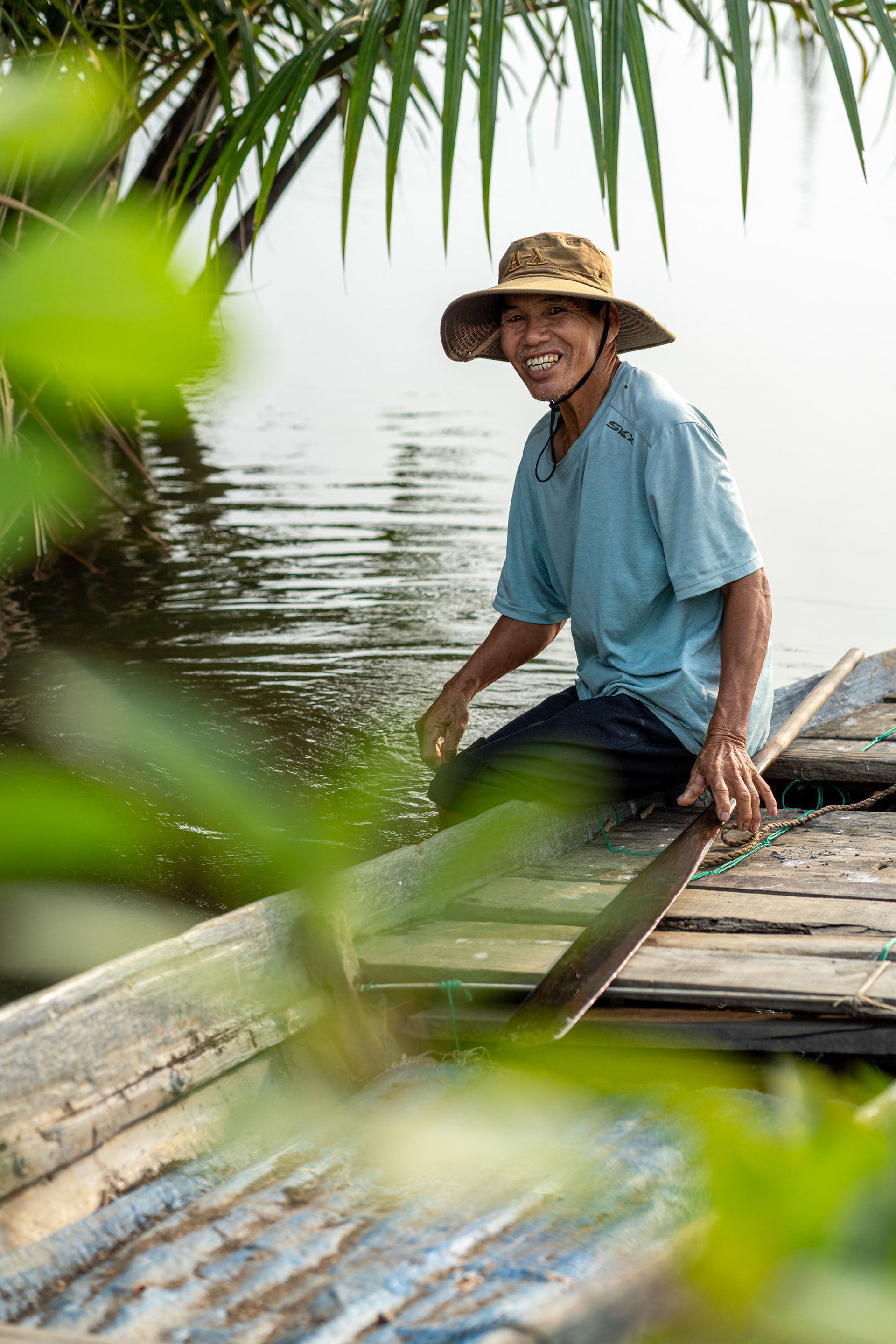
Near Hoi An — boat operator and nicest man around
These were photographed over several visits moving between fields, river edges, and villages south of Hoi An.
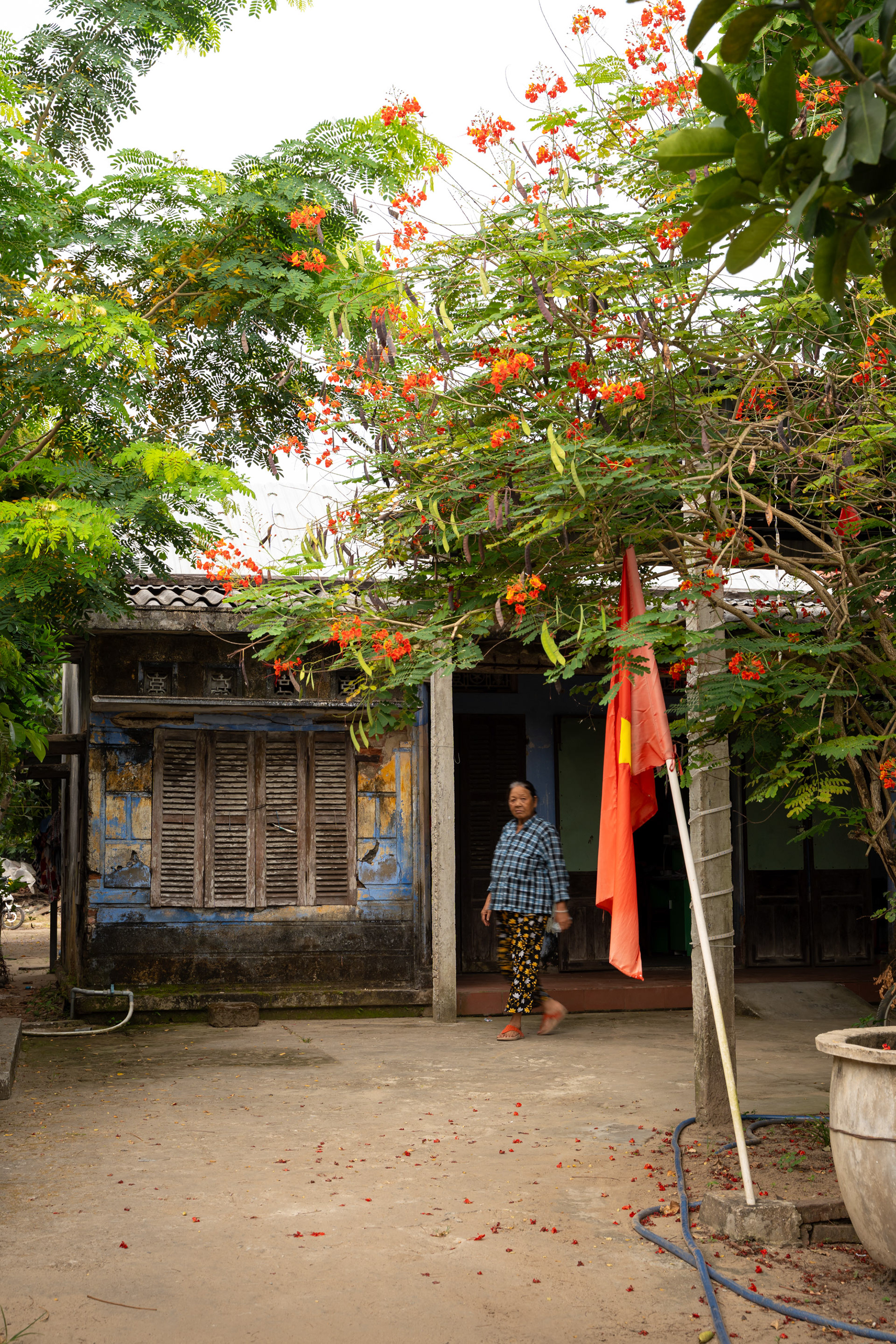
Quảng Nam — village home
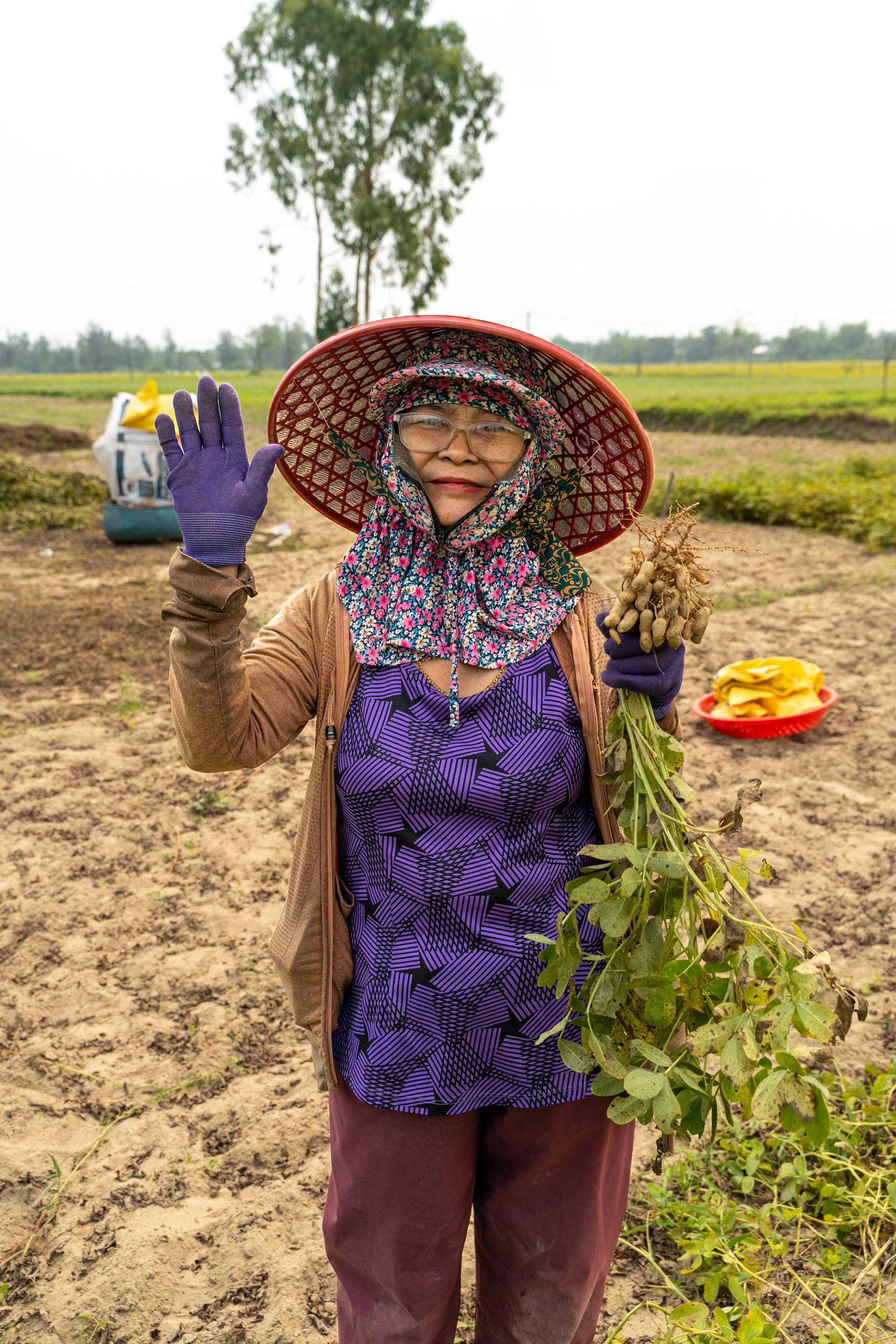
Duy Nghĩa — peanut harvest
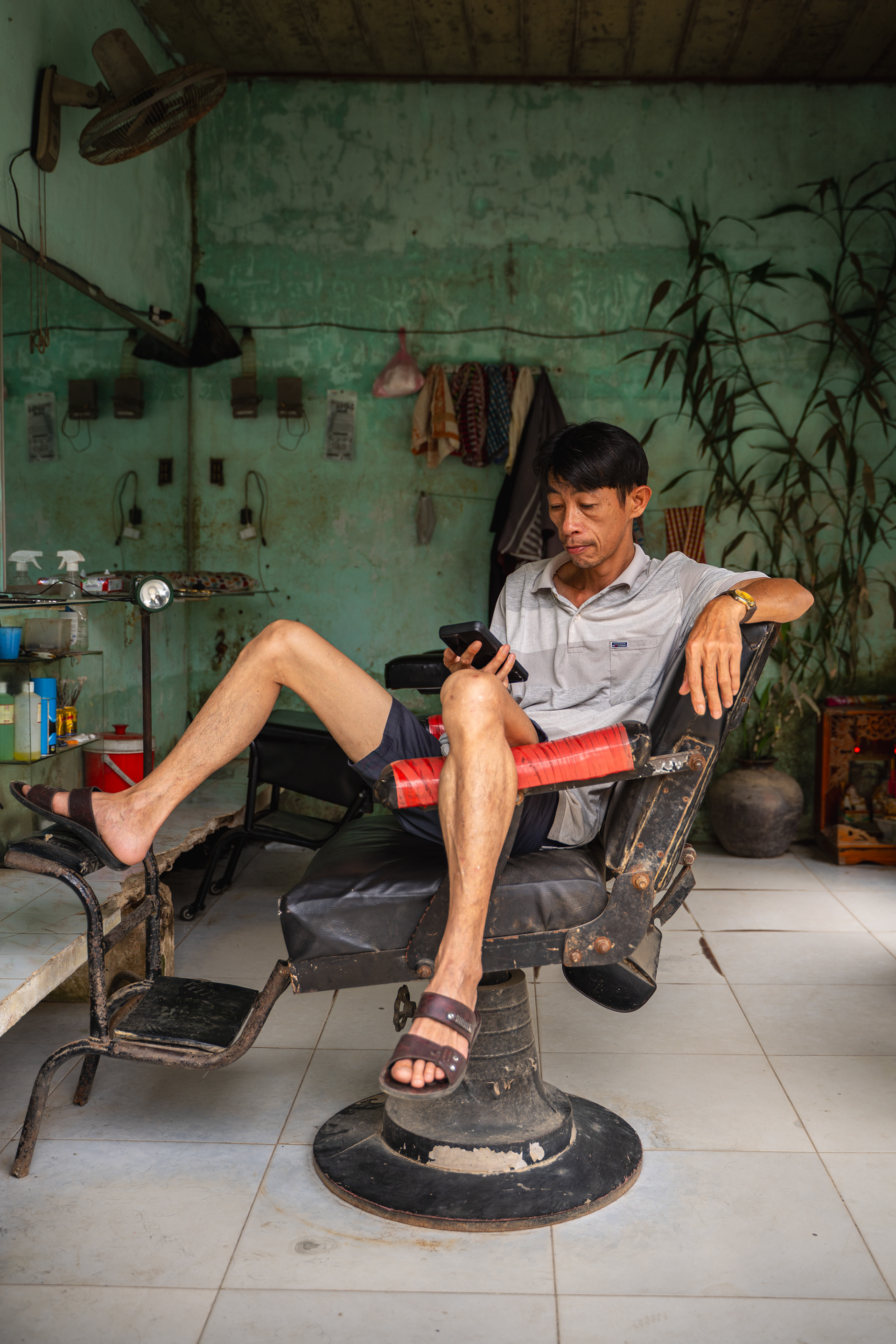
Quảng Nam — local barbershop
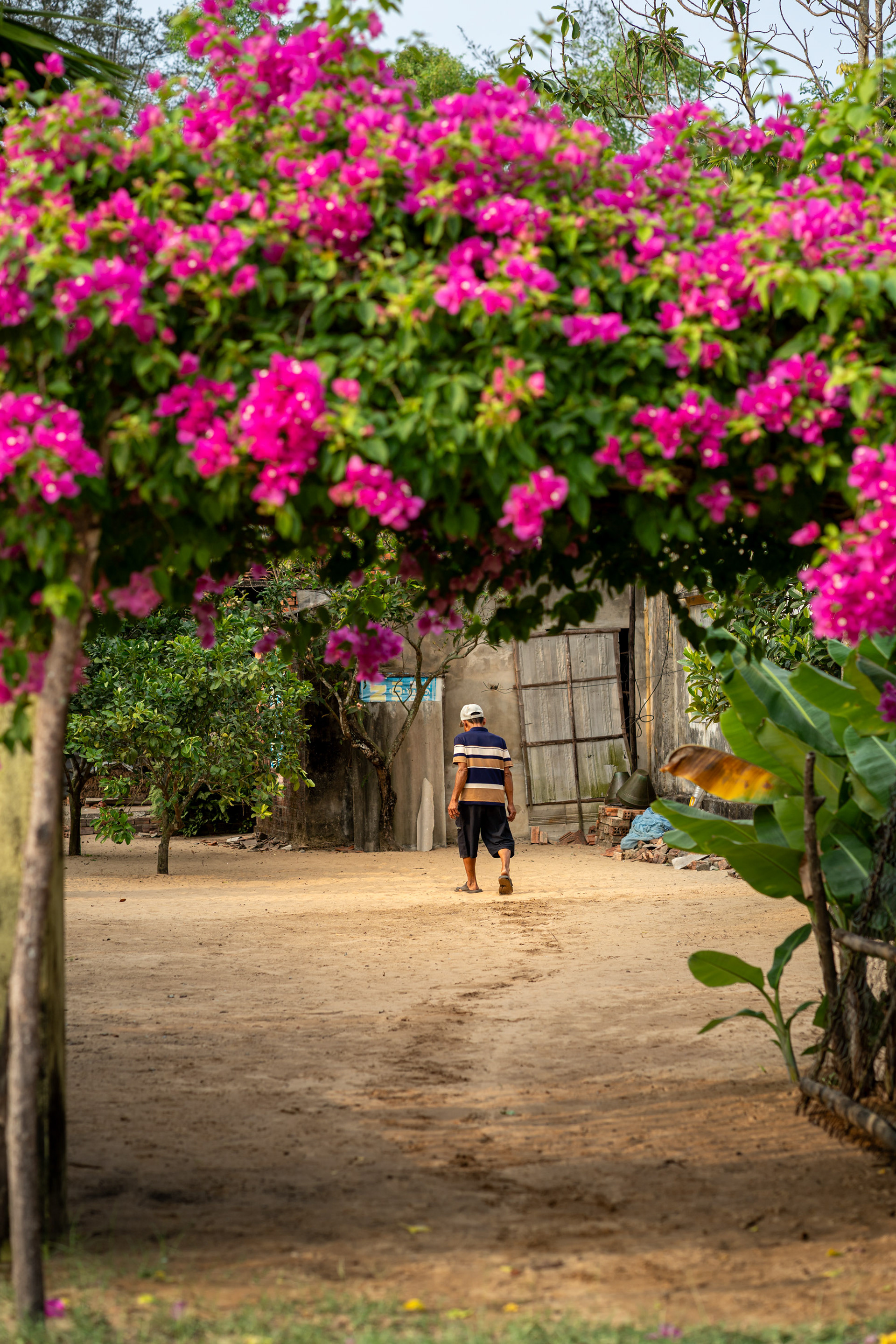
Man walking beneath bougainvillea outside rural home in Duy Nghĩa near Hoi An, Vietnam

Duy Nghĩa — village home

Morning Photo Tours on the Streets of Hoi An
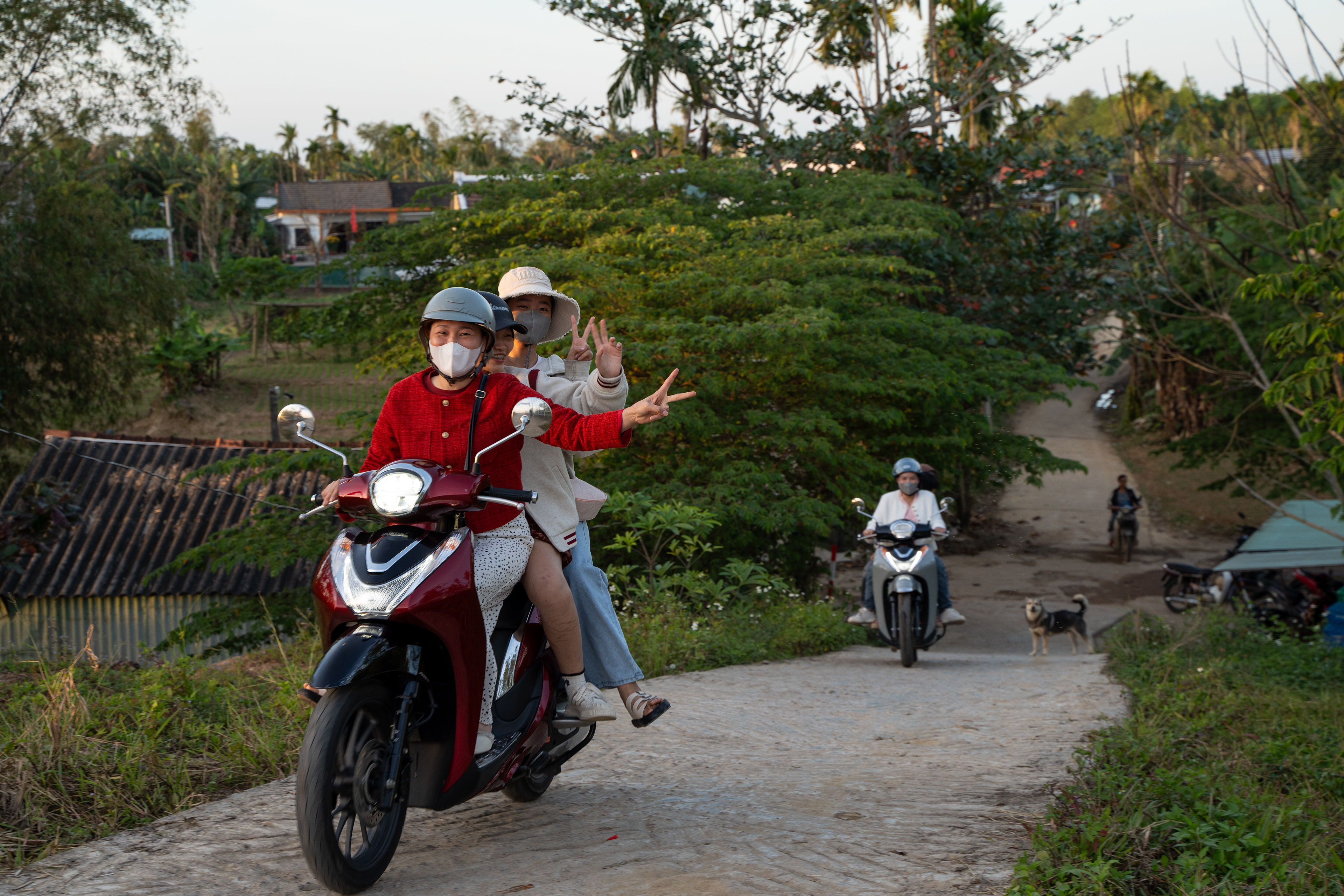
There’s a short window in Hoi An where things feel quieter. Before the tour groups move in. Before the heat arrives in force. Before the Old Town starts performing. That’s usually when these walks happen.
hoi an street photography local life early morning vietnam

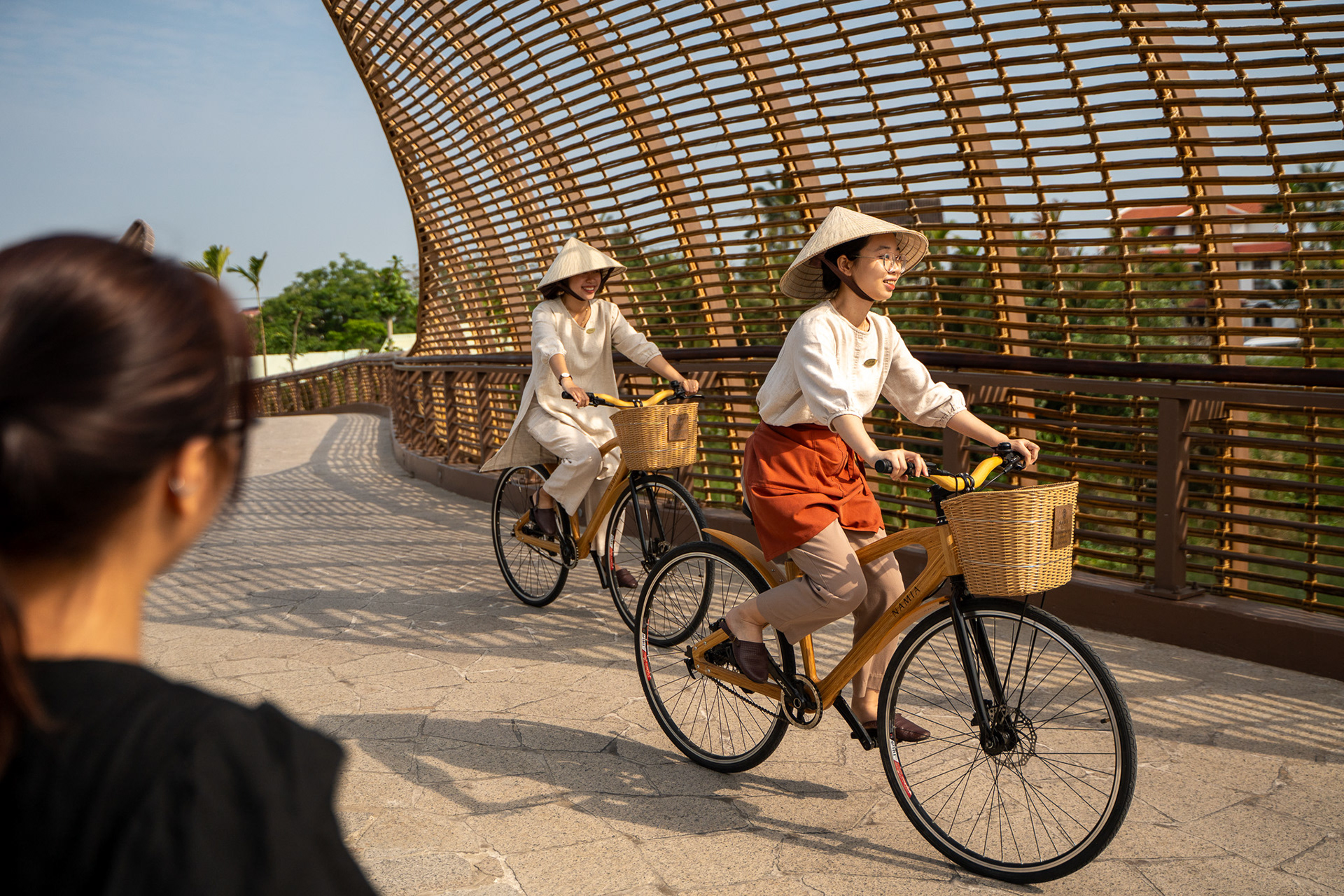
Cycling through Hoi An's historic Old Town as the sun rises
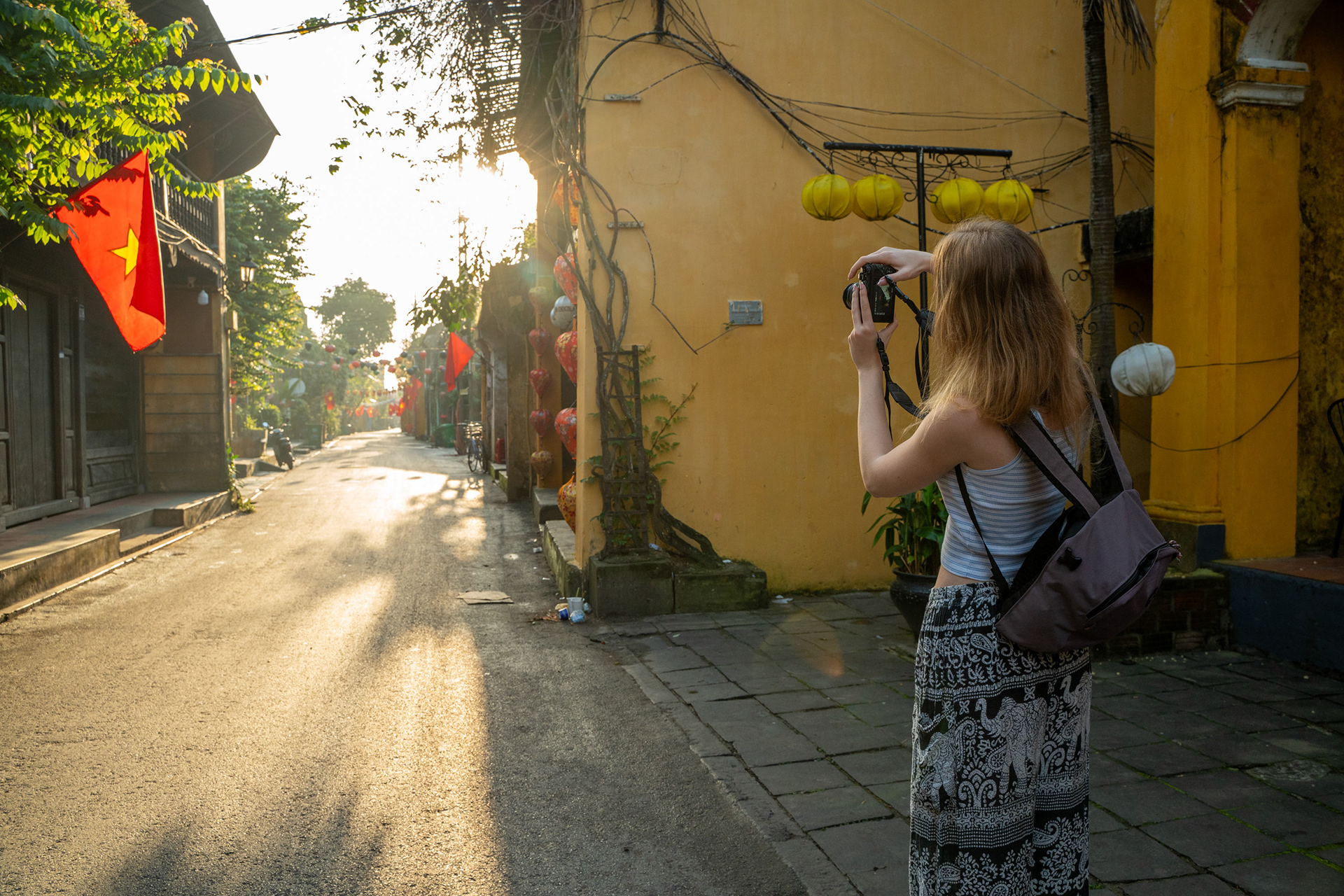
A coffee, a quick check of the light, and then out into the colourful parts of town. Away from the crowds, where things are still moving at their own pace.
No fixed route. Just following what’s happening. Some mornings it’s the market. Other days it’s the river. Sometimes nothing obvious at all, just small moments that build over time.
Most people see a very polished version of the city. These walks tend to sit just outside of that. Not hidden, just often overlooked or driven past.
Interested in joining?
If you’re in Hoi An, or will be soon, and want to spend a morning or afternoon working on your photography in a more grounded way, you can find more details below.
Flooding in Hoi An
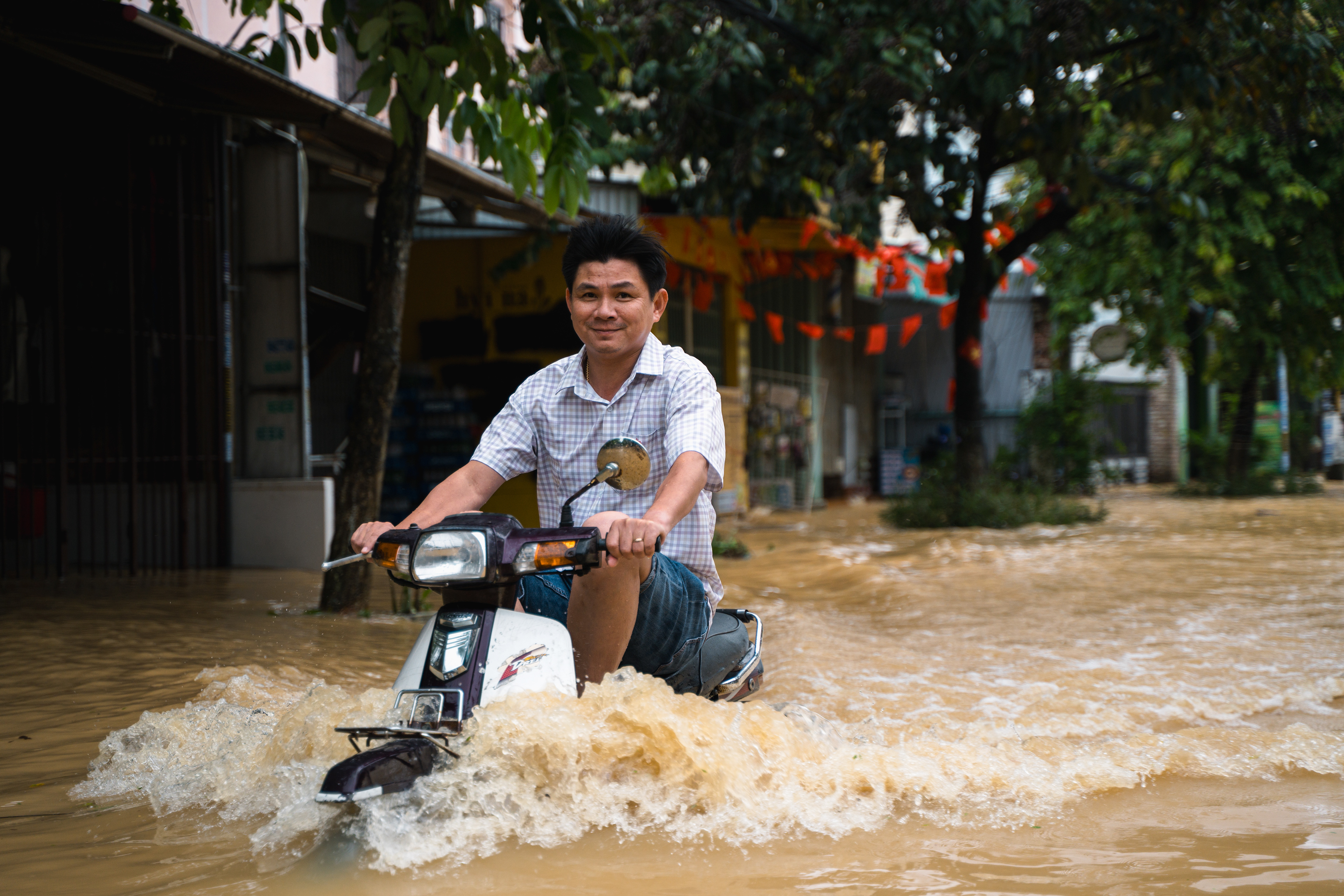
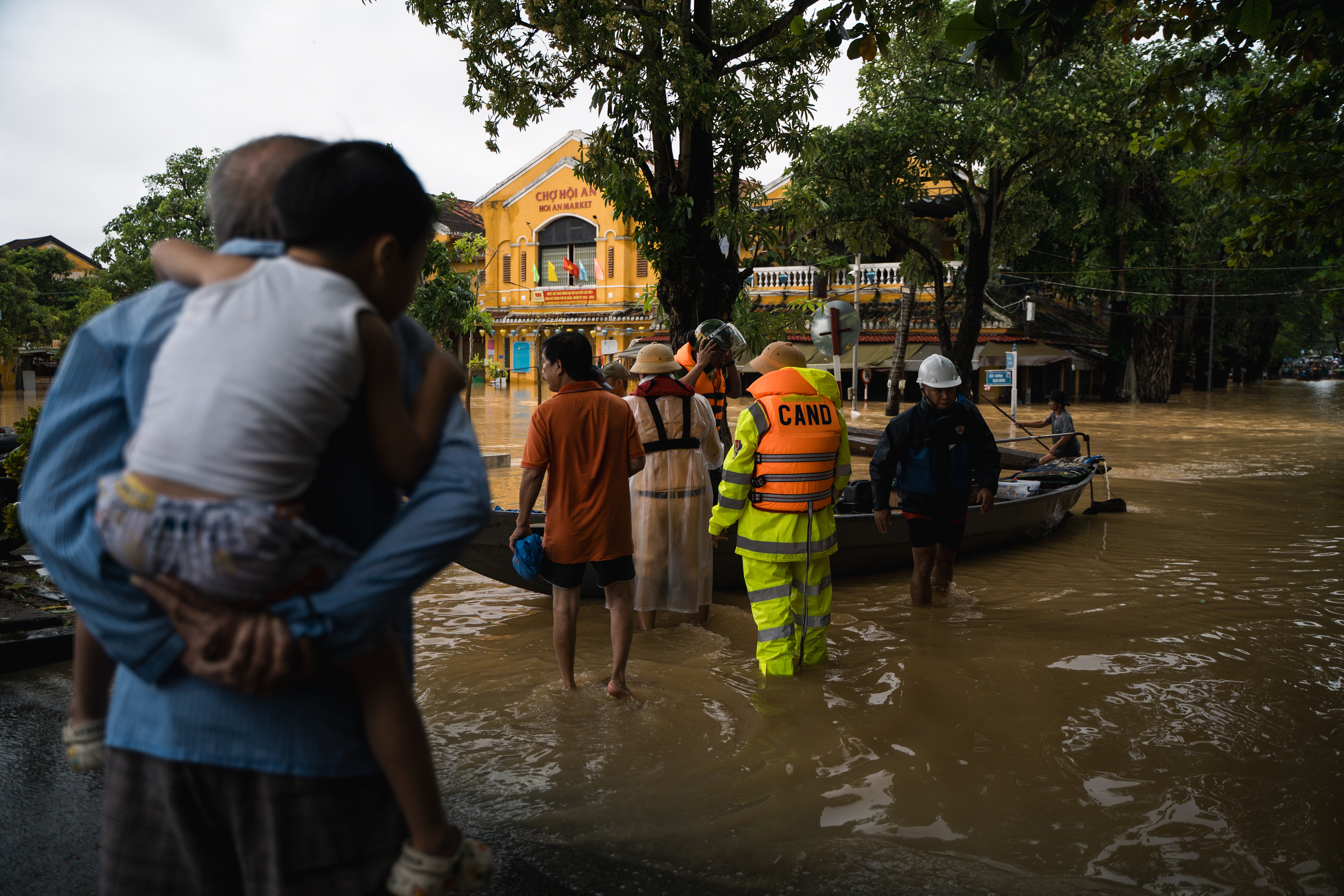
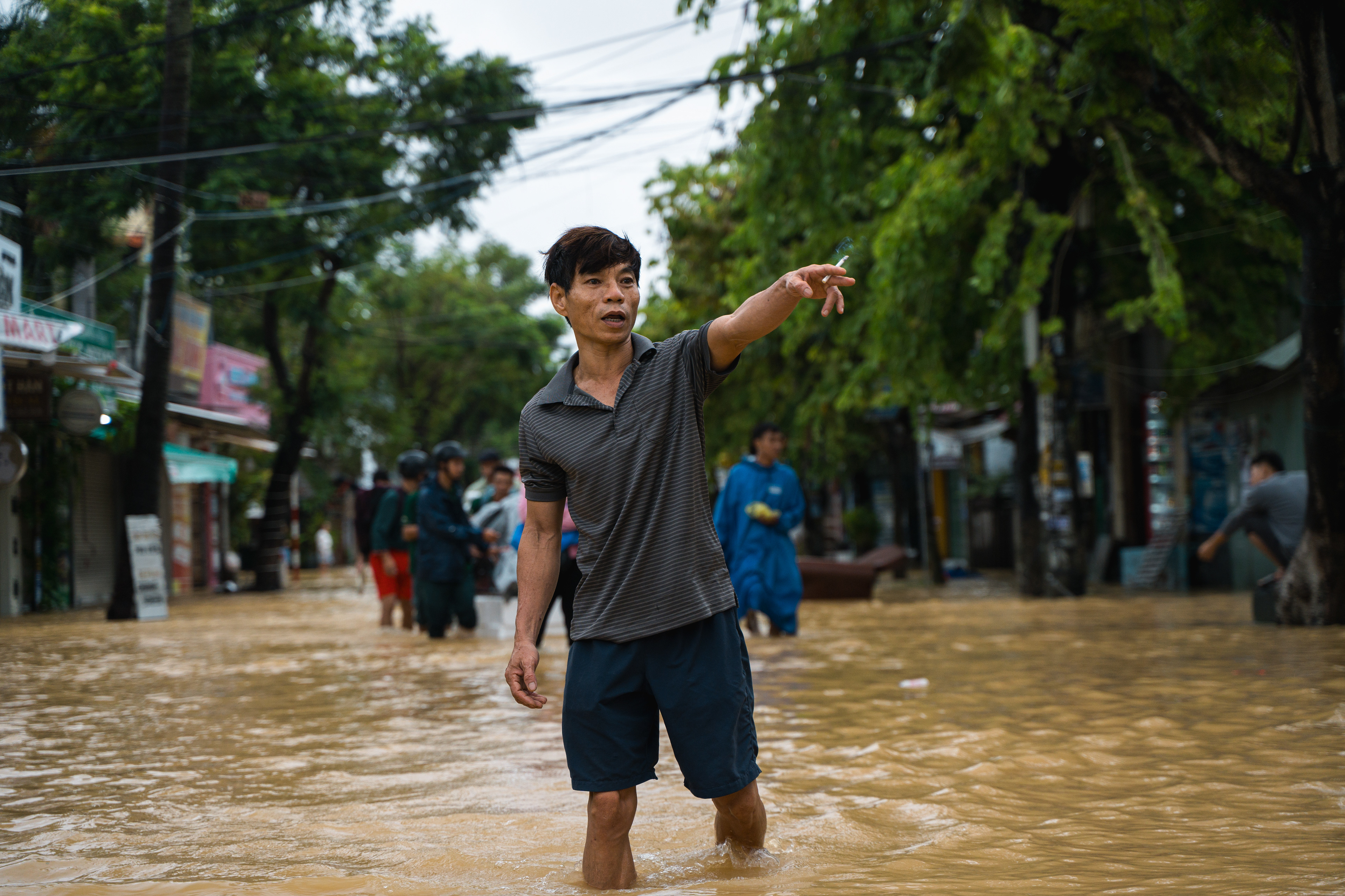
On 28 October 2025, heavy rainfall across central Việt Nam led to flooding in Hoi An and surrounding areas of Quảng Nam Province. Water levels rose quickly in low-lying parts of the town, including sections of the Ancient Town, where streets became impassable to motorbikes and (almost) pedestrians.
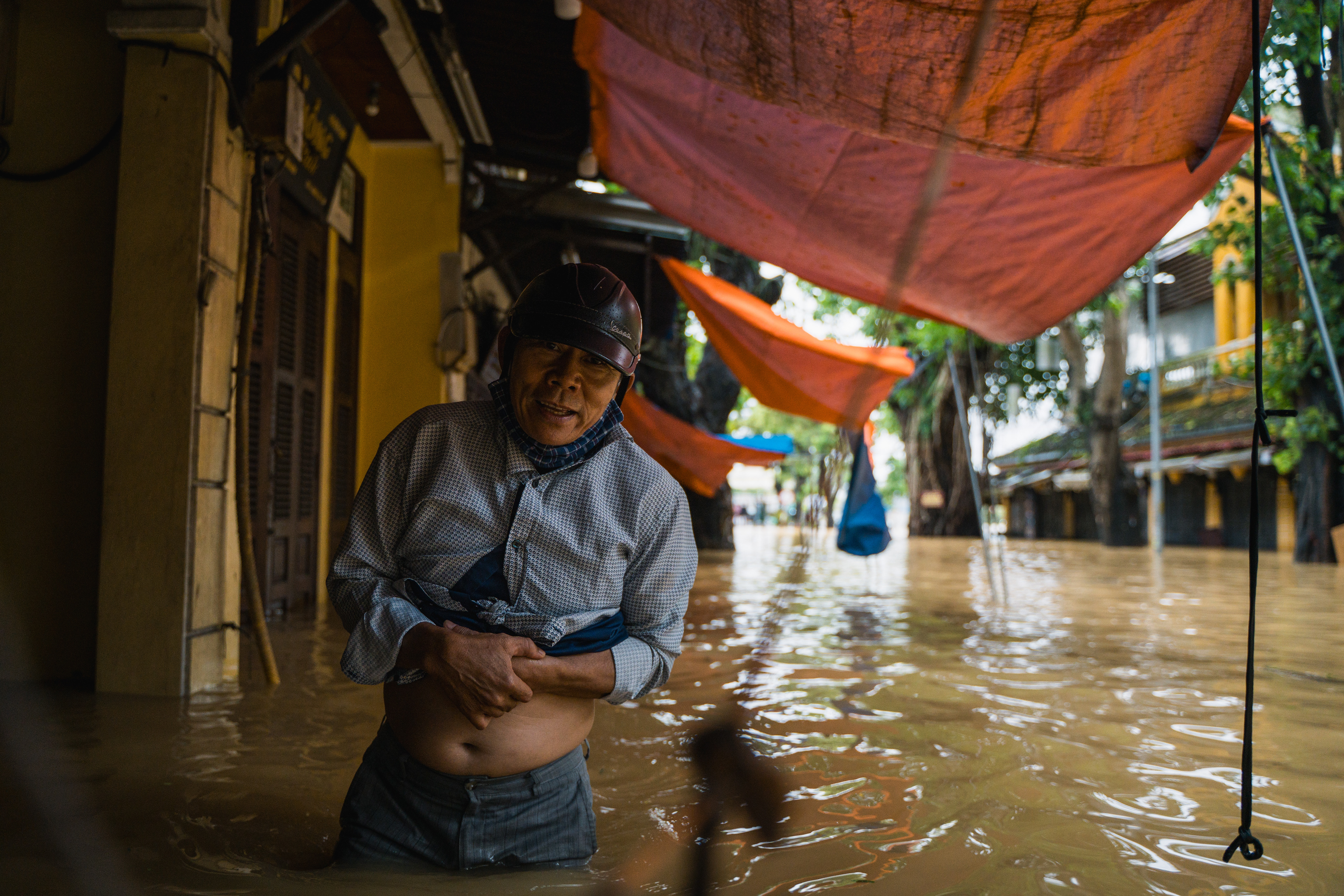
Hoi An lies downstream of the Thu Bồn River system, which responds rapidly to sustained rainfall. Seasonal flooding is a regular occurrence during the wet season, though the depth and extent vary year to year. During this event, water levels in parts of the Old Town reached knee to waist height.
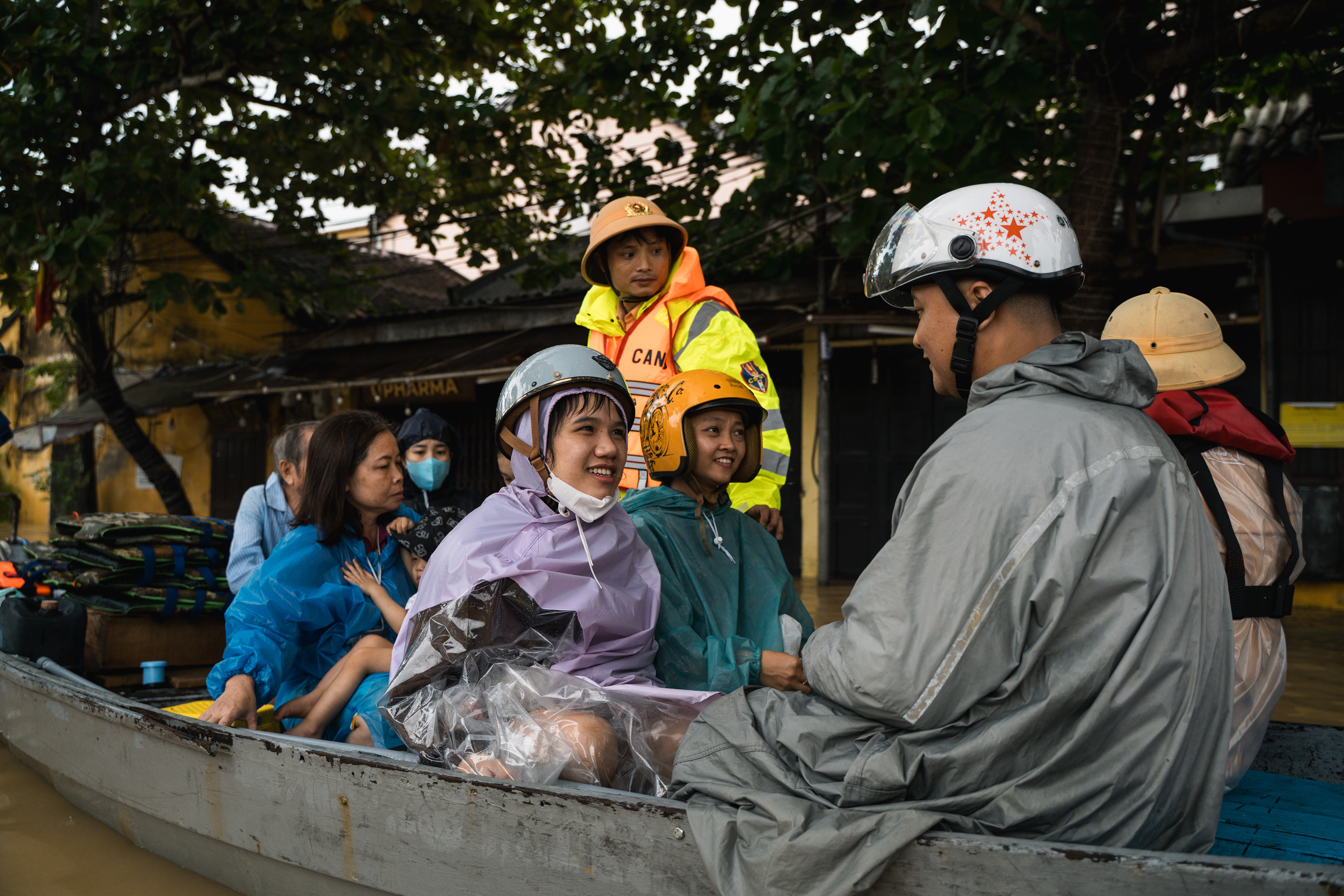
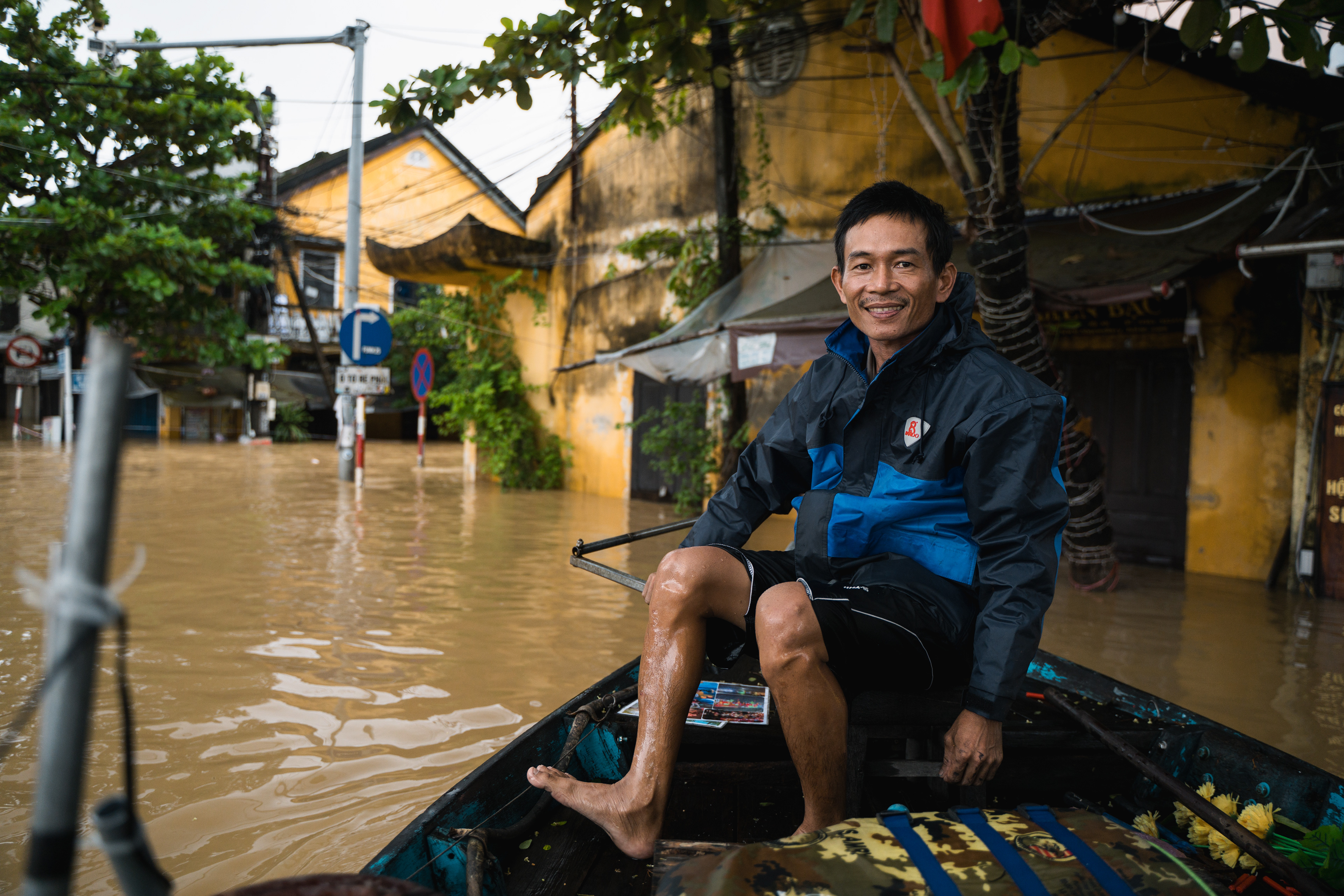
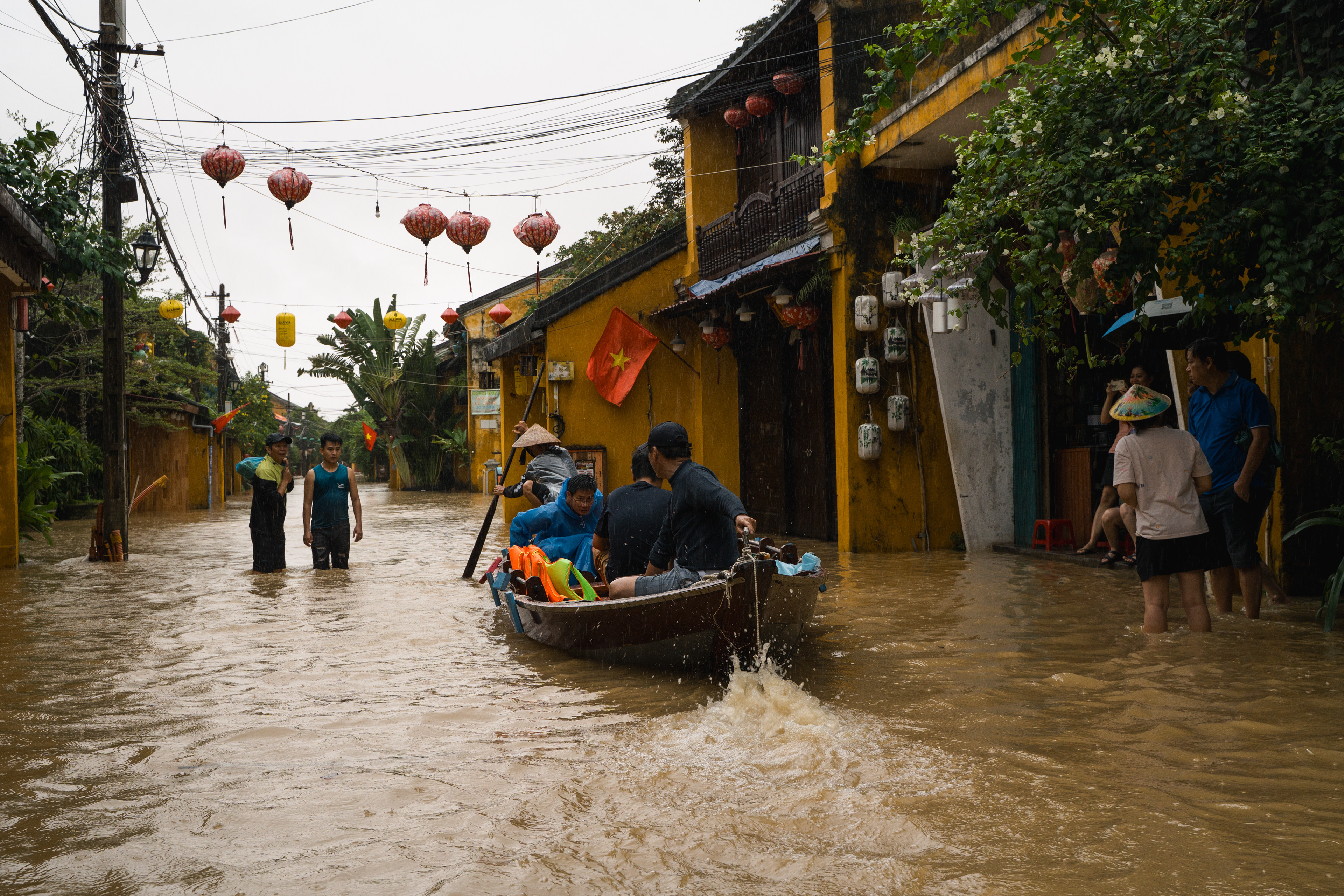
As streets flooded, small wooden boats were used to move people through the Ancient Town. Boat operators transported residents, workers, and visitors between dry access points, as well as helping move supplies where needed. Some people waded short distances, while others waited in shops or doorways for water levels to stabilise.
Electricity was cut throughout Hoi An as a precaution, and many businesses closed temporarily. Despite this, activity continued in reduced form. Residents remained present in flooded streets, monitoring conditions, assisting others, and adjusting routines around access and transport. 
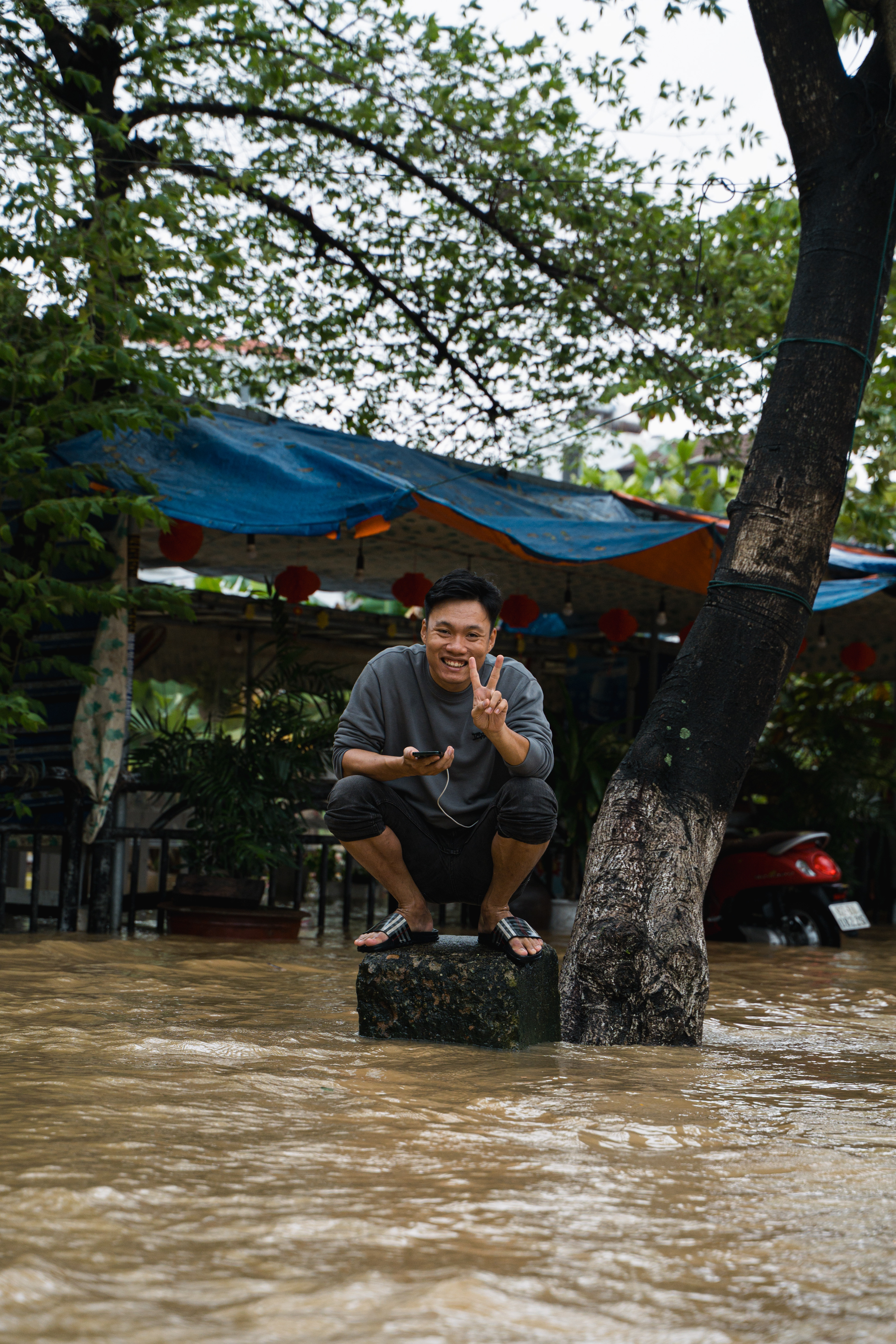
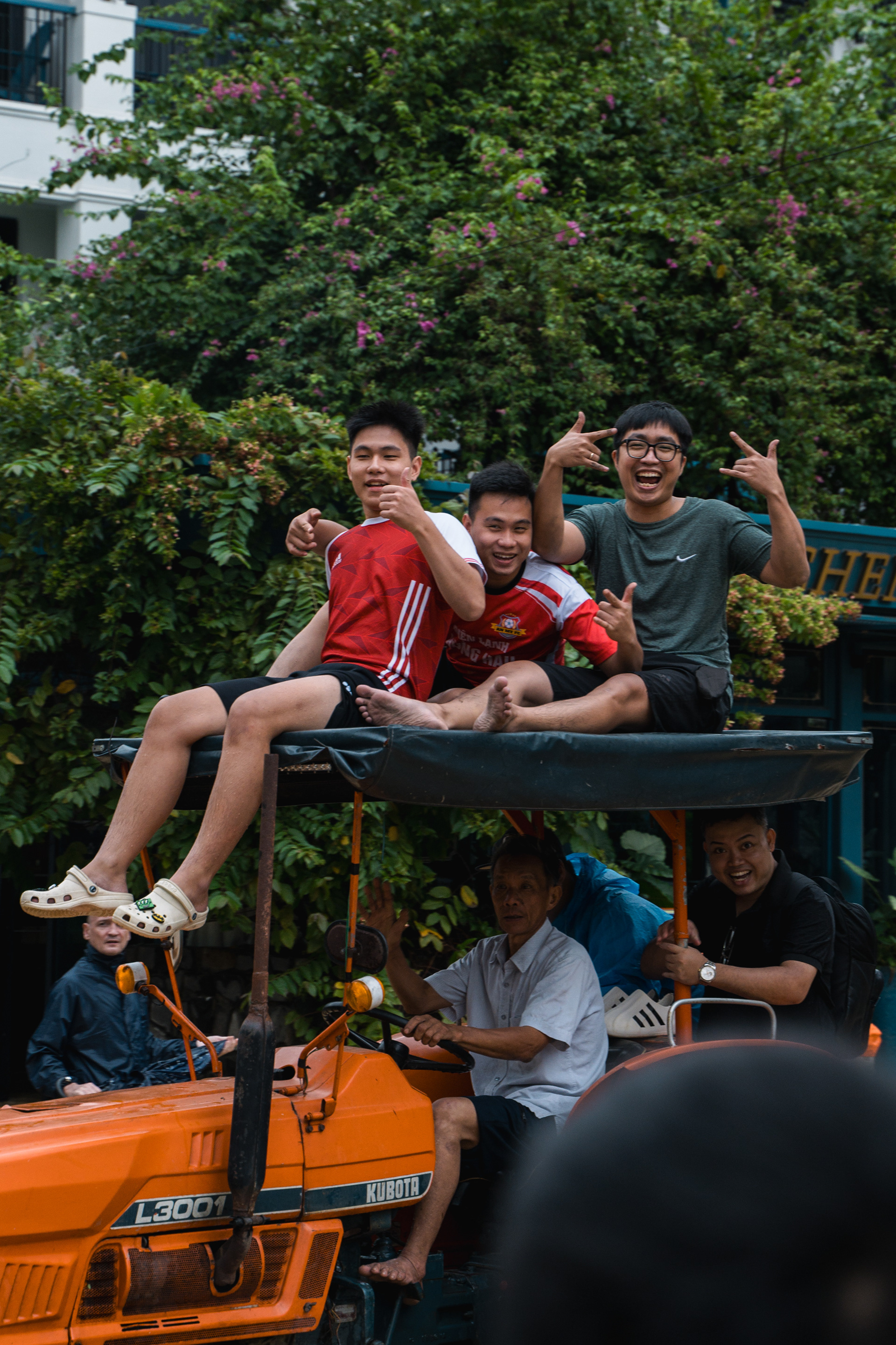
The images in this journal were made during peak flooding within the Ancient Town. They show flooded streets, boat transport, and daily movement as it happened.
Hoi An - To The Sea
At the mouth of the Thu Bon River, Duy Hải wakes long before sunrise. This fishing village sits at the point where freshwater meets the open sea, a junction that has shaped the lives of local families for generations. Boats return in the blue hour, heavy with the night’s catch, and the shoreline turns into a working floor of crates, tools, voices, and movement.
Here, the river isn’t a backdrop but the backbone of an entire economy. The estuary provides shelter for the boats, access to offshore grounds, and an ever-shifting tidal pulse that determines when work begins and ends. Families who have lived on these banks for decades unload, sort, scale, and trade at a speed that comes from routine, necessity, and muscle memory.
The market is raw and direct: anchovies spread out to dry, ice chopped by hand, and small round basket boats shuttling between the larger vessels and the shore. Every corner has its own rhythm—crews hauling crates across wet concrete, buyers negotiating before the sun is fully up, and the smell of salt and diesel mixing with the warm river air.
Duy Hải is a reminder that the river’s final stretch is not an ending but a convergence: the last passage of the Thu Bon before it reaches the sea, and the first step in a long chain of work that feeds much of central Vietnam.
Hoi An - To The River
The Thu Bồn River has shaped life in Hội An for centuries. Long before the lanterns and tourism arrived, these waters linked the coast to the mountains, carrying timber, ceramics, and silk between inland communities and traders from across Asia. Even now, away from the busy ancient town, the river remains the quiet centre of daily life.
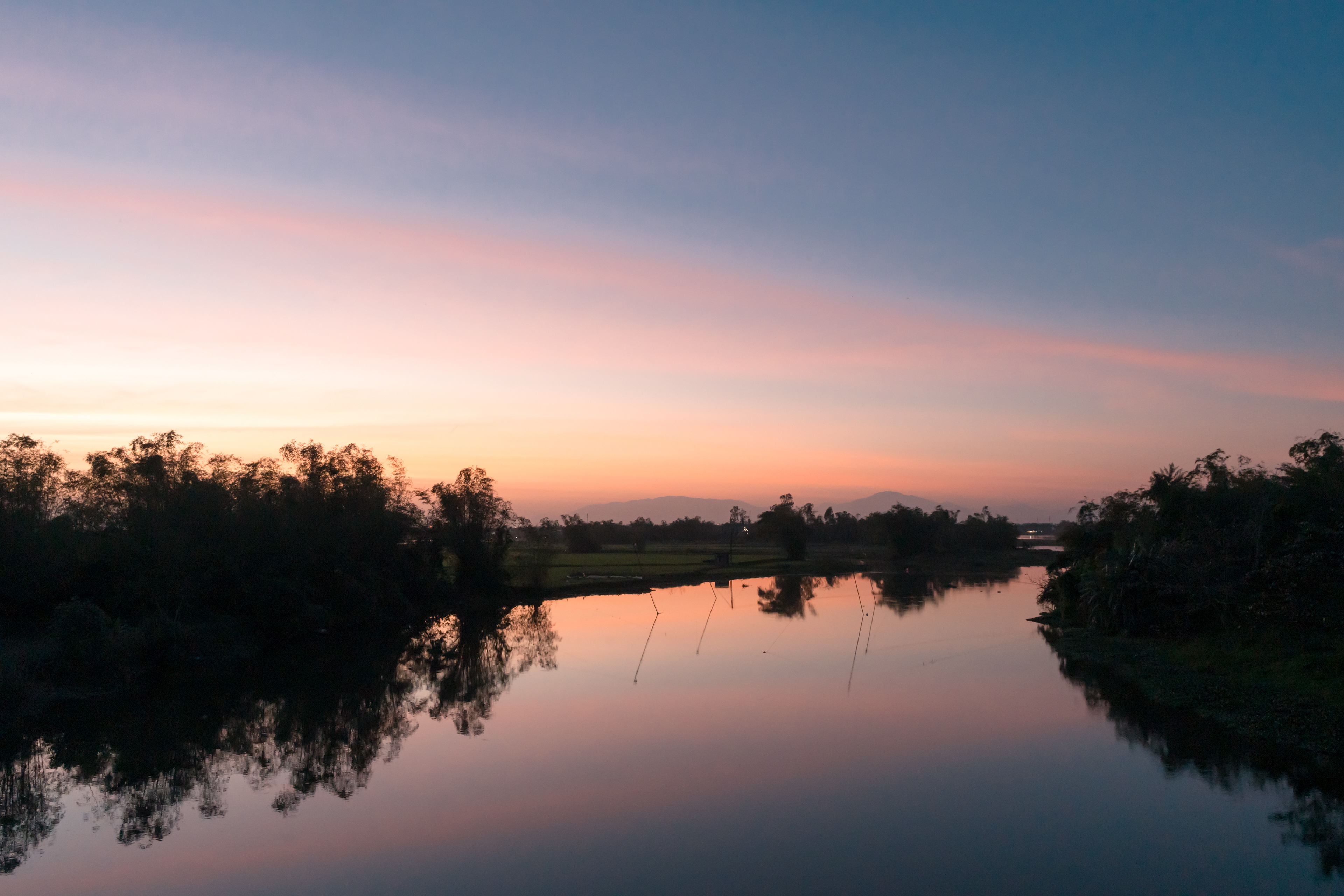
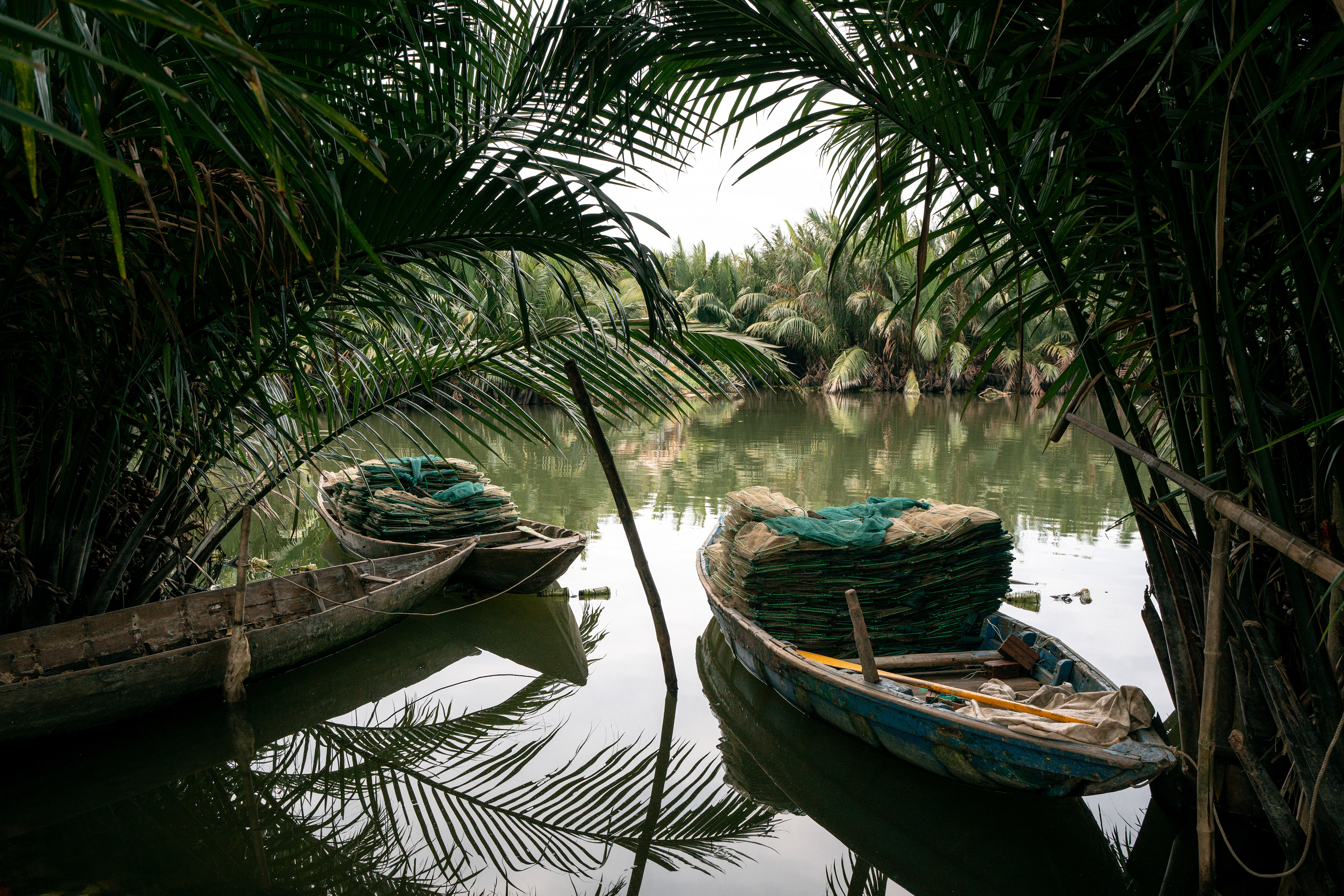
Small wooden boats sit under palms, loaded with fishing nets and traps that will be checked at first and last light. Families still rely on these narrow channels for their income, moving slowly through the water the way their parents and grandparents did. In the late afternoon, fishers work from low canoes, casting nets into water tinted by the last light of the day. As the sun drops, they move with steady, practised rhythm, determined to make the most of the fading hours.
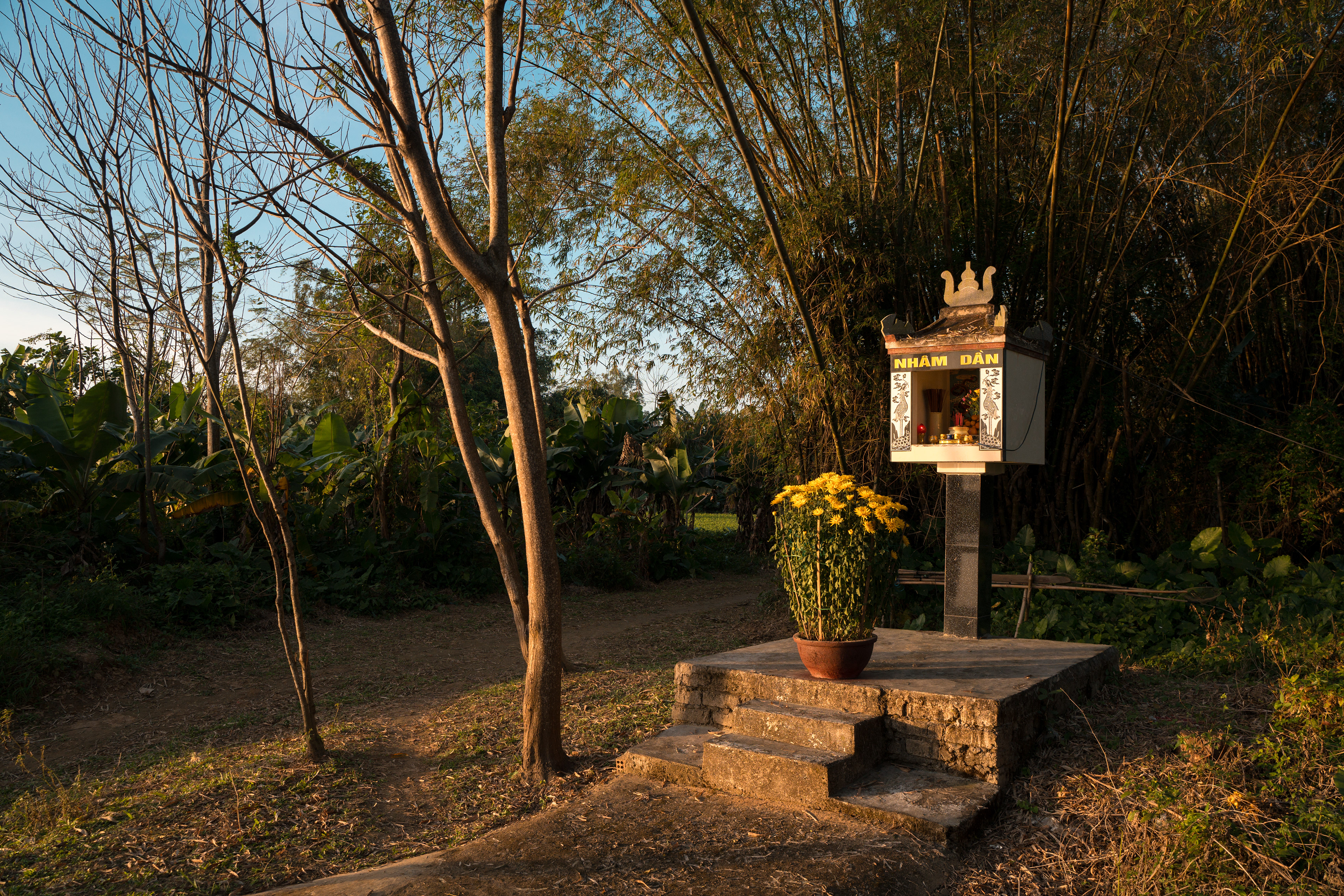
Shrines stand at the paths leading to the water, small markers offering protection for those who depend on the river’s moods. The landscape shifts constantly — tides, silt, seasonal floods — yet the routines remain steady.
Here, the Thu Bồn is not a backdrop. It is the thread that holds the outer villages of Quảng Nam together, a working river that continues to feed the communities built along its edge.
Hoi An – To The Fields
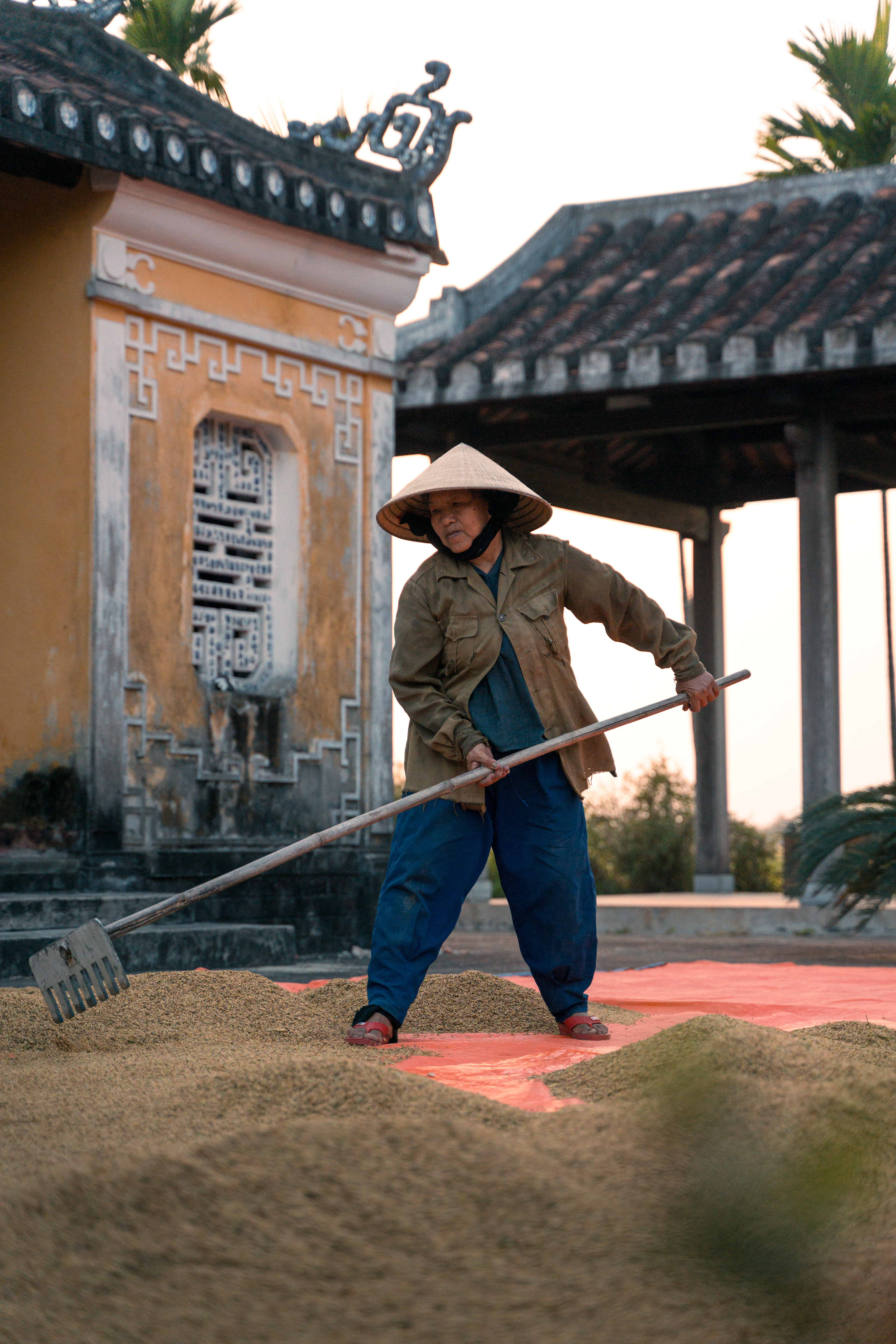
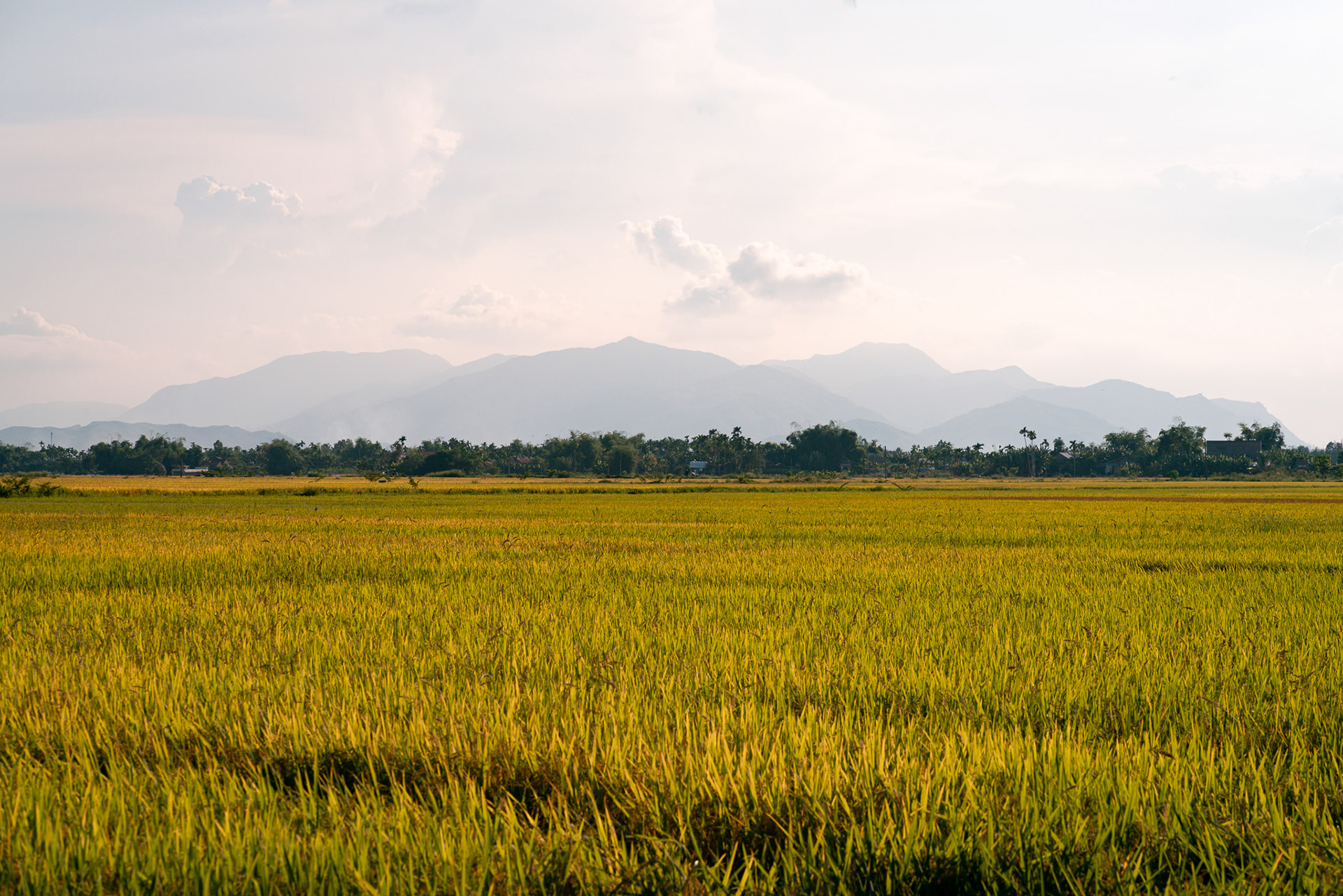
Hoi An’s old town draws most of the attention, but the fields on its edges tell a different story, one built on rice, routine, and long days in the heat. When the harvest comes, the pace of life shifts. Machines cut through the fields while others still work by hand, raking, bundling, and hauling rice the way it’s been done for generations.
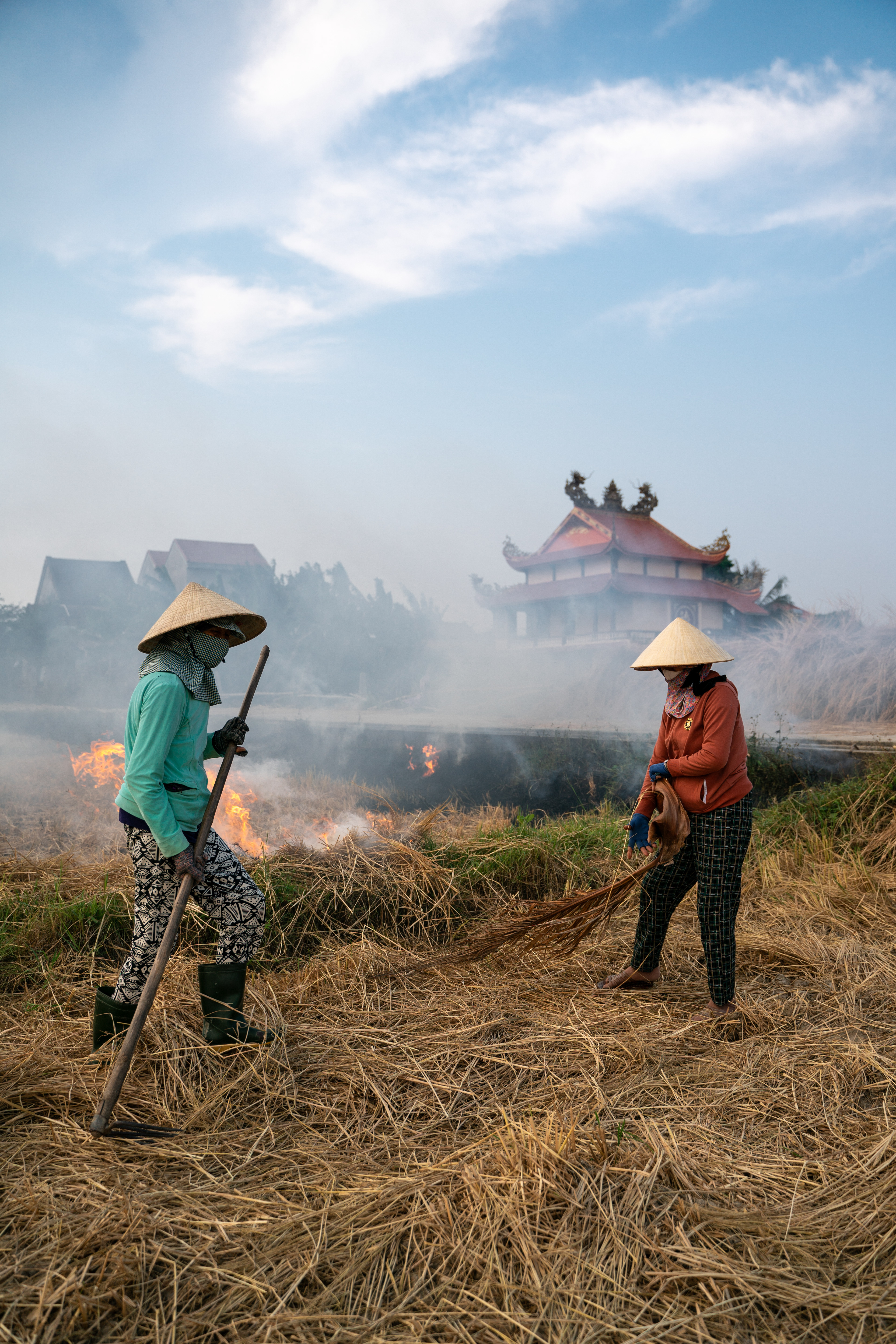
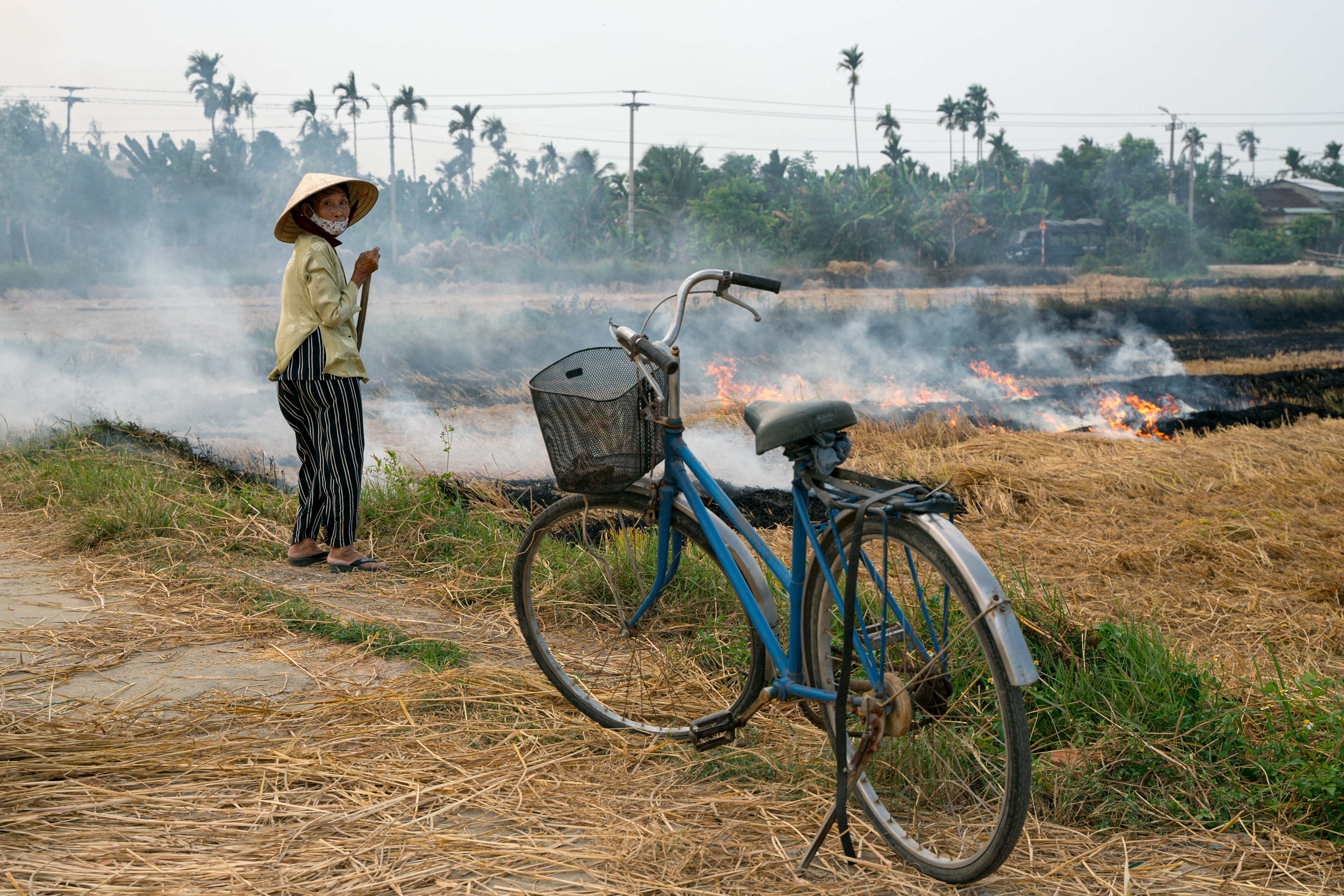
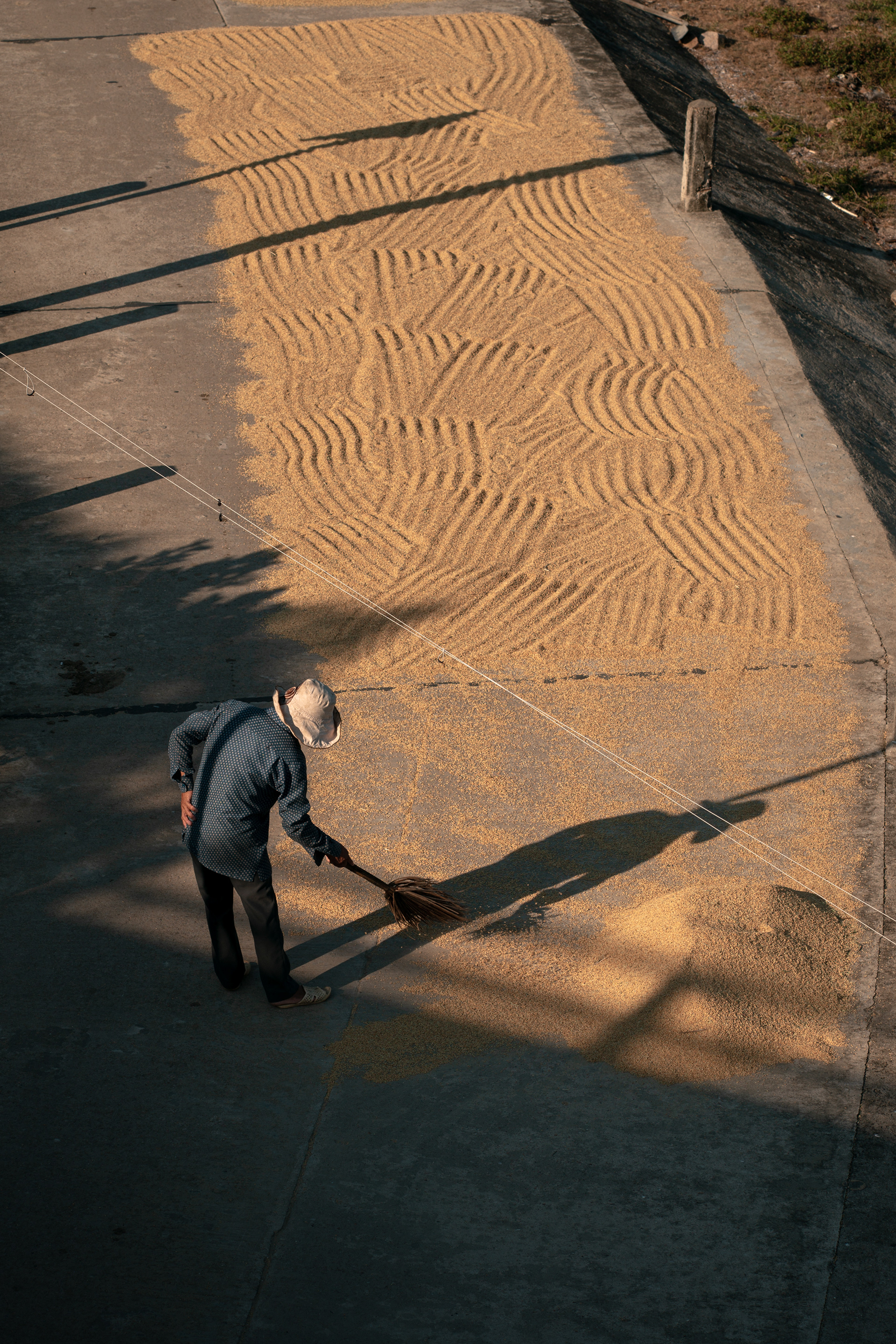
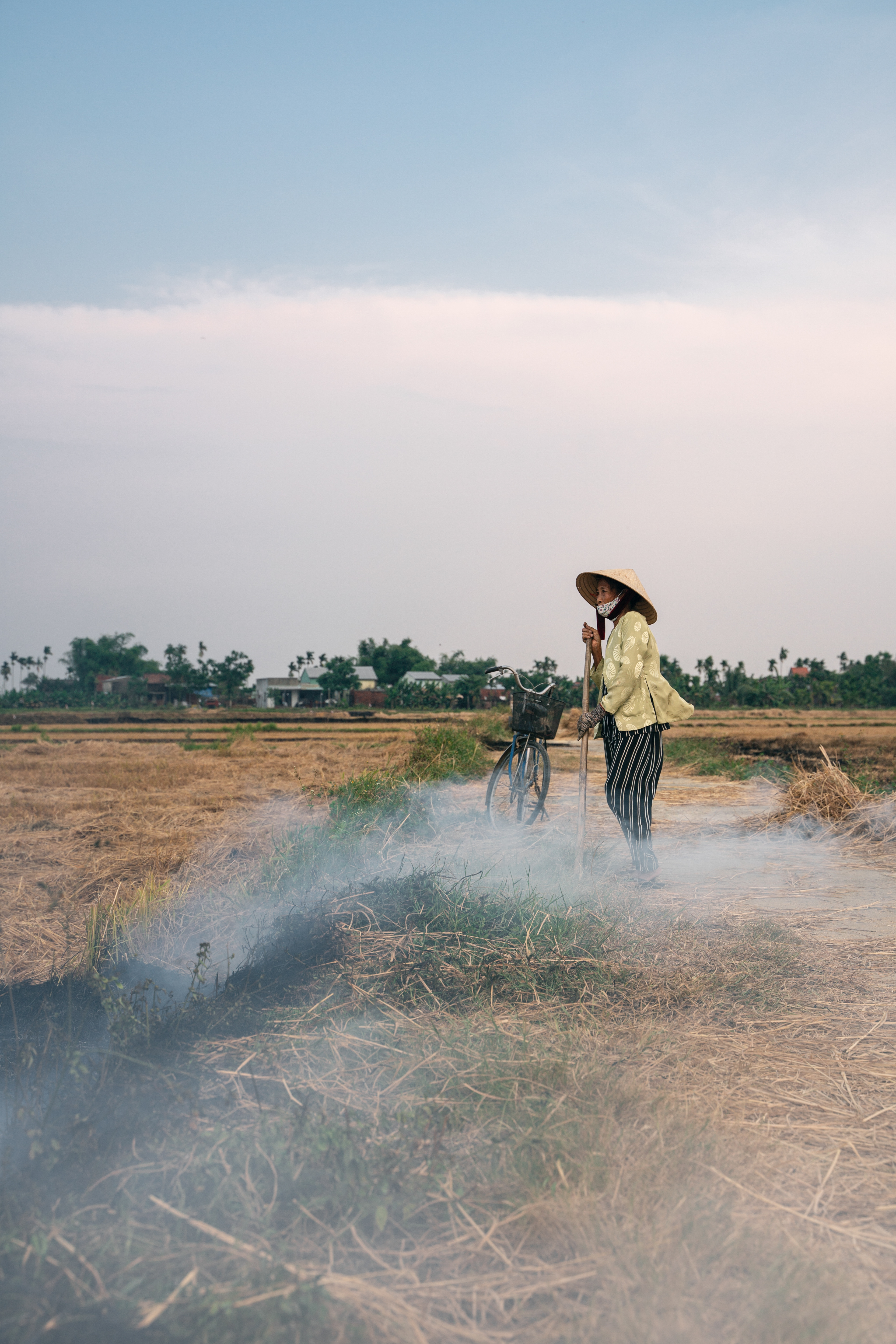
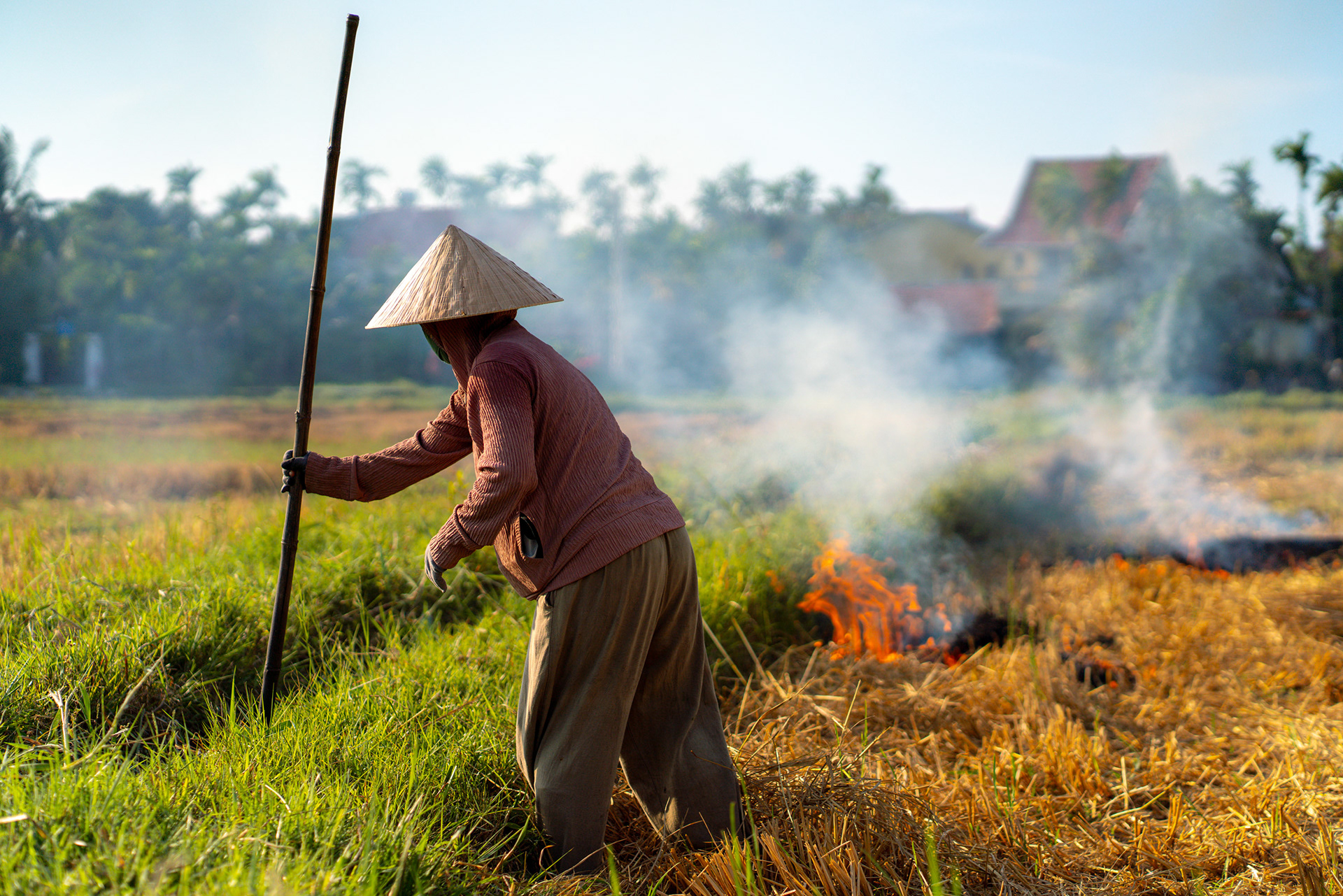
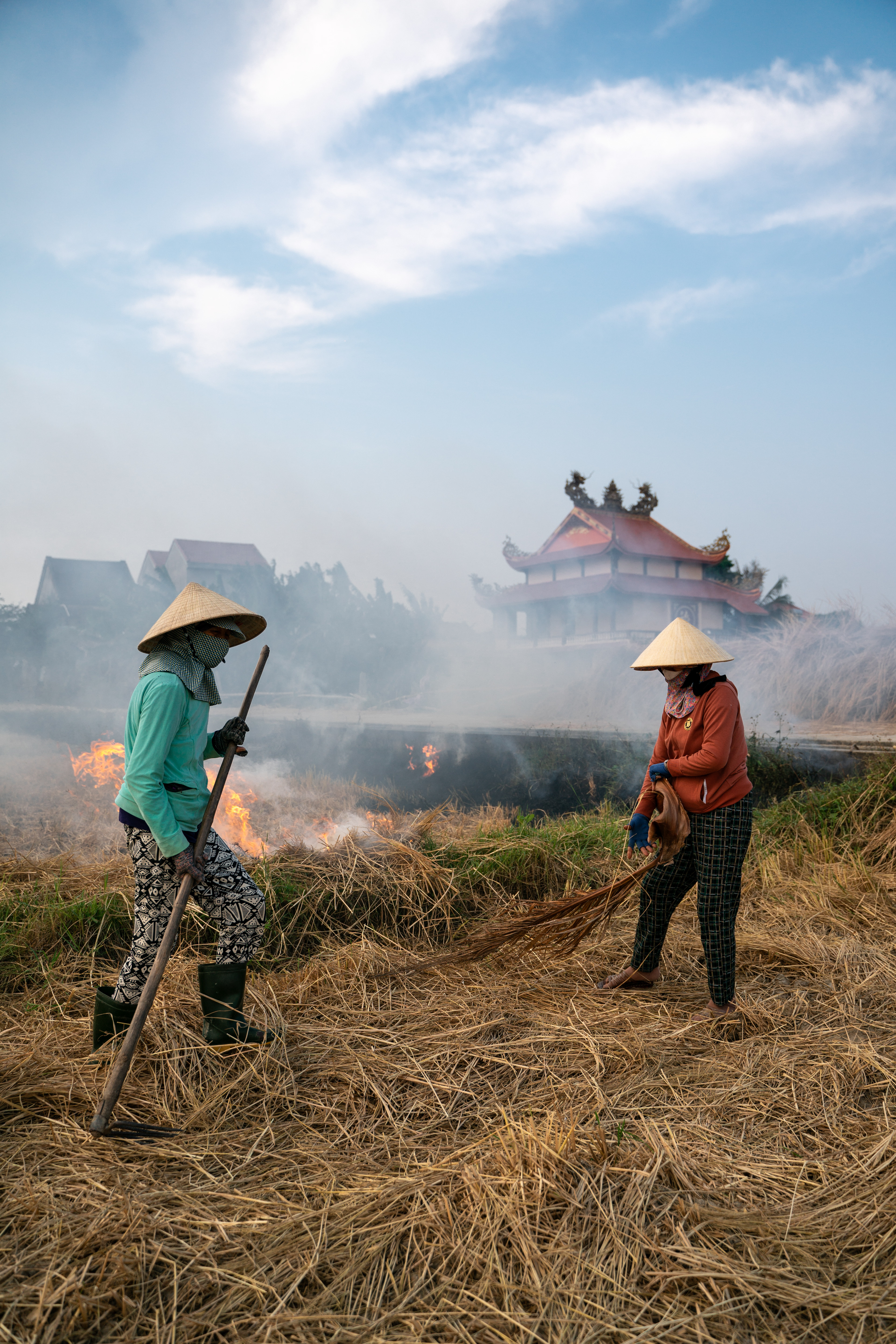
Drying rice spreads across the concrete lanes and courtyard floors, forming neat lines under the afternoon light. Smoke rises from controlled burns as the leftover stalks are cleared, drifting across the paddies and catching on the breeze that pushes in from the river. Workers move through it without pause, their faces covered against the ash and sun.
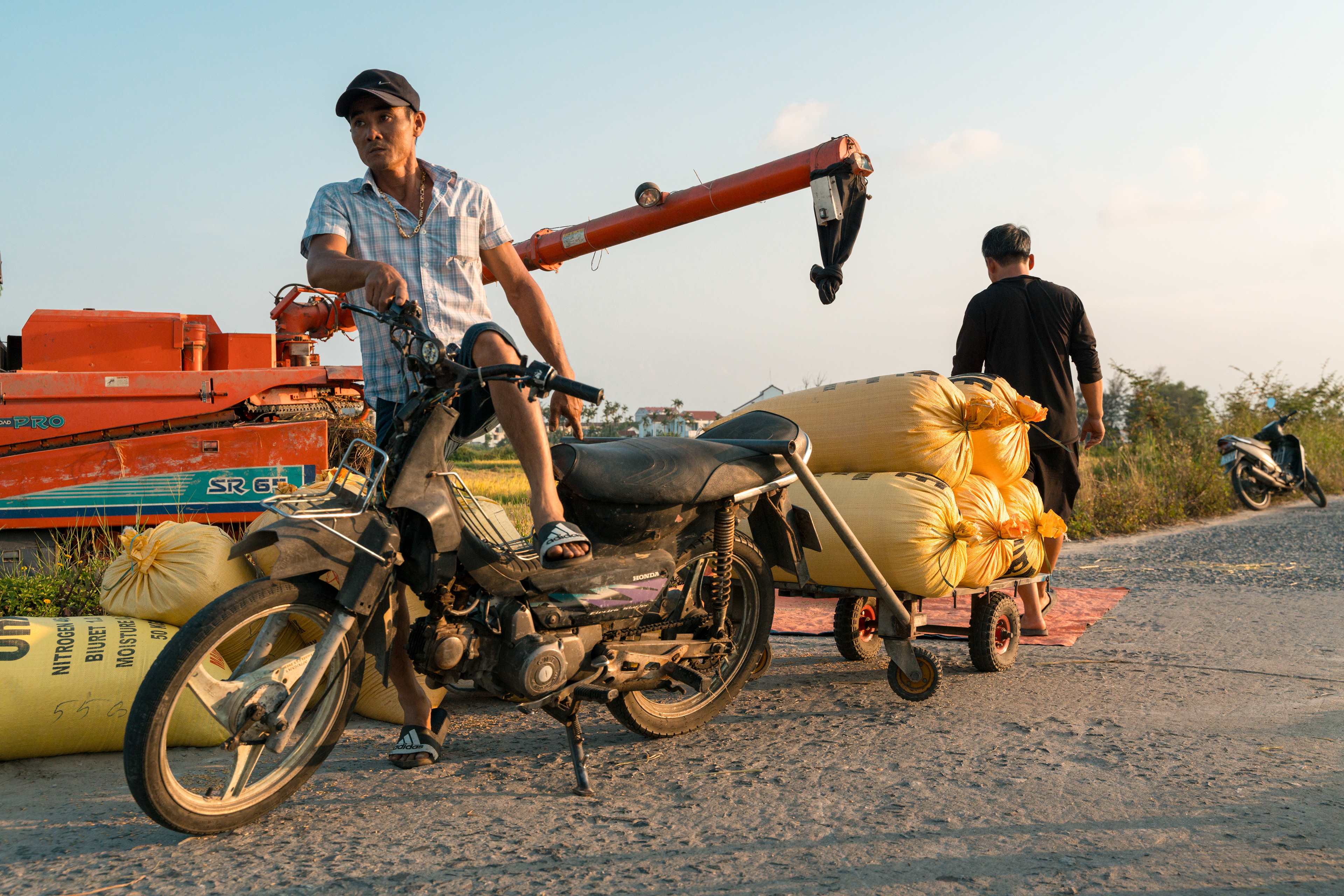
Motorbikes and bicycles become makeshift transport, stacked high with sheaves tied down with rope. On the roadside, neighbours gather to check crop quality, share a drink, or watch over the final loads being brought in. There’s a quiet cooperation to it all — an unspoken understanding of who does what, and when.
These scenes sit just outside the tourist routes, but they carry the weight of everyday life in Quảng Nam. The harvest isn’t a spectacle, but it’s the backbone that keeps the area moving, season after season.
Behind the Scenes with Cake Collective at Namia Hotel, Hoi An
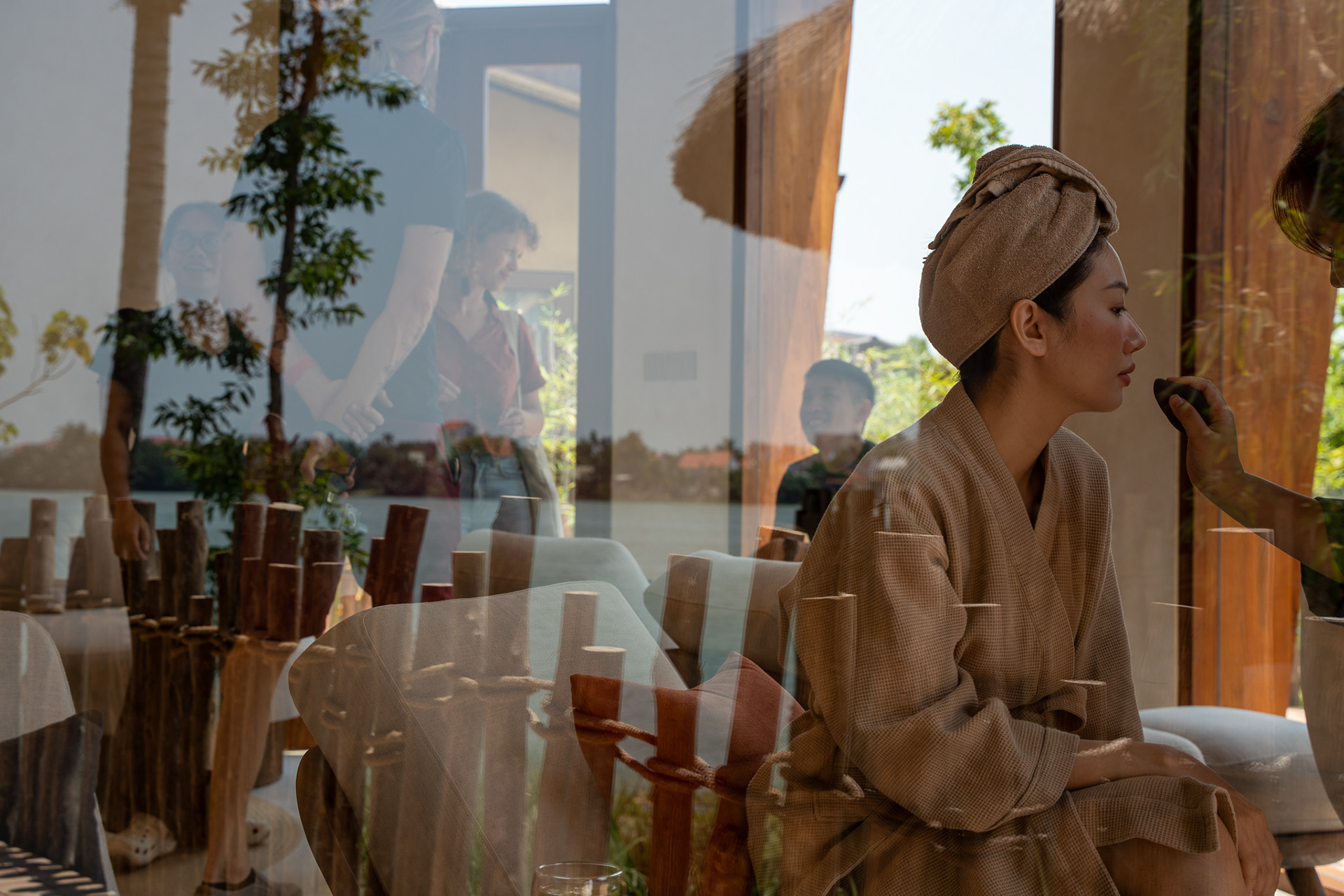
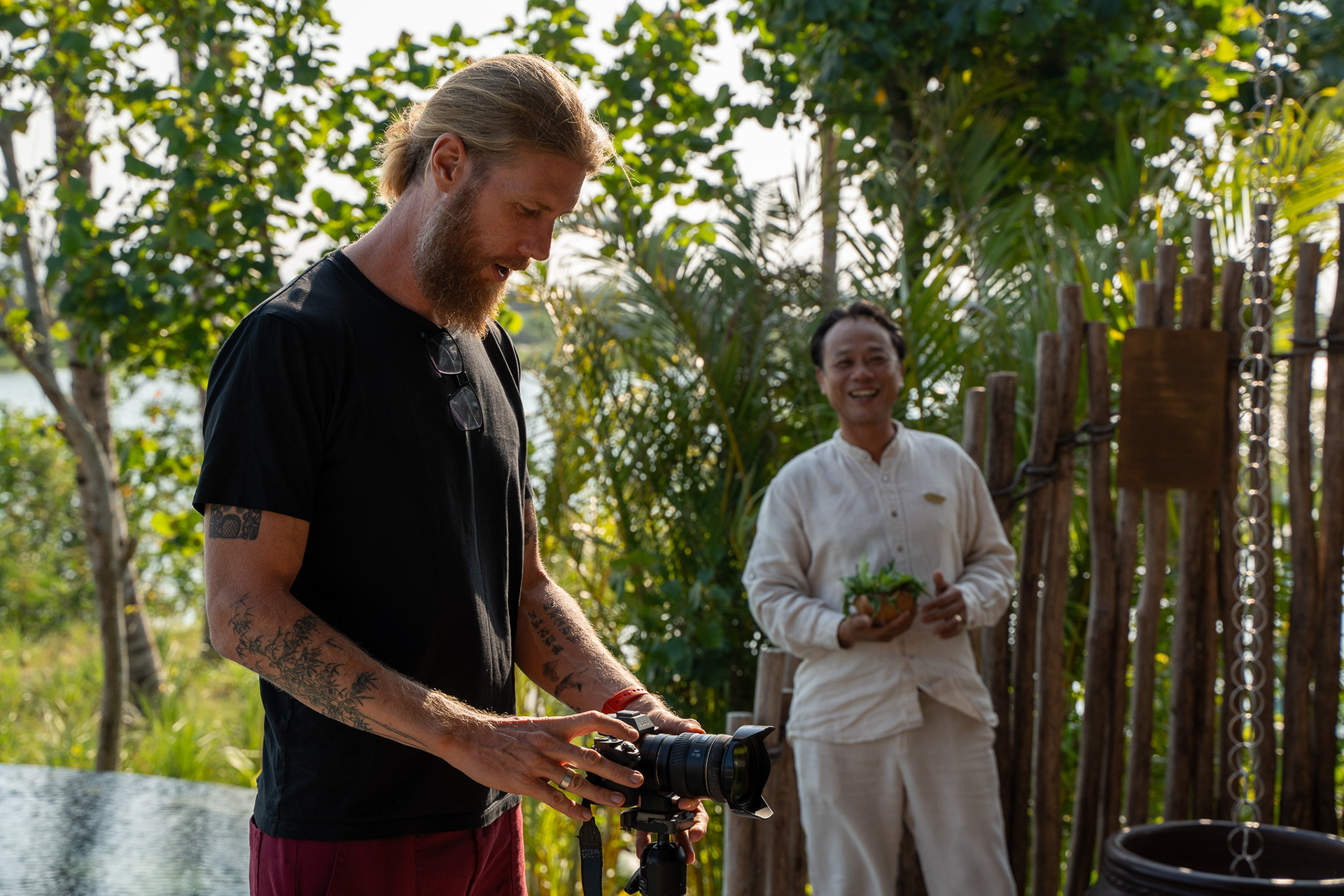
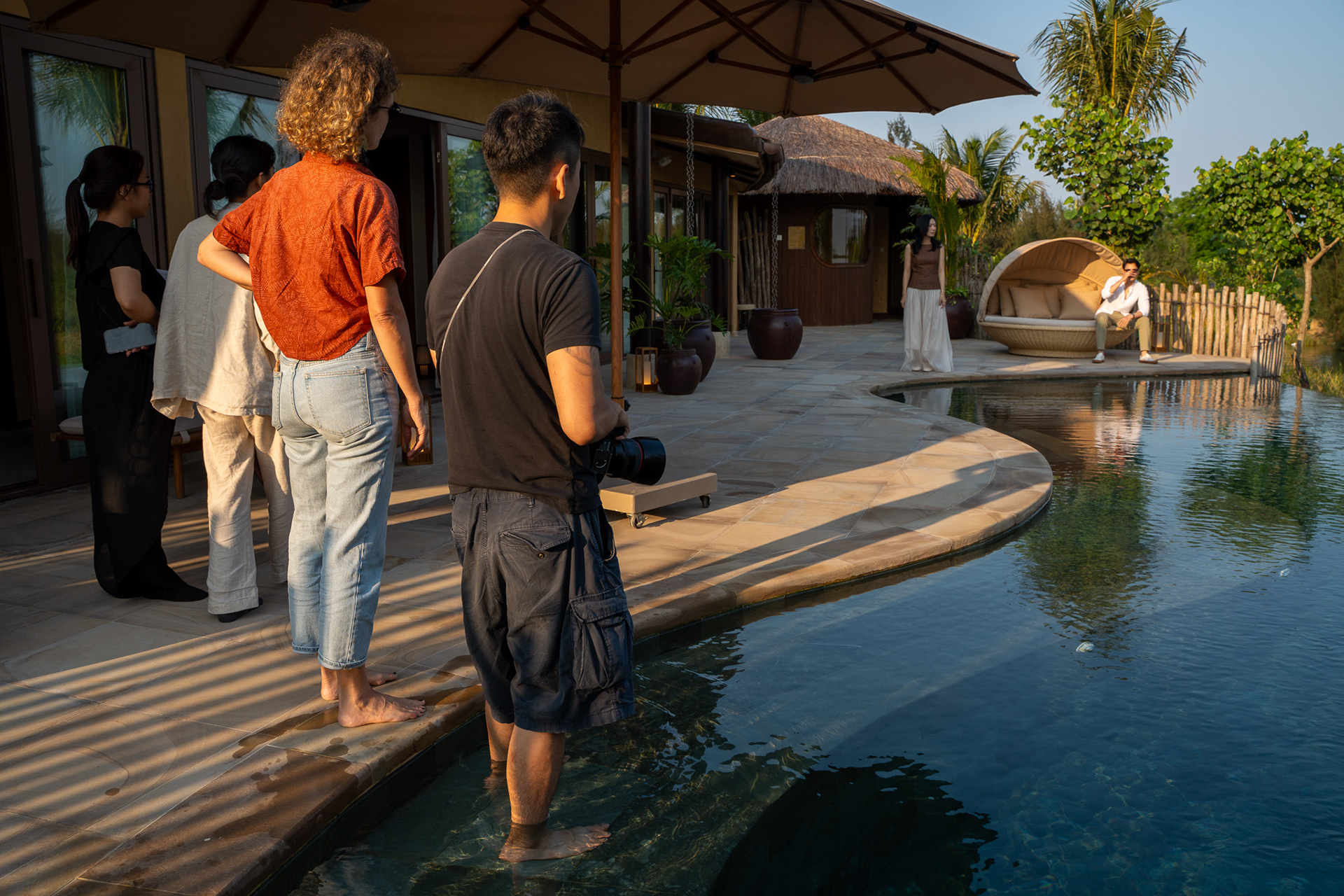
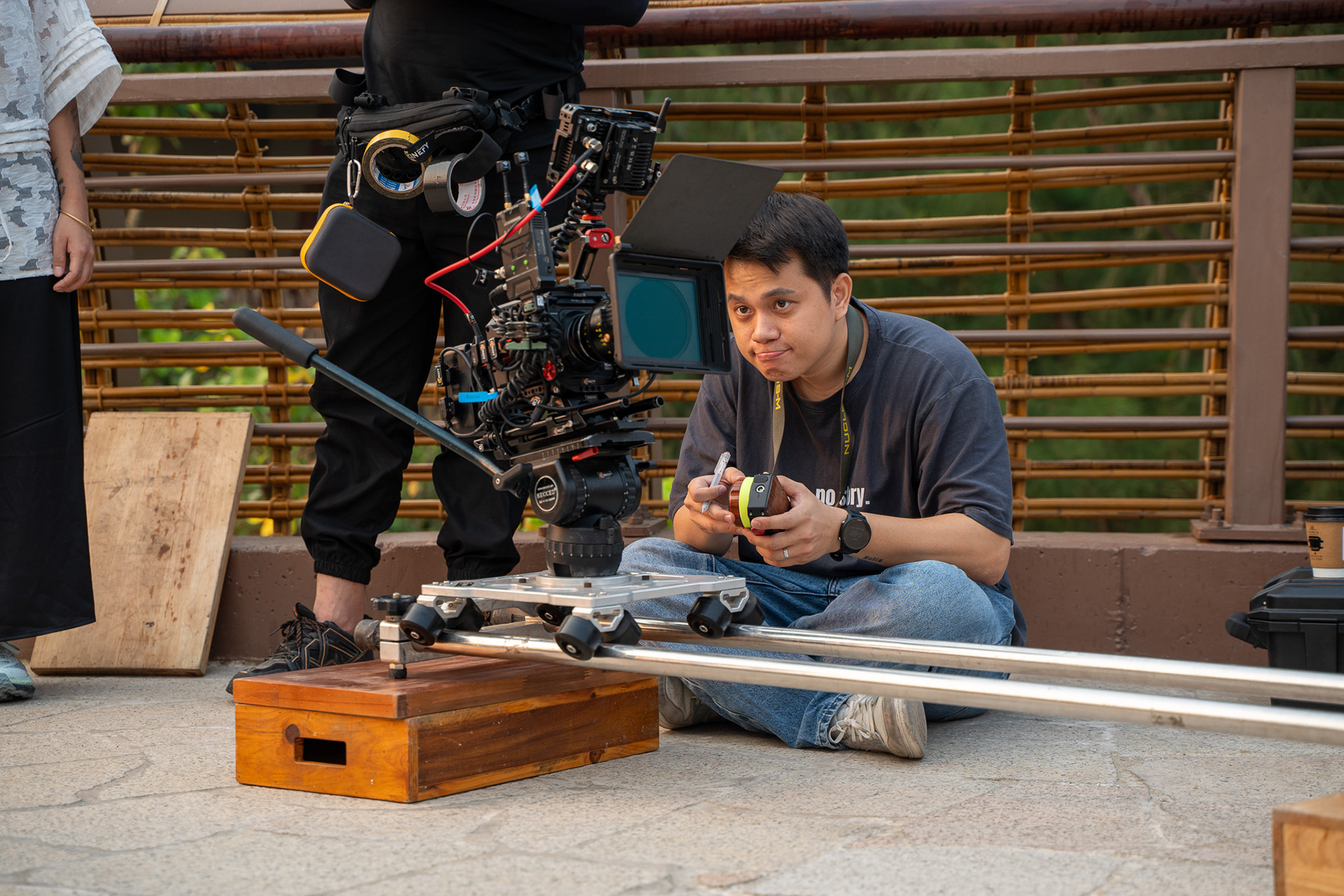
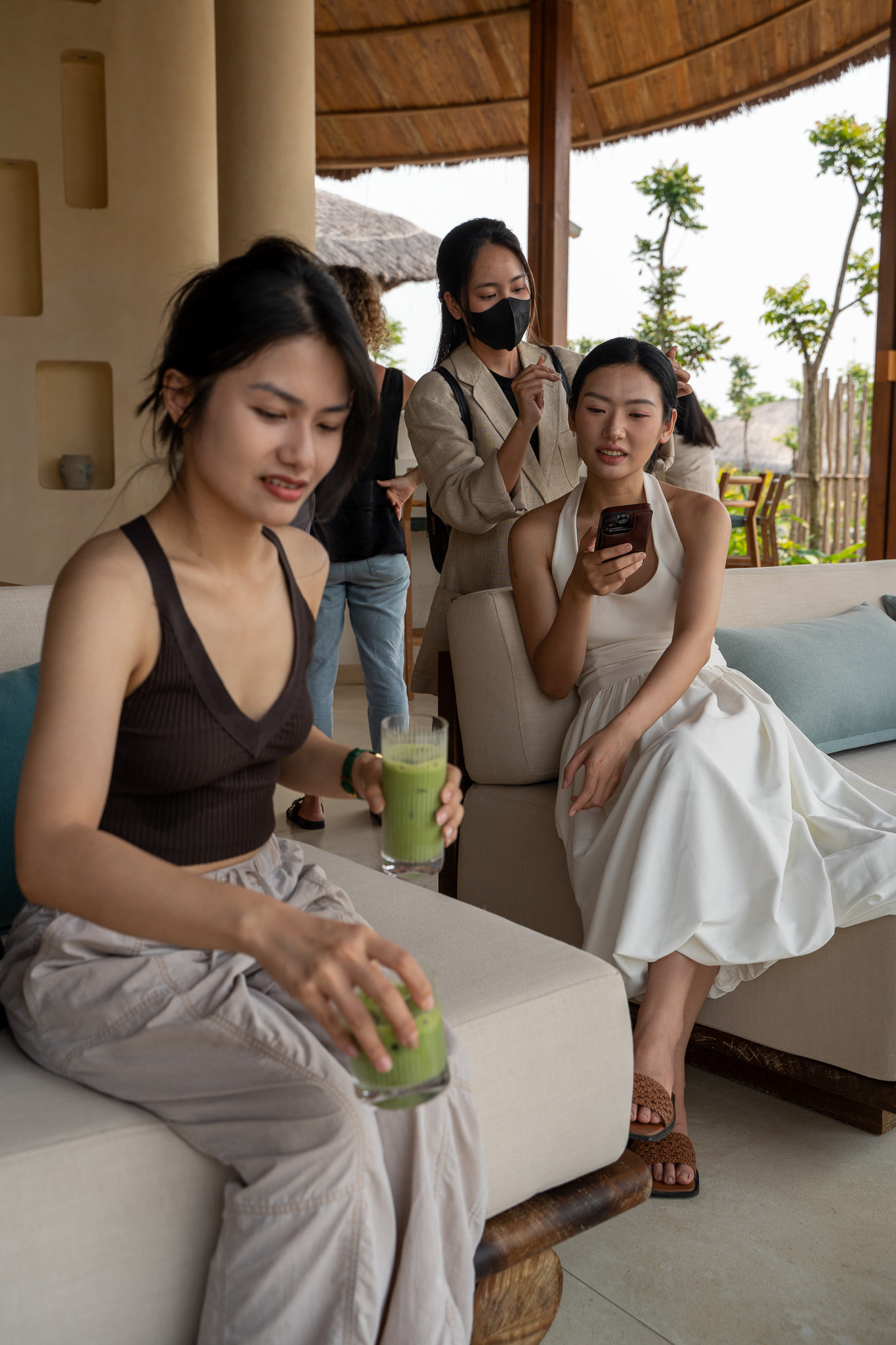
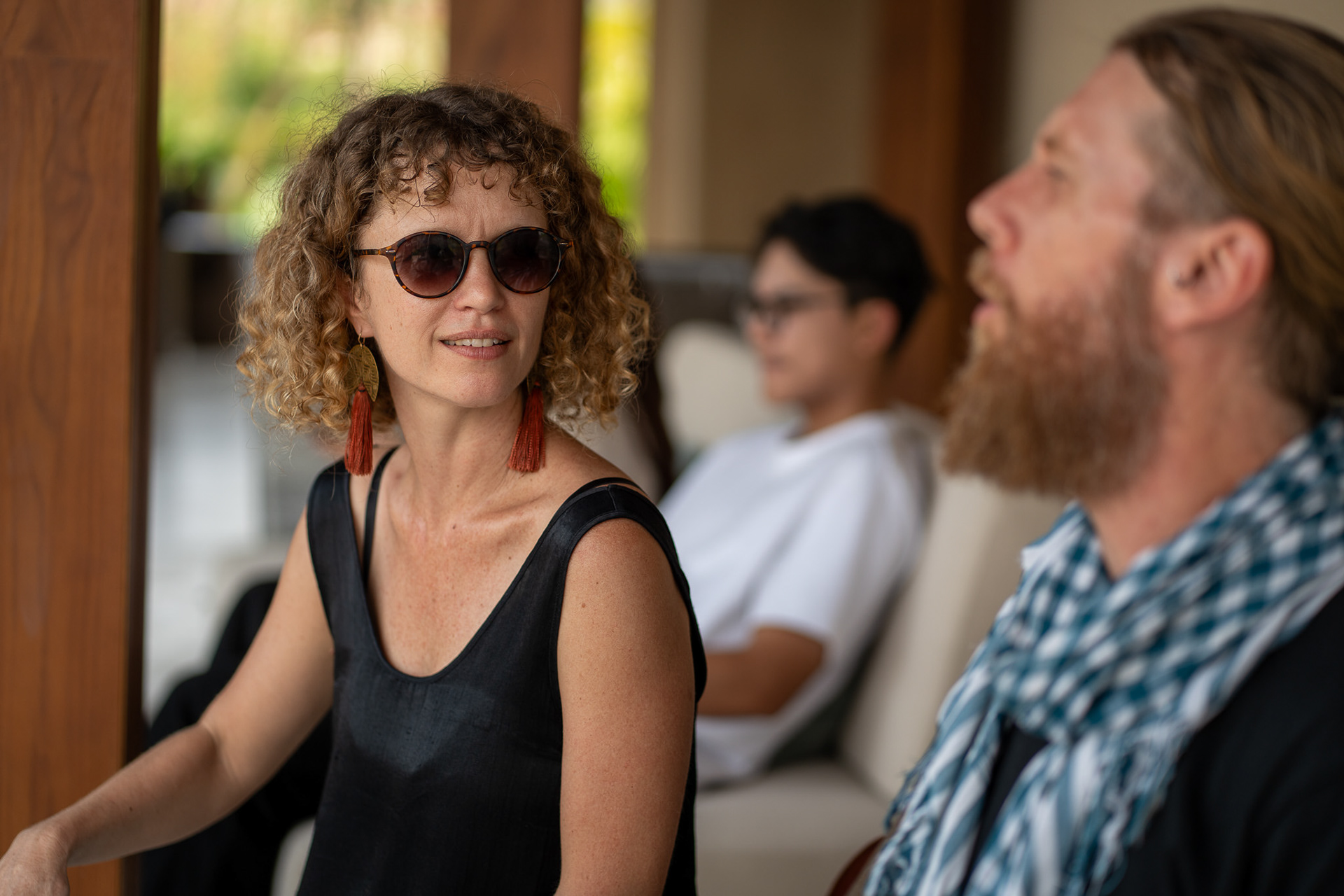
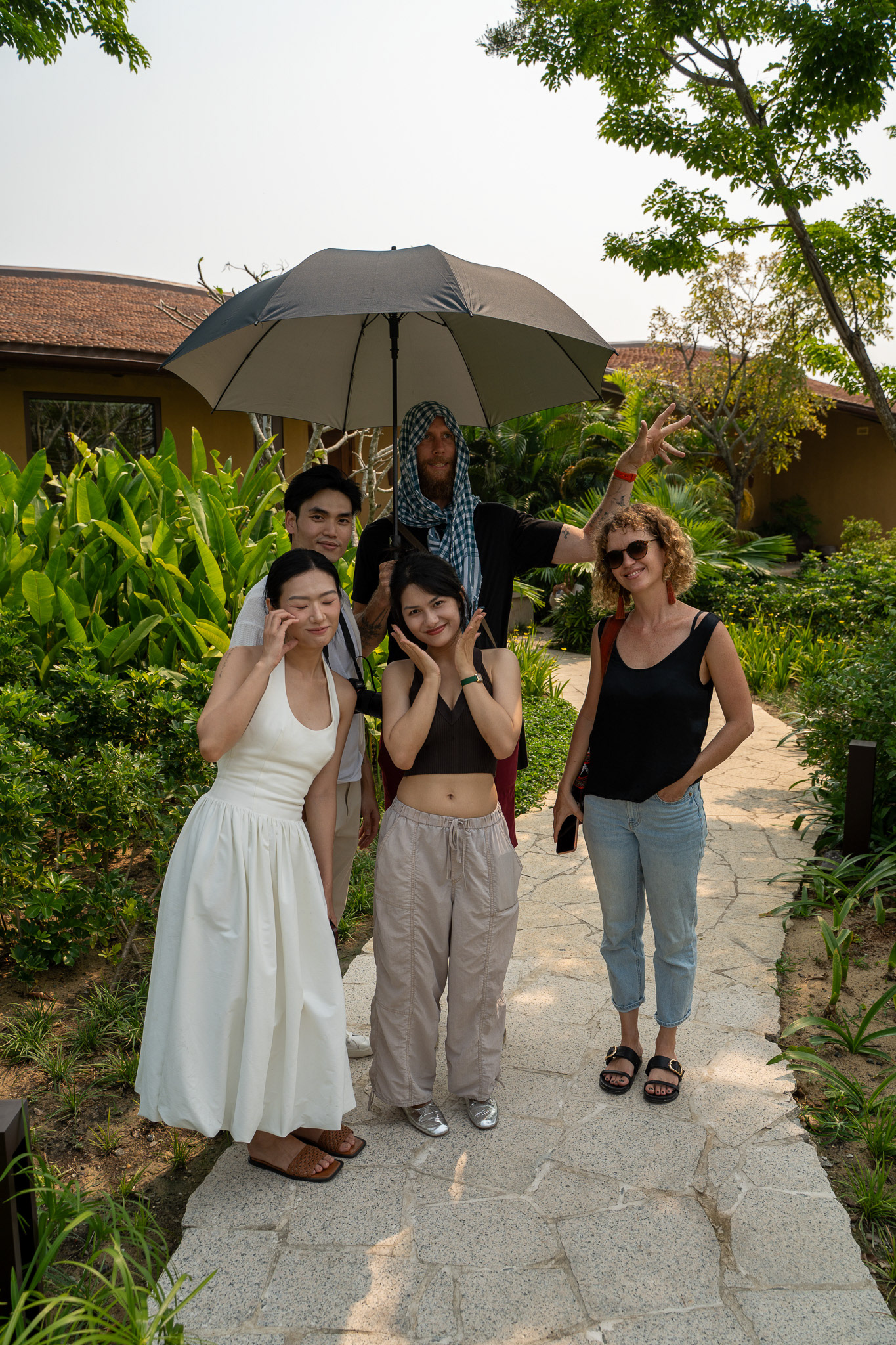
In March 2025, I joined The CAKE Collective on a multi-day photo and video shoot at Namia Hotel, Hoi An.
The CAKE Collective is a Saigon-based creative team working across photography, video, and production in Vietnam and the wider region. This shoot involved a large crew working across the property over several long days.
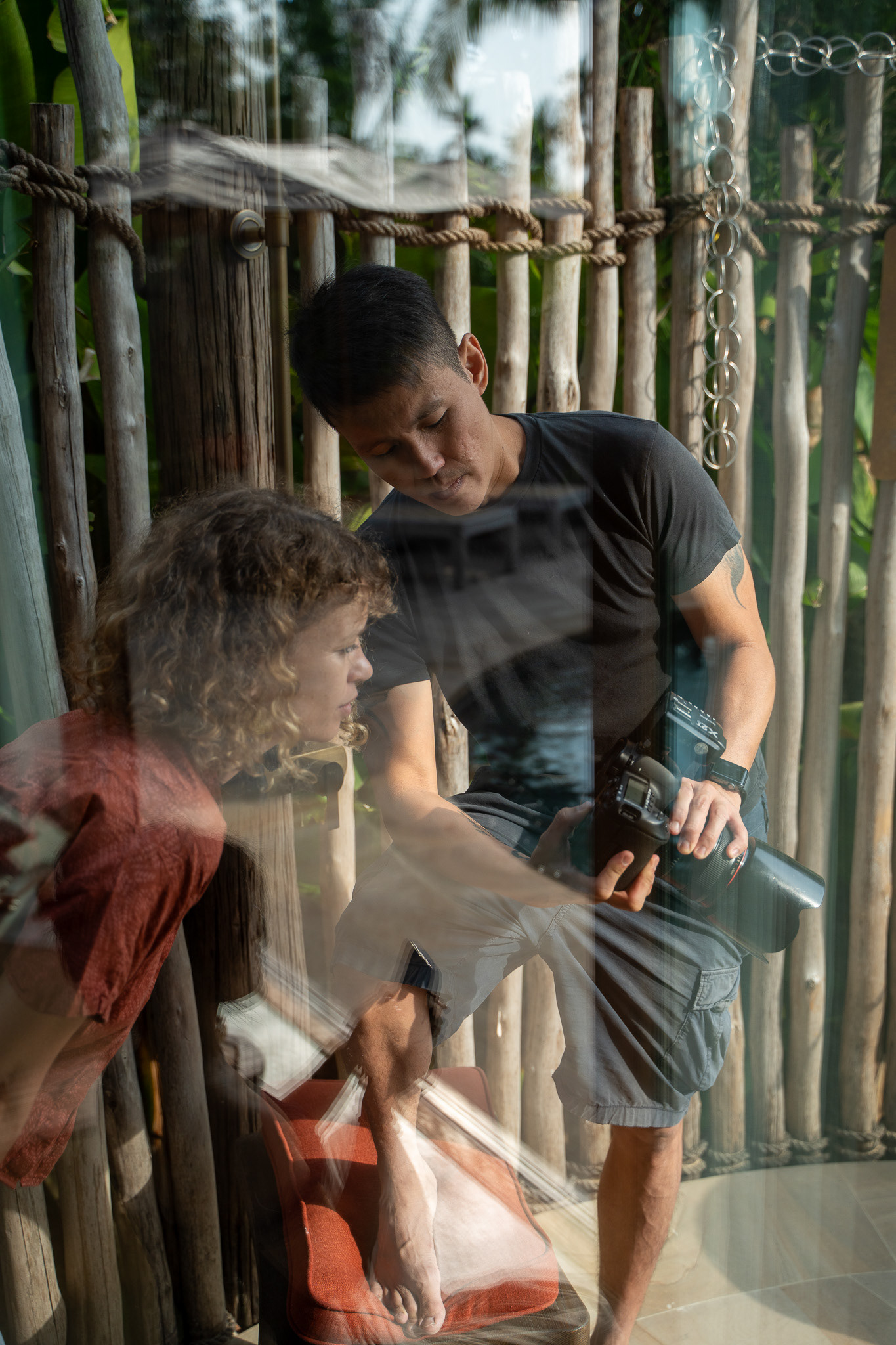
I was there to photograph the process behind the scenes — how the team worked through setups, lighting changes, reviews, resets, and movement between locations. Most of the time was spent coordinating, waiting, adjusting, and keeping things moving as the day went on.
The images focus on those in-between moments: crews reviewing shots, setting up, breaking down, and working together across the site.
Elements of the Mekong Delta — A Journey into People, Place & Plates
Behind the Lens of the WWF x Saigoneer Series
Elements of the Mekong Delta is a documentary video series produced in collaboration with WWF‑Viet Nam and published by Saigoneer, exploring the links between food, culture, and environmental sustainability in southern Vietnam. I worked as videographer on the series, travelling throughout the Mekong Delta to film on location in rural landscapes, wetlands, studios, restaurants, and chefs’ homes. The work focused on documenting people whose livelihoods and cooking practices are closely connected to the region’s ecosystems, capturing everyday processes, local knowledge, and place-based food culture through observational, documentary-style filmmaking.

You may also like

Back to Top